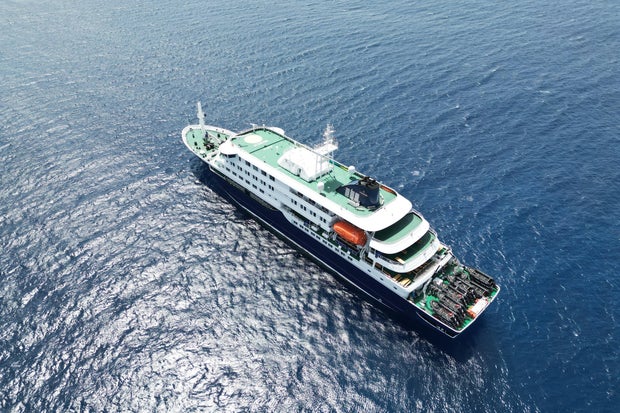
At least 3 people have died and 4 additional suspected or confirmed hantavirus cases have emerged aboard the stranded MV Hondius cruise ship, with the WHO saying rare human-to-human transmission may have occurred among close contacts. Spain is preparing a full investigation and disinfection in the Canary Islands, while passengers may face quarantine of up to 8 weeks because hantavirus incubation can last 1-8 weeks. The incident is a material health and travel disruption, though the WHO said pandemic-level risk remains low.
The immediate market read is not "pandemic risk" but micro-travel disruption: a single high-profile isolation event on a boutique expedition ship can tighten booking behavior for polar/cruise itineraries well before any broader health data deteriorates. That matters because the marginal customer for long-haul expedition travel is high-income, discretionary, and unusually sensitive to perceived operational control; cancellations can cascade through niche operators faster than headline case counts would imply. The clean second-order beneficiary is the risk-management stack around travel — medical evacuation, maritime monitoring, remote diagnostics, and travel insurance/reinsurance — because this episode highlights how quickly a localized onboard event can become an expensive repatriation and quarantine problem.
The key tail risk is not transmission scale, but operational duration: if authorities treat this as a potential onboard cluster, the relevant clock is weeks, not days, because quarantine windows can exceed the remaining voyage economics of the vessel. That creates a disproportionate cost structure for expedition cruise operators: lost future sailings, reimbursement pressure, and reputational damage concentrated in a small number of ships with limited route flexibility. Conversely, large diversified cruise lines and mass-market leisure travel should be less exposed than pure-play expedition names, since the shock is product-specific rather than a generalized demand shock.
Consensus may overstate the public-health signal and understate the commercial signal. The chance of a broad travel selloff is low unless additional secondary cases appear in the next 7-14 days; if case counts stay contained, the market likely mean-reverts quickly. But if a cruise line or insurer is forced to absorb extended quarantine/evacuation costs, the earnings impact can still be meaningful because the economics are highly fixed-cost and the brand damage can persist into the next booking season.
AI-powered research, real-time alerts, and portfolio analytics for institutional investors.
Request DemoOverall Sentiment
strongly negative
Sentiment Score
-0.72
