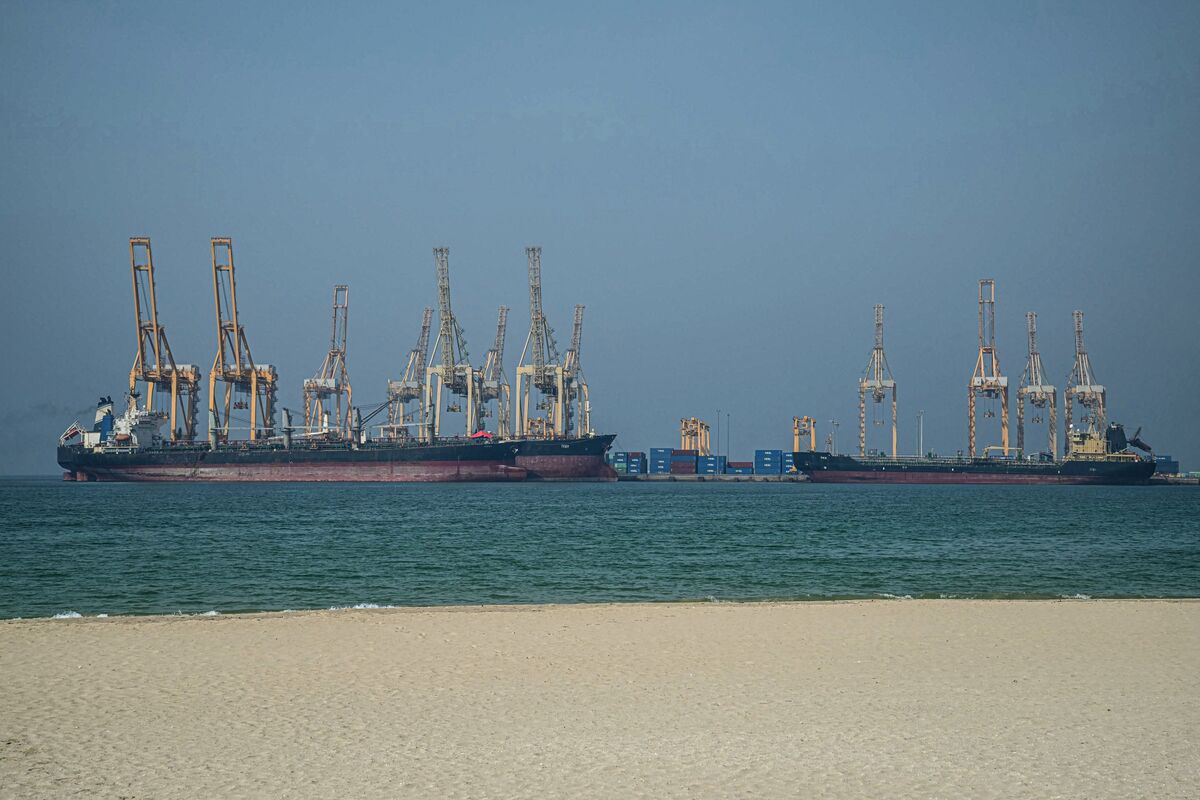
Iran said the Strait of Hormuz is open and will allow ships through for the duration of a 10-day ceasefire in Lebanon, but only via a coordinated route specified by Tehran. The announcement helped push oil prices lower and eased immediate supply fears, though the conditional access keeps disruption risk elevated for global energy flows and shipping.
The market is likely underpricing the difference between “open” and “open on someone else’s terms.” A coordinated routing regime functions like a soft choke point: it reduces the probability of an outright closure, but it preserves Iranian leverage over scheduling, insurance, and transit reliability. That means the immediate price response in crude may be right for headline risk, but too optimistic for freight, insurance, and refined-product optionality if delays or selectivity creep in.
The bigger second-order beneficiary is not the headline oil complex but the logistics stack that earns off uncertainty. War-risk premiums, vessel rerouting costs, and inventory-holding demand can stay elevated even if benchmark crude retreats, which supports tanker rates, marine insurers, and select defense supply chains. Conversely, refiners and industrials that were relieved by lower crude could be disappointed if the bottleneck shifts from supply interruption to throughput friction, especially over the next 2-6 weeks when chartering and port scheduling data will reveal whether the route is genuinely normalizing.
Consensus is likely too focused on the binary “closed/open” frame and not enough on the duration of administrative friction. If the corridor remains formally open but operationally managed, the tail risk is not a price spike but a persistent volatility regime that compresses margins for downstream users and raises working capital needs across global trade. That kind of regime tends to be bullish for volatility sellers only if they can absorb gap risk; otherwise the cleaner trade is owning optionality rather than linear exposure.
The contrarian angle is that the market may be overestimating how fast this de-escalates. A temporary pause tied to negotiations can still be tactically useful for Iran, and that means any complacency rally in transport-sensitive equities could fade as soon as the market realizes the “opening” is conditional, not durable. The right horizon is days for crude beta, weeks for freight and defense, and months for any true normalization in global supply chains.
AI-powered research, real-time alerts, and portfolio analytics for institutional investors.
Request TrialOverall Sentiment
neutral
Sentiment Score
-0.10
