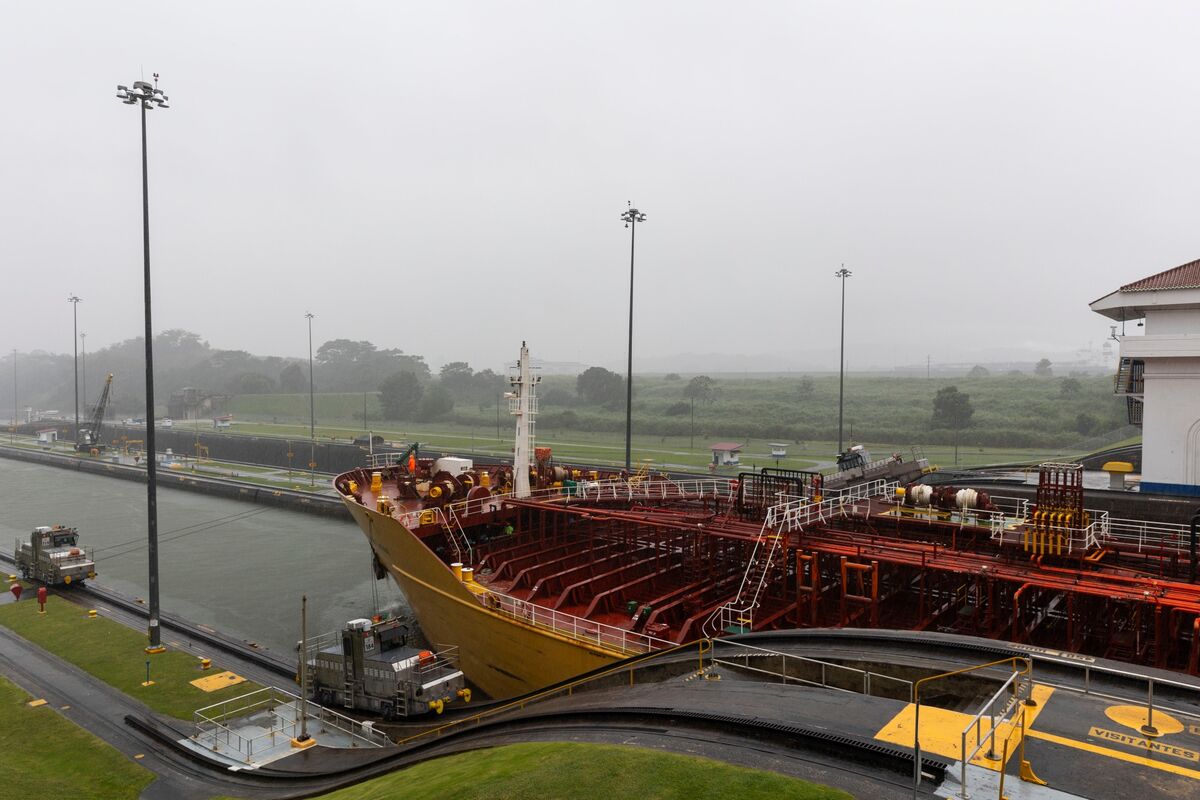
US crude shipments transiting the Panama Canal are above 200,000 barrels a day, close to a four-year high and the most since July 2022, as Asian refiners substitute American crude for disrupted Mideast supply. The surge reflects weeks-long Strait of Hormuz shipping disruption and highlights a meaningful rerouting of global oil flows. The development is supportive for US crude exports and tanker demand, with potential implications for broader energy markets.
The key market signal is not the absolute cargo count, but the rerouting premium being paid to preserve supply optionality. When Asian refiners lean on US Gulf barrels through Panama, they are implicitly monetizing voyage-time certainty over pure freight cost, which should support US grades with dependable loading profiles and penalize crudes that rely on a fragile Hormuz corridor. The first-order beneficiary is US export infrastructure; the second-order beneficiary is any refinery complex able to process lighter, lower-sulfur feedstock without depending on Middle East prompt cargoes.
This is also a logistics stress test. Panama capacity becoming a marginal bottleneck means the spread between Gulf Coast benchmarks and delivered Asia prices can widen even if outright Brent softens, because the market is paying for route resilience, not just molecules. That favors Gulf Coast export terminals, midstream names with firm capacity, and tanker utilization metrics; it hurts refiners and traders who were optimized for cheap Mideast supply and may now face higher working capital and inventory replacement costs.
The catalyst window is days to weeks, not years: if Hormuz disruptions persist, the rerouting trade can extend long enough to reprice freight, differentials, and regional product cracks. The main reversal risk is a diplomatic de-escalation that restores normal Mideast flows faster than Panama congestion clears, or a weather/operational issue at either canal or Gulf export infrastructure that constrains the alternative route and compresses the premium abruptly.
The contrarian point is that this may be a logistics squeeze rather than a durable demand shock. If traders overestimate how long Asia will tolerate higher delivered costs, the move could reverse quickly once prompt inventory is rebuilt and arbitrage windows close; in that case the better trade is the infrastructure bottleneck, not directional crude beta.
AI-powered research, real-time alerts, and portfolio analytics for institutional investors.
Request TrialOverall Sentiment
mildly positive
Sentiment Score
0.15
