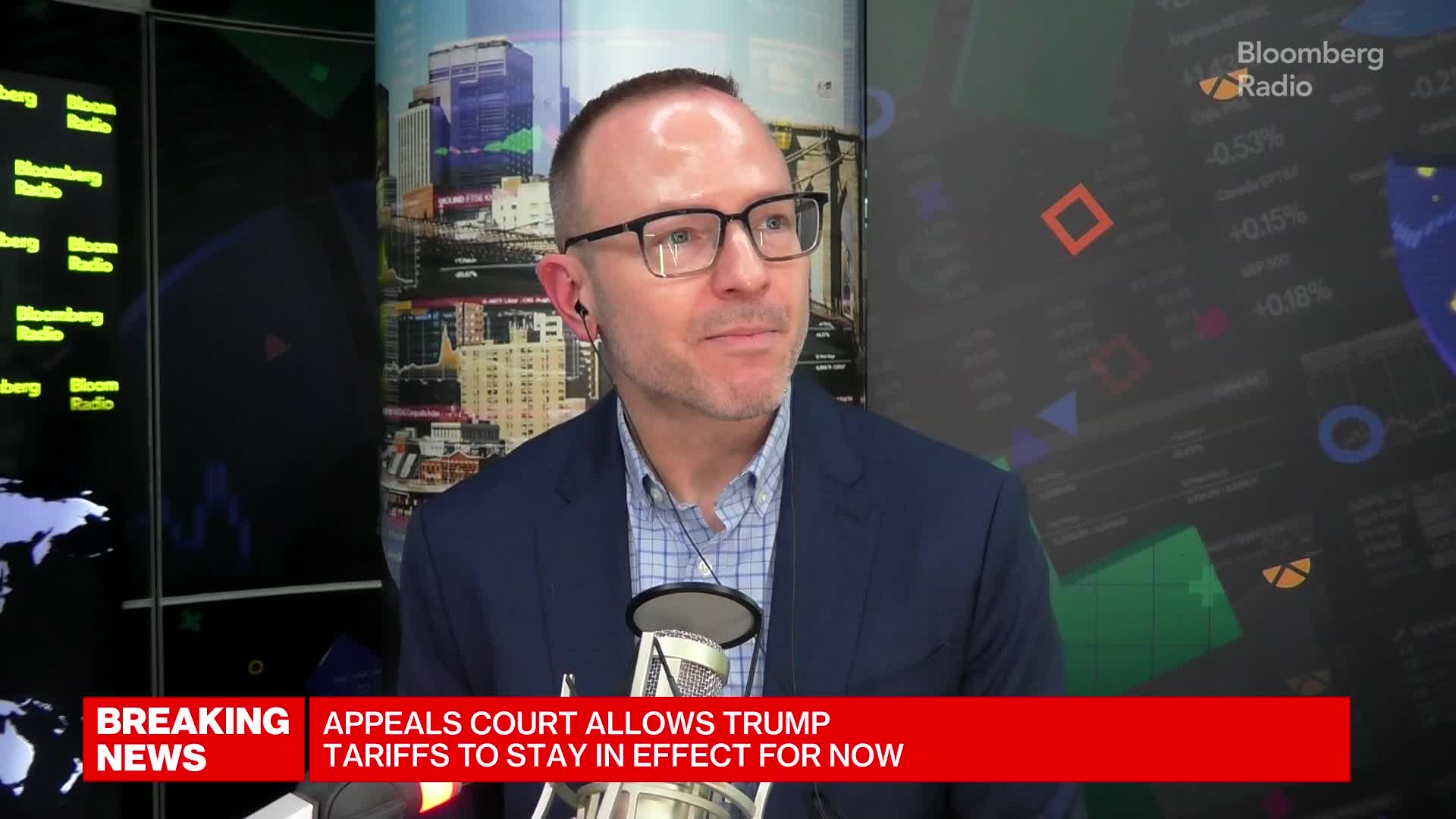
A U.S. appeals court has temporarily blocked a lower trade court's decision to halt the Trump administration's tariffs, allowing them to remain in effect for now. The legal back-and-forth introduces uncertainty for businesses reliant on international trade and sets the stage for further court proceedings to determine the long-term validity of these trade policies.
A U.S. appeals court has granted a temporary stay, thereby preventing a lower trade court's decision to halt certain Trump-era tariffs from taking immediate effect; these tariffs will consequently remain in place pending further legal proceedings. This development, described by Bloomberg's Erik Larson as ongoing "legal back and forth," perpetuates uncertainty within the U.S. trade policy landscape, a sentiment reflected by the provided signals which indicate a neutral sentiment score of -0.1, an "uncertain" tone, and a moderate market impact score of 0.4. The continuation of these tariffs, even on a temporary basis, directly affects sectors involved in international trade and complex supply chains, aligning with the identified themes of "Tax & Tariffs," "Trade Policy & Supply Chain," "Regulation & Legislation," and "Legal & Litigation." Businesses reliant on imports will likely continue to face existing cost pressures and navigate the strategic implications of this sustained, albeit potentially impermanent, tariff environment while the legal situation unfolds.
AI-powered research, real-time alerts, and portfolio analytics for institutional investors.
Request DemoOverall Sentiment
Neutral
Sentiment Score
-0.10
