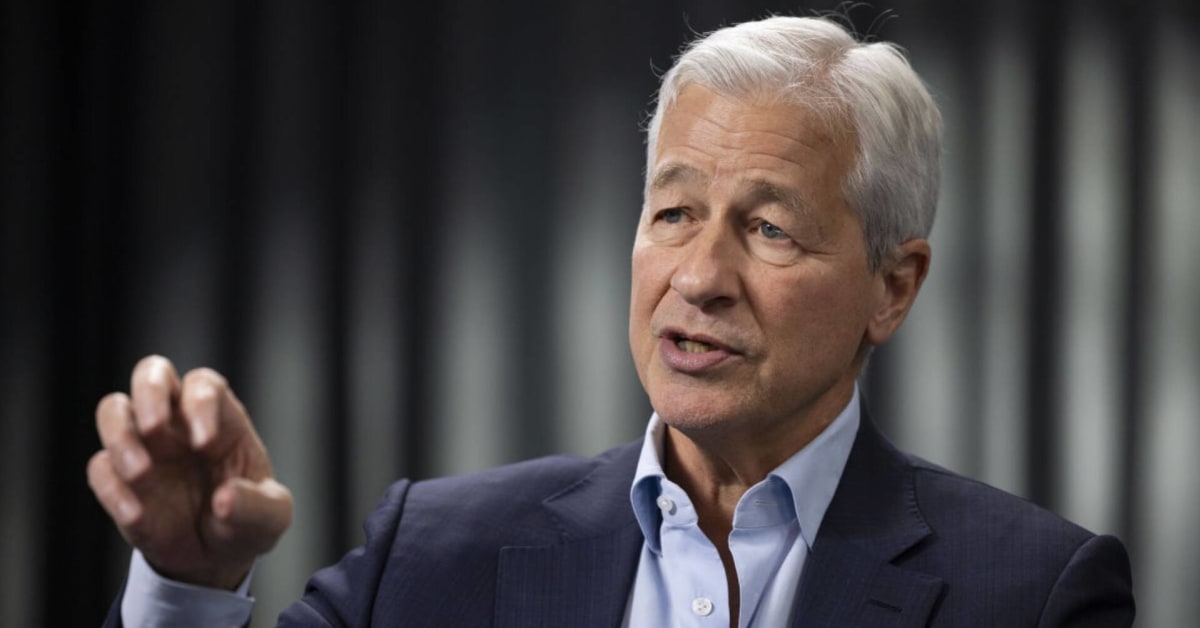
J.P. Morgan CEO Jamie Dimon is warning of a potential crisis stemming from the U.S. debt pile and economic uncertainty, highlighting the risk of widening credit spreads if confidence in the U.S. dollar erodes, which would negatively impact borrowing costs for businesses and consumers. Rising Treasury yields, driven by economic uncertainty and concerns over inflation reignited by new tariffs, are already impacting spending decisions and business expansion plans. Dimon advocates for policies promoting economic growth as the primary solution to mitigate these risks, emphasizing deregulation and skills development.
J.P. Morgan CEO Jamie Dimon, alongside other prominent financial figures, has issued a significant warning regarding the U.S. economy, primarily focusing on the risks associated with the burgeoning U.S. debt pile and prevailing economic uncertainty. Dimon specifically highlights the potential for a detrimental widening of credit spreads should investor confidence in the U.S. dollar erode, a scenario that would escalate borrowing costs for businesses and consumers. This concern is amplified by a federal budget deficit running at approximately $2 trillion annually. The economic backdrop is complex: the Federal Reserve, after implementing three rate cuts in late 2023 (September, November, December) in response to unemployment rising to 4.2% from 3.4%, has adopted a holding pattern. This cautious stance stems from fears that newly instituted tariffs could reignite inflation, which had previously surged to 8% in 2022 before being brought below 3% by aggressive Fed tightening. Indicative of market anxiety, the 10-year Treasury Note yield has increased to nearly 4.5% from below 3.7% in September 2023. This environment is already influencing behavior, with consumers curtailing discretionary spending and businesses pausing expansion plans. Dimon's apprehension about a credit spread 'gap out' underscores a severe risk to various lending markets, including small business loans, high-yield debt, and real estate, with a timeline for such an event ranging from six months to six years. As a remedy, Dimon advocates for policies fostering robust economic growth, such as deregulation, permitting reform, and enhanced skills development. The overall sentiment from these observations is strongly negative, signaling a high potential market impact.
AI-powered research, real-time alerts, and portfolio analytics for institutional investors.
Request DemoOverall Sentiment
strongly negative
Sentiment Score
-0.75
Ticker Sentiment
