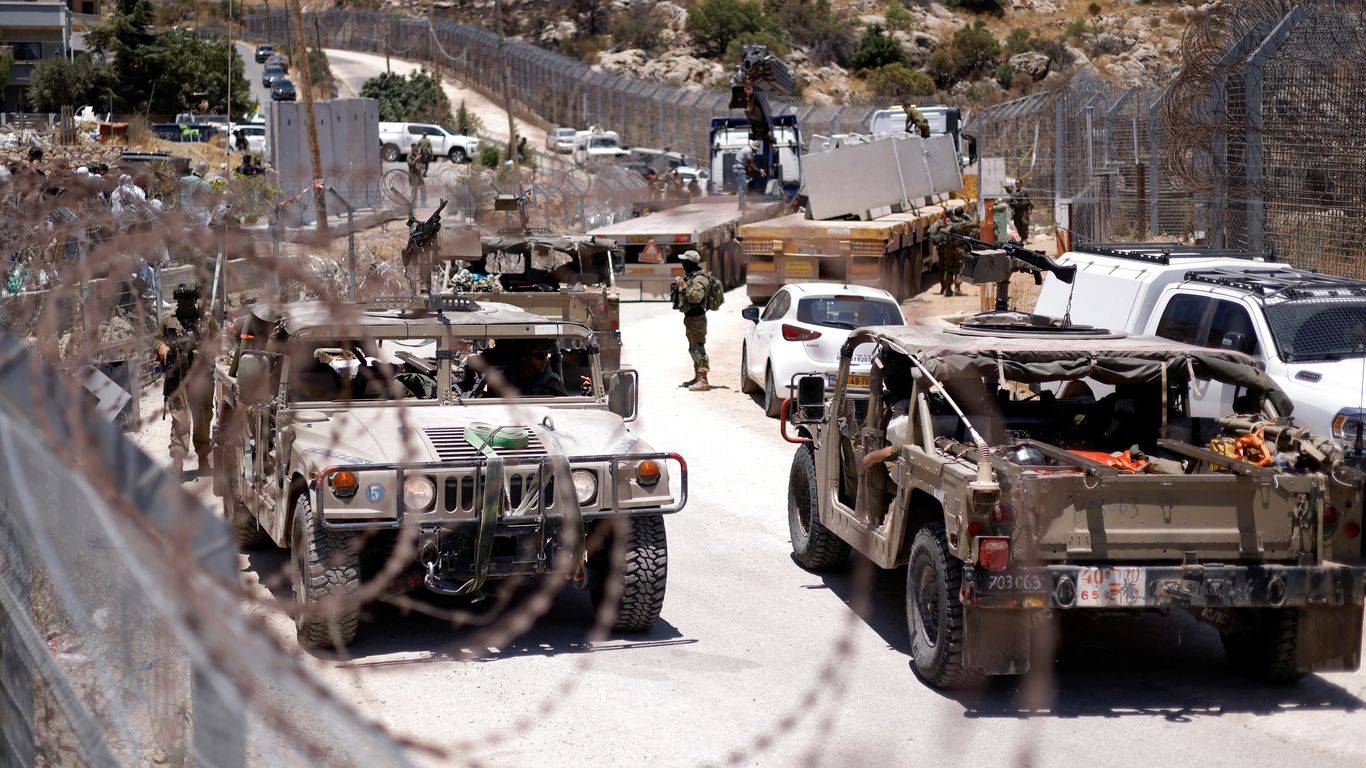
Israel has presented Syria with a detailed security agreement proposal, seeking a broad demilitarized zone and a no-fly zone for Syrian aircraft in its territory southwest of Damascus, in exchange for a gradual withdrawal from recently occupied Syrian areas, excluding a strategic Mt. Hermon outpost. This U.S.-facilitated initiative aims to replace the 1974 disengagement agreement and critically includes maintaining an aerial corridor through Syria for potential future Israeli operations against Iran. While trilateral talks are progressing, Syria is preparing a counterproposal, and an agreement is not imminent, signaling ongoing geopolitical complexities and strategic shifts in the region.
Israel has tabled a significant security proposal to Syria, facilitated by the U.S. administration, aiming to establish a new geopolitical framework following the collapse of the Assad regime. The proposal is modeled on the 1979 Israel-Egypt peace treaty and demands substantial Syrian concessions, including a broad, multi-tiered demilitarized zone southwest of Damascus, an extension of the border buffer zone, and a complete no-fly zone for Syrian aircraft in the region. In exchange, Israel offers a gradual withdrawal from recently occupied territories, but crucially insists on retaining its strategic outpost on Mt. Hermon. A key underlying Israeli objective is the maintenance of an aerial corridor through Syria, preserving its capability for potential future military strikes against Iran. While trilateral talks are progressing, Syria has yet to formally respond and is preparing a counterproposal, indicating that an agreement is not imminent. The negotiations represent a potential de-escalation, but Israel's maximalist demands and strategic focus on Iran underscore the persistent and complex security dynamics in the region.
AI-powered research, real-time alerts, and portfolio analytics for institutional investors.
Request DemoOverall Sentiment
mixed
Sentiment Score
0.10
