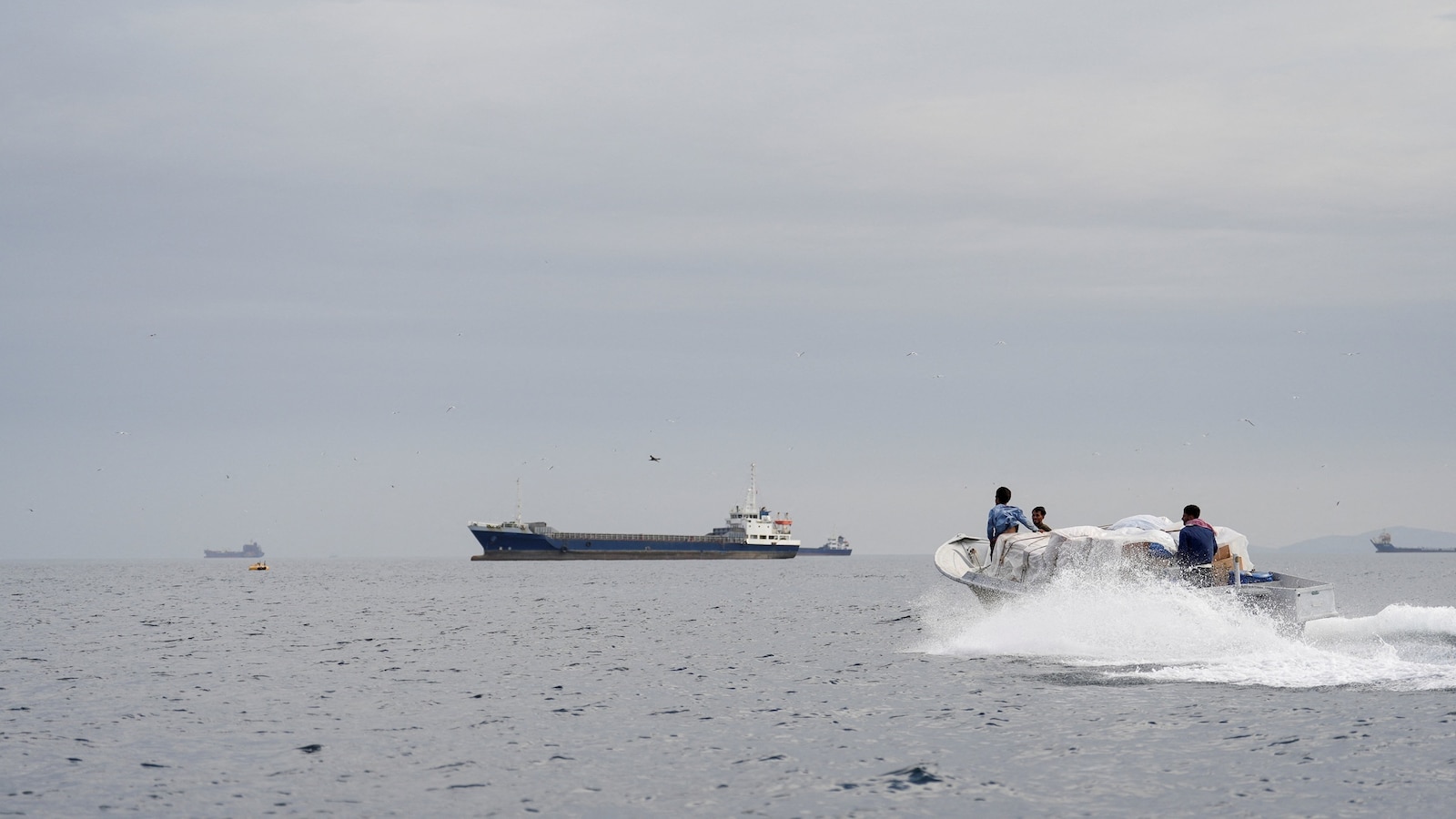
The Strait of Hormuz was declared 'completely open,' but major caveats remain: the U.S. naval blockade on Iranian ports is still in place and Iran says passage is limited to a coordinated route under IRGC supervision. Oil prices fell about 9% on the announcement, but roughly 700 ships remain stuck in the Persian Gulf, including about 250 tankers carrying 165 million barrels of crude and products. The situation remains highly fluid and could quickly affect global energy and shipping markets.
The market is pricing a binary de-escalation, but the shipping bottleneck is still a balance-sheet problem before it is a headline problem. Even if the route is technically open, the relevant constraint is whether cargo underwriters, charterers, and vessel owners are willing to re-risk tonnage after weeks of immobilization; that typically lags any political statement by days to weeks. The first phase of normalization should therefore be visible not in spot crude alone, but in freight rates, marine insurance premia, and the discount/contango structure for Middle East cargoes.
The biggest second-order winner is not crude supply per se, but downstream consumers with high energy intensity and low fuel pass-through: airlines, chemicals, rail, trucking, and select industrials should see margin relief faster than upstream producers lose pricing power if the reopening is slow and partial. Conversely, the “open” strait may actually concentrate flows into a narrower, monitored corridor, which increases latent chokepoint risk and preserves a geopolitical risk premium even as front-end oil sells off. That means the move in crude could overshoot on the downside if traders assume pre-war throughput returns immediately.
The key tail risk is that the U.S. blockade on Iranian flows creates a structurally asymmetric reopening: non-Iranian barrels can move, but Iranian barrels and any ship deemed non-compliant remain hostage to enforcement. If Iranian exports stay suppressed, the market may get temporary relief without a full supply normalization, which is bullish for Middle East crude differentials and bearish for tankers with exposure to Persian Gulf liftings. Over the next 1-3 weeks, any renewed interception or revised routing rules could snap freight and oil back quickly because positioning is likely to be crowded into the de-escalation trade.
Contrarian view: the move may be underdone in equities, overdone in spot oil. Energy equity cash flows are driven by sustained realized pricing, not one-day headline shocks, and if the physical system remains impaired for even another 2-4 weeks, upstream names will still print strong Q2/Q3 realizations while transport, airlines, and industrials get immediate margin relief. The best risk/reward is probably in relative value, not outright direction: long beneficiaries of lower input costs versus short proxies for prolonged logistics friction.
AI-powered research, real-time alerts, and portfolio analytics for institutional investors.
Request TrialOverall Sentiment
neutral
Sentiment Score
0.05
