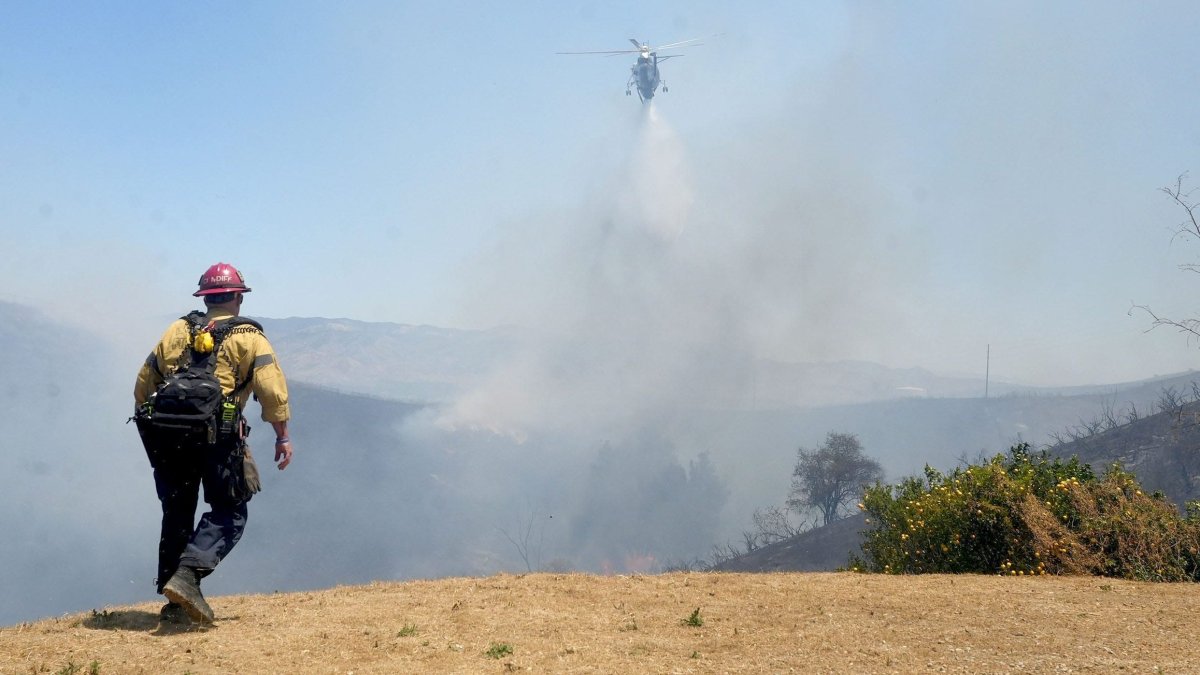
Three Southern California wildfires have burned more than 3,500 acres this week, including the 2,115-acre Sandy Fire (15% contained), the 1,460-acre Bain Fire (25% contained), and the 600-acre Verona Fire (20% contained). Evacuation orders and warnings affect tens of thousands of residents, including about 43,000 under evacuation orders in Simi Valley, while an air quality alert remains in effect through Wednesday evening across parts of Southern California. The fires are disrupting schools, worsening smoke conditions, and creating localized but material regional risk.
The immediate market impact is not the fires themselves but the operational drag from smoke, closures, and mobility restrictions. In the next 3-10 trading days, the first-order winners are firms with exposure to indoor substitution: HVAC, filtration, bottled water, home improvement, and e-commerce logistics, while the losers are outdoor recreation, restaurants with patio traffic, and local commuter-dependent retail. A less obvious second-order effect is wage and schedule disruption for field services and last-mile networks in Ventura/Riverside, which can raise near-term fulfillment costs even if demand is unchanged.
The larger tradeable signal is around municipal and insurance sensitivity. Repeated wildfire events in Southern California tend to widen the spread between catastrophe-exposed regional carriers and diversified national insurers, but the market often underprices the lag from claims severity to reserve revisions by 1-2 quarters. Utilities and real estate names with high exposure to brush-interface zones may see a temporary de-risking bid, yet the real pressure comes if containment remains slow into the weekend and evacuation orders expand; that extends the duration of lost labor hours, school/daycare disruption, and local consumption weakness.
Contrarianly, this is probably more of a short-dated volatility event than a durable macro shock unless there is a larger regional fire complex or sustained wind event. Air-quality headlines can create oversold conditions in “Southern California exposure” baskets even when the revenue hit is only a few days, so chasing downside after the first 24-48 hours carries poor payoff unless fires materially spread. The better setup is to fade the most acute local losers once containment improves, while keeping optionality on climate-adjacent beneficiaries that can see incremental demand regardless of the eventual fire outcome.
AI-powered research, real-time alerts, and portfolio analytics for institutional investors.
Request DemoOverall Sentiment
moderately negative
Sentiment Score
-0.45
