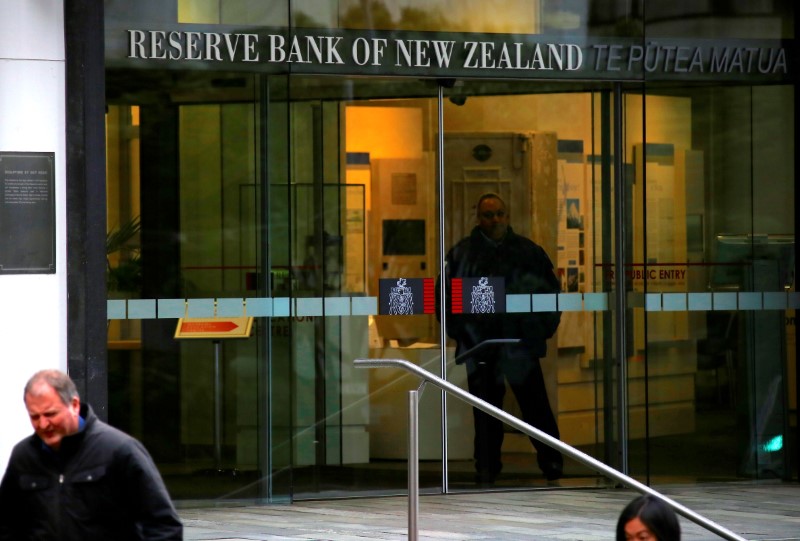
The Reserve Bank of New Zealand (RBNZ) raised the official cash rate by 25bps to 2.50% and signalled “some further reduction in monetary stimulus is likely,” citing inflation still above the 1%-3% target range. It expects annual headline inflation to ease from 3.9% (June quarter) to 3.3% (September quarter) but warned the earlier oil shock would linger even as global oil/petrochemical prices eased after partial reopening of the Strait of Hormuz. The RBNZ also flagged risks from a weaker NZD and fading growth momentum in the June quarter, with OCR path dependent on incoming data.
This is less a pure oil story than a repricing of the central bank reaction function. The key mechanism is that lower headline inflation from energy relief does not automatically restore easing if firms are still trying to re-anchor margins and wages at higher nominal levels; that keeps NZ front-end yields supported and preserves an upside bias in NZD. The second-order loser is domestic duration-sensitive exposure: housing, REITs, utilities, and rate-dependent retailers face a longer period of tight financial conditions even if the imported-inflation shock fades.
The market risk is that this gets read as a one-way hawkish signal, when in reality the next 4-8 weeks are data-dependent. If Q3 activity, labor, or spending data roll over faster than expected, the RBNZ can pivot from “more tightening” to “hold-and-watch,” which would unwind the currency bounce quickly. Conversely, if oil stabilizes but the currency weakens, the imported-inflation channel can re-accelerate, making the bank even less tolerant of easing financial conditions.
Contrarian view: consensus may be overestimating how much the recent energy shock already fixed inflation. The lagged pass-through from freight, food, and services pricing can persist for 1-2 quarters after oil reverses, so the inflation problem may be stickier than the immediate commodity tape suggests. That favors being long policy-sensitive carry only on pullbacks, not chasing the first spike higher.
AI-powered research, real-time alerts, and portfolio analytics for institutional investors.
Overall Sentiment
mildly negative
Sentiment Score
-0.15
Ticker Sentiment
