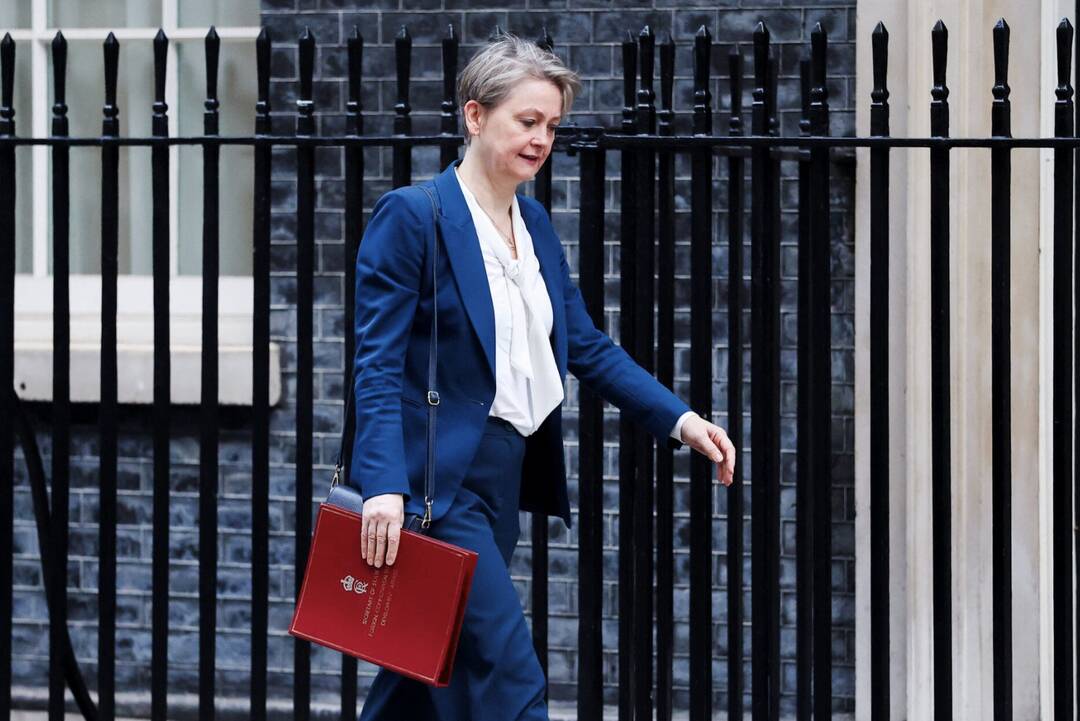
UK Foreign Secretary Yvette Cooper will visit China on June 2 and India on June 4, with discussions centered on the Middle East and Russia-Ukraine wars. The trip includes a meeting with Chinese Vice President Han Zheng and a technology-focused programme in Shenzhen, followed by talks with India’s EAM S Jaishankar. The article is largely diplomatic and factual, with limited immediate market impact.
This visit is less about diplomacy theater and more about optionality around supply-chain realignment. A UK channel into both Beijing and New Delhi at once raises the odds of incremental progress on export controls, tech collaboration, and de-risking language, which matters most for semis, industrial automation, and telecom equipment where even small policy shifts can re-rate supplier access over a 3-12 month horizon.
The second-order beneficiary is India as a neutral manufacturing and services proxy: any friction between the West and China tends to accelerate qualification of India as an alternate node for electronics assembly, data services, and defense procurement. That creates a relative advantage for Indian capex beneficiaries versus China-exposed UK multinationals, while also subtly improving the bargaining power of Indian firms tied to Western reshoring and friend-shoring budgets.
A less obvious angle is that the Ukraine and Middle East agendas keep defense spending sticky and reduce the probability of near-term peace dividends. That supports long-duration demand for munitions, air defense, and cyber security, even if headline geopolitical risk fades intermittently; the market usually underprices how often “de-escalation” talks convert into higher budget commitments rather than lower ones. Conversely, any visible thaw in UK-China tech engagement would pressure the most crowded anti-China positioning in Europe over weeks, not days.
The contrarian view is that this is not a major regime-change event for markets. The UK lacks enough trade weight to force structural concessions, so the actionable signal is more about tone and sequencing than policy substance; the move is likely underwhelming unless followed by concrete export licensing or investment announcements within 30-60 days. The bigger risk is a headline-driven spike in China-exposed cyclicals if investors extrapolate dialogue into policy relaxation too quickly.
AI-powered research, real-time alerts, and portfolio analytics for institutional investors.
Request TrialOverall Sentiment
neutral
Sentiment Score
0.00
