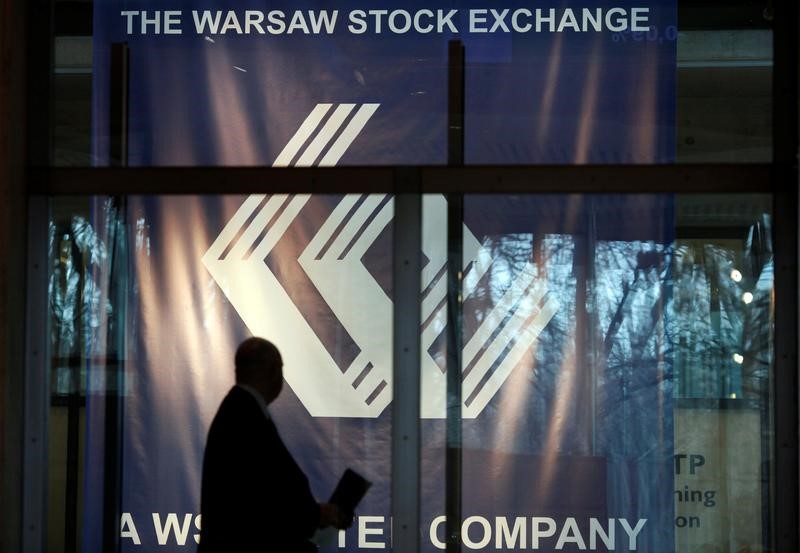
WIG30 closed up 1.92% as Basic Materials, Banking and Oil & Gas led gains; KGHM +4.70%, Rainbow Tours +4.38%, mBank +3.33%, while Enea fell 2.75% and MODIVO hit a 52-week low at 96.50 (-1.59%). Crude prices plunged (WTI Apr -11.60% to $83.78, Brent May -11.07% to $88.01) even as April gold futures rose 2.73% to $5,242.81/oz amid hopes of Iran war de-escalation. FX: EUR/PLN 4.26 (+0.38%), USD/PLN 3.66 (+0.23%); USD Index futures 98.58 (-0.59%).
The market action reflects a classic risk-on squeeze driven by a softer USD and shorter-term hopes of geopolitical de-escalation, producing a divergence: energy contracts have repriced lower while precious metals moved higher. That divergence creates a two-speed commodity regime over the next 1–3 months — oil will be driven by inventory prints, refinery throughput and OPEC communications, while gold will trade more to real-rate moves and episodic risk-premia tied to headline geopolitics.
For Poland specifically, lower oil is an immediate income-transfer mechanism: import-dependent sectors and corporates with large fuel bills see margin relief and improved FX-adjusted cash flow, while domestic generators and hydrocarbon-linked producers face margin compression and capital-spend visibility deterioration. Banks with large corporate loan books are the second-order beneficiaries — improved borrower cashflows reduce forward-looking provisioning needs and support asset-quality revisions into the next reporting cycle.
Key risks are asymmetric and time-dependent. A renewed Iran/Red Sea shock or coordinated OPEC supply cut could flip oil higher sharply inside days and re-energize PLN weakness, reversing carry flows; conversely, a sustained USD rally or rising US real yields would compress gold and pressure risk assets over months. Positioning should therefore be short-dated and catalyst-aware: trade the next 4–12 week window around inventory data, bond auctions, and geopolitical headlines rather than buy-and-hold macro exposure.
AI-powered research, real-time alerts, and portfolio analytics for institutional investors.
Overall Sentiment
mildly positive
Sentiment Score
0.20
