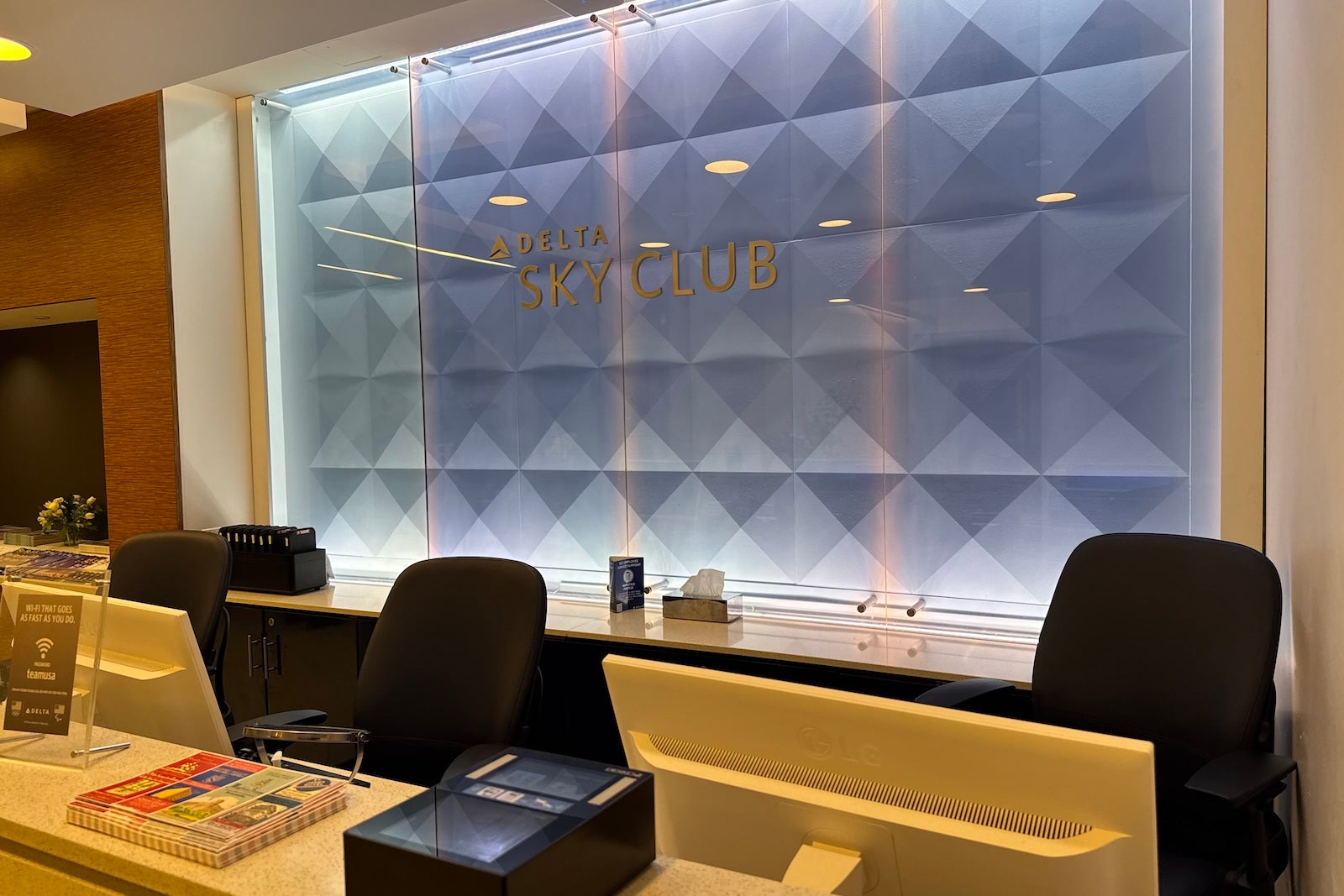
Delta is expanding and upgrading its Sky Club footprint with a new Las Vegas Sky Club planned for Harry Reid International Airport in 2029, a near-term total makeover of the Concourse A Sky Club at Denver expected within ~2 months, and major expansions in Florida: Jacksonville's club will triple to 10,000 sq ft by next year and Tampa’s relocated club will open on Airside D in 2028. The carrier also completed a months-long renovation at Philadelphia (now 5,800 sq ft; seating up from 75 to 144 and larger back-of-house food prep), underscoring continued capital allocation to premium customer amenities that should modestly bolster competitive positioning and premium passenger experience but is unlikely to be material to Delta’s near-term financials.
Market structure: Delta (DAL) is the clear direct beneficiary — lounge expansions (JAX to 10,000 sq ft by ~Q4 2026, DEN reopening in ~2 months, Vegas slated 2029) reinforce premium product differentiation, likely supporting higher yields on business/leisure mix and incremental membership revenue. Card-branded lounges (AmEx/AXP, Capital One) face localized competition but AMEX’s Centurion and Capital One’s recent openings limit immediate share losses; AAL (American) sees marginal competitive pressure at PHL but not systemic displacement. Supply/demand: continued lounge capex signals confidence in sustained travel demand and premium spend recovery; near-term supply constraints (airport gates) remain the dominant capacity limiter, not lounge space.
Risk assessment: Tail risks include a macro downturn that cuts corporate travel >15% YoY, construction/lease delays (esp. LAS to 2029) and potential airport regulatory/lease disputes that could push capex beyond budgets. Immediate risks (days-weeks): operational hiccups at reopened DEN affecting NPS; short-term (months): JAX reopening execution and membership uptake; long-term (years): ROIC on Vegas build if travel patterns shift. Hidden dependencies: lounge economics depend on ancillary food/beverage supply chains, staffing (back-of-house), and card-suite partnerships which can change contractual revenue share.
Trade implications: Direct play — establish a modest long in DAL (2–3% portfolio) to capture premiumization, targeting +15–25% upside over 12 months and using a 8–10% stop; fund via either cash or selling a short-dated AAL position. Pair trade — long DAL / short AAL (1:1 dollar) for 6–12 months to express product-led market-share rotation; trim if spread narrows <5% or if DAL membership growth <5% YoY. Options — buy a 9–12 month DAL call spread (buy ATM, sell +20% OTM) to limit premium for a directional take; consider short-dated puts only if collecting premium with defined capital.
Contrarian angle: The market may underprice long-term brand/loyalty value from lounge investment — ROI is indirect (yield, retention) and often realized over multiple quarters, so near-term capex headlines can create buying opportunities on >3–5% pullbacks. Conversely, don’t ignore that lounges are low-return real estate: if DAL’s membership churn rises above 10% or membership revenue growth lags <3% YoY over two consecutive quarters, crowding and margin pressure could reveal mispricing. Watch leading indicators (corporate travel bookings, ASPC fares, DAL membership rev growth) over the next 2–4 quarters to validate thesis.
AI-powered research, real-time alerts, and portfolio analytics for institutional investors.
Request DemoOverall Sentiment
mildly positive
Sentiment Score
0.30
Ticker Sentiment
