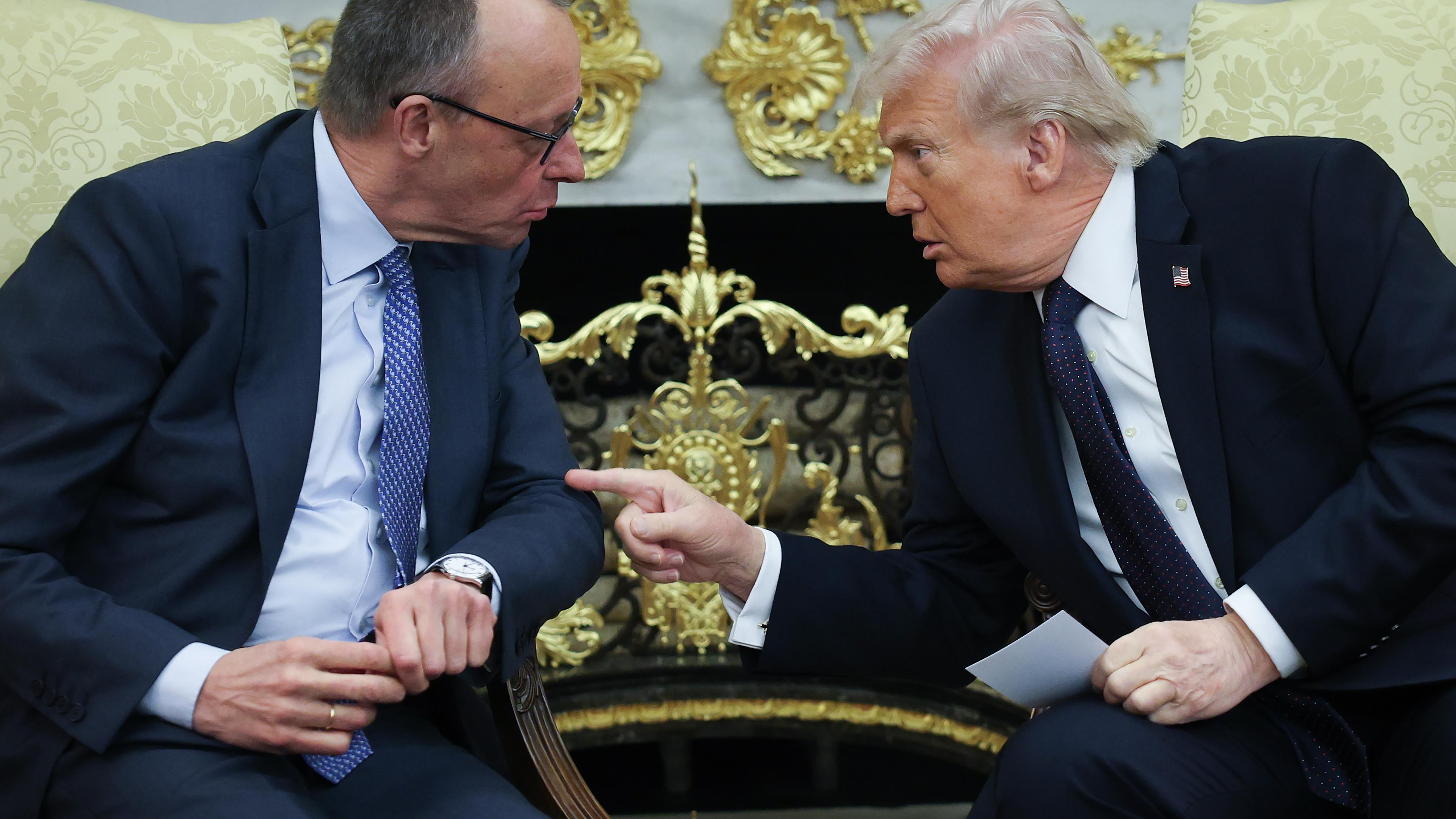
Trump warned he is studying a reduction of U.S. troops in Germany, where 36,436 active-duty personnel were stationed as of December 2025, while escalating criticism of Chancellor Merz over Germany’s role in the Iran conflict. The dispute highlights rising transatlantic tensions and follows Merz’s warning that the Strait of Hormuz disruption is already hurting European markets. The article also notes the U.S.-Iran conflict has cost at least $25 billion, underscoring continued geopolitical and energy-market risk.
The market implication is less about the rhetoric and more about the probability of a transatlantic funding and force-posture repricing. If Washington even partially trims Germany-based personnel, the first-order beneficiaries are European defense primes and local infrastructure/security contractors that would absorb accelerated procurement and base-support spending, while the losers are U.S. legacy defense names with Europe-heavy sustainment exposure and any cyclical German industrials that depend on a stable U.S. security umbrella to anchor capital allocation.
The second-order effect is on energy and FX: a more fractured U.S.-Europe line on the Iran file raises the odds of a longer-duration Strait of Hormuz premium, which tends to leak into European input costs faster than U.S. headline inflation. That widens the policy divergence already embedded in EUR/USD, because Europe is simultaneously more exposed to imported energy shocks and less able to offset them with fiscal ease; in a risk-off tape, that is usually EUR-negative and supportive of USD strength on a 1-3 month horizon.
The key catalyst is whether the troop-review language becomes a concrete redeployment plan or remains negotiating leverage. A real drawdown would likely steepen the near-term European defense spending curve, but it could also compress the geopolitical risk premium if it forces a faster cease-fire or burden-sharing deal; the consensus may be overpricing only the first scenario and underpricing the possibility of a diplomatic off-ramp within weeks if market stress in Europe intensifies.
For now, this is a classic convexity setup: headlines can keep worsening for days, but the tradeable move should be realized only if energy transit risk persists or base-realignment decisions surface. The cleanest expression is to own beneficiaries of European rearmament while fading vulnerable German cyclicals and using FX as the macro hedge.
AI-powered research, real-time alerts, and portfolio analytics for institutional investors.
Request DemoOverall Sentiment
mildly negative
Sentiment Score
-0.20
