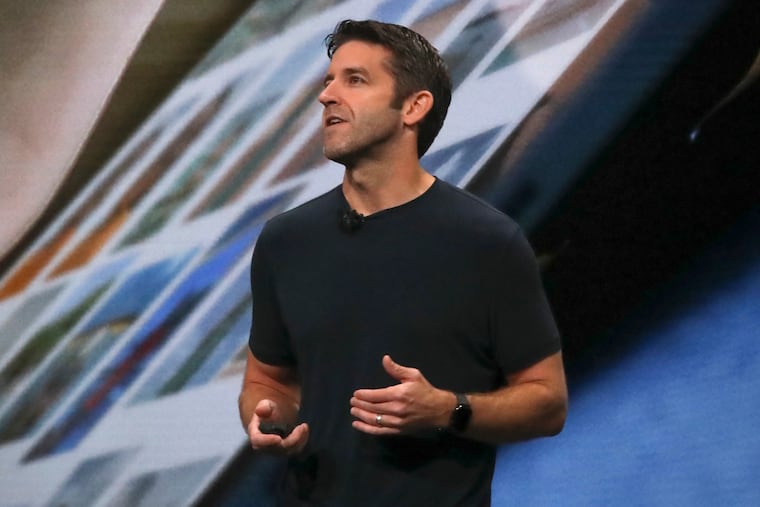
Apple’s incoming CEO, John Ternus, is slated to take the top role on Sept. 1, marking a leadership transition at the company. The article highlights his 25-year Apple career, Penn engineering background, and product engineering track record, but contains no financial results or operational guidance. Overall impact is limited and largely informational.
This is a governance signal more than a near-term operating catalyst: Apple is effectively choosing continuity with an operator who has spent his career inside the product and hardware stack, which lowers execution risk but also caps the odds of a sharp strategic reset. For holders, that usually supports the multiple in the first 1-2 quarters because it reduces succession uncertainty and reinforces confidence in capital allocation discipline, but it does not by itself unlock a new growth vector.
The second-order effect is on the ecosystem, not just AAPL. A hardware-first CEO tends to preserve Apple’s tight integration advantages, which is incrementally negative for low-end Android OEMs and peripheral suppliers that rely on more aggressive platform opening or product experimentation. The bigger implication is that Apple likely stays focused on margin defense, supply-chain control, and incremental device upgrades rather than betting the company on a single AI or services pivot; that reduces left-tail risk but can slow narrative re-rating if the market was hoping for a more transformative change.
TSLA is only tangentially affected through the broader read-through on high-profile engineering leadership: investor attention may temporarily rotate toward what “technical operators” can accomplish inside large consumer hardware franchises. That comparison is mostly noise for fundamentals, but it can matter sentimentally if the market starts paying a premium for execution credibility over visionary branding. The contrarian miss here is that a smooth transition can be bearish for option buyers expecting a volatility event; the overhang may be resolved without enough change to justify a breakout.
Risk catalyst timeline is months, not days: the market will focus on first product cycles under the new regime, especially whether hardware cadence and margin structure stay intact through the next 2-3 launch windows. If Apple starts signaling slower innovation or defensive positioning in AI/device upgrades, the stock could de-rate versus mega-cap peers; if instead management uses the transition to accelerate product differentiation, the multiple can expand modestly from stability alone.
AI-powered research, real-time alerts, and portfolio analytics for institutional investors.
Request TrialOverall Sentiment
neutral
Sentiment Score
0.10
Ticker Sentiment
