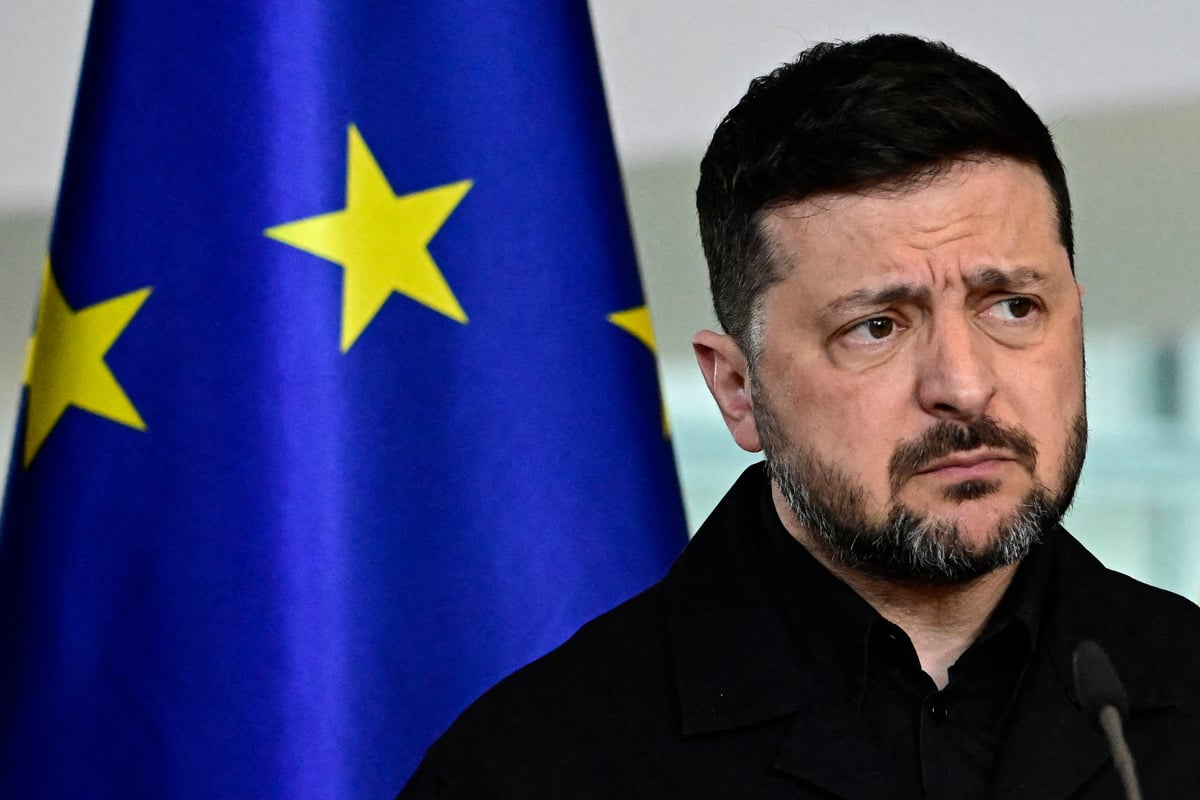
Zelensky said US peace negotiators "have no time for Ukraine" because of the war in Iran, warning that reduced US focus could weaken pressure on Putin and slow stalled talks to end the war in Ukraine. He also said US arms deliveries are becoming "a big problem," especially for air defense materials, as US-led negotiations have not met since February. Germany and Ukraine announced a strategic defense partnership during Zelensky's visit to Berlin.
The market implication is not just a slower Ukraine peace process; it is a deterioration in allocation priority. When Washington is forced to triage multiple geopolitical fronts, the marginal loser is usually the theater with the weakest domestic political constituency and the longest duration of support, which argues for a more brittle flow of Western military aid over the next 1-3 quarters. That matters most for air-defense stocks and European primes tied to replenishment cycles, because the funding risk is less about immediate demand and more about the timing of contract awards and delivery schedules.
The second-order effect is a subtle tightening of European strategic autonomy trade-offs. Germany’s defense partnership rhetoric is supportive for continental defense names, but it can also accelerate procurement bias toward domestic/EU suppliers at the expense of US export share if transatlantic reliability is perceived as less certain. In that setup, the winners are companies exposed to European air defense, munitions, and ISR capacity expansion; the losers are platforms dependent on foreign financing continuity or US political bandwidth.
From a catalyst standpoint, the next 2-8 weeks matter more than the next year: any further escalation involving Iran could keep Washington distracted and prolong the funding gap, while a de-escalation or a new aid package would reverse the near-term risk premium. The contrarian view is that Ukraine support is already underpriced as a political variable; if Europe fills even 20-30% of the shortfall faster than expected, the selloff in defense supply-chain names could be overdone. The better risk/reward is to express this through relative value rather than outright direction, because the sector remains structurally supported even if near-term headlines are negative.
AI-powered research, real-time alerts, and portfolio analytics for institutional investors.
Request TrialOverall Sentiment
moderately negative
Sentiment Score
-0.35
