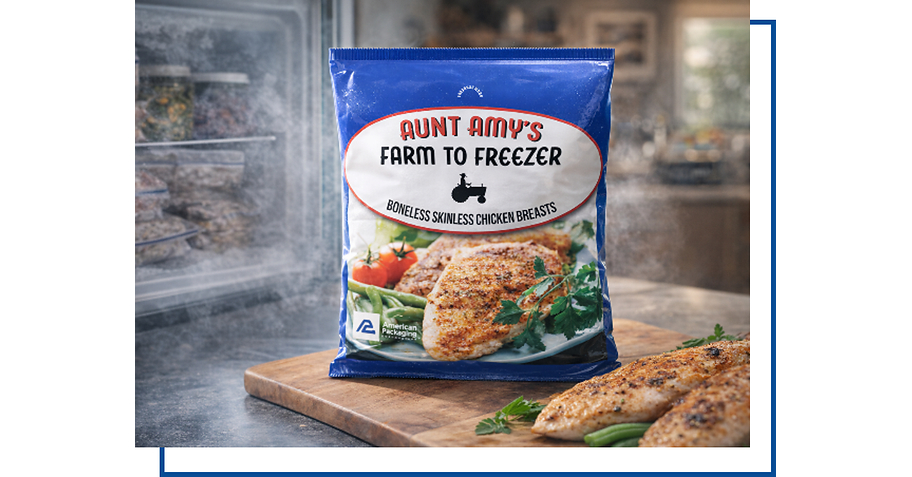
American Packaging (APC) highlighted new flexible frozen-food packaging capabilities, including award-winning printing, cold/abrasion resistance, anti-fog windows, easy-open/reclose features, microwave steam-venting options, and RE® sustainable formats (Design for Recycle, Renewable Content, and PCR content). The release is promotional with no financial results, guidance, or measurable impact provided.
This is more of a marketing signal than a fundamental inflection, so the right read-through is competitive positioning, not immediate revenue. The main economic winner is the flexible-packaging stack that can sell graphics + functionality as a bundle: that supports price/mix for converters with specialty laminates and printing, while commodity film suppliers remain exposed if brands push back on cost. For PKG specifically, the direct read-through is weak because its core exposure is not the same end-market architecture; any impact is second-order via broader packaging budget allocation rather than a share-gain/loss event.
The cleaner mechanism is defensive margin protection for frozen food brands: better packaging can slow private-label commoditization and support shelf conversion, but it also raises COGS, so the uplift is more likely to accrue to packaging vendors than to food producers. If retailers are under margin pressure, they will accept the design uplift only where it improves turns or reduces waste, which means adoption should be uneven and SKU-specific rather than a category-wide step-up.
Contrarian view: the ESG angle is probably being overstated versus the practical economics of freezer-aisle conversion. "Sustainable" formats only matter if they preserve seal integrity, reduce food waste, or support price premiums; otherwise procurement teams will trade them off against resin inflation and line-speed issues. There is no obvious near-term catalyst here, so the better setup is to wait for 2Q commentary on mix/pricing before expressing a view.
AI-powered research, real-time alerts, and portfolio analytics for institutional investors.
Overall Sentiment
neutral
Sentiment Score
0.05
Ticker Sentiment
