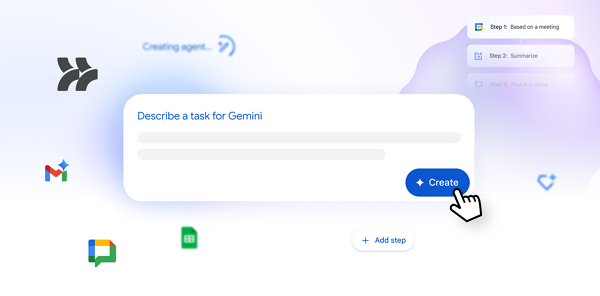
Google has published an open-source command-line interface for Workspace on GitHub that enables AI agents and MCP-compatible tools to access core Workspace services (Gmail, Drive, Docs). The release includes integration instructions for OpenClio and broadens connectivity for apps such as the Claude desktop app, Visual Studio Code and the Gemini CLI, potentially accelerating third-party AI agent workflows and enterprise adoption of Workspace integrations.
Market structure: Google (GOOGL/GOOG) is the direct beneficiary — Workspace CLI lowers friction for AI agents (OpenClio, MCP clients) to access Gmail/Drive/Docs, increasing lock‑in and incremental Google Cloud/API demand; expect modest upward pricing power for Workspace/GCP monetization over 12–24 months and faster uptake among startups and enterprise dev teams. Losers: point collaboration vendors (Box, Slack variants) and incumbent M365 integration sellers may see slowed share gains; cybersecurity vendors see higher demand but also greater competition. Cross-asset: equity reaction should be modestly positive to GOOGL (market impact score 0.15); negligible commodity effect; low single-digit basis-point tightening in tech credit spreads if adoption accelerates; options IV for GOOGL may tick up near product announcements.
Risk assessment: tail risks include regulatory/privacy enforcement (EU/FTC fines up to low single‑digit billions) and a high‑impact security breach exposing Workspace data; probability non‑zero within 12 months and would knock 10–25% off sentiment. Immediate (days) risk: investor overreaction to PR; short‑term (weeks/months): enterprise pilots that either validate or stall adoption; long‑term (quarters/years): platform lock‑in and new MCP standards. Hidden dependencies: enterprise IAM, SIEM integration, and third‑party vendor security posture; adoption hinges on audit/compliance proofs and SSO integrations.
Trade implications: tactical: overweight GOOGL via equity (2–3% portfolio) within 2–6 weeks to capture adoption momentum, target +15–25% in 12 months, stop‑loss −8%. Options: implement a low‑cost directional call spread (3‑month, buy 5% OTM call / sell 12% OTM call sized to 1–2% notional) to limit spend; hedge regulatory tail with a 6‑month 7–10% OTM put (small size). Pair trade: long GOOGL (1.5%) / short MSFT (1.0%) over 6–12 months to play relative Workspace traction, rebalance on earnings/certification news.
Contrarian angles: consensus underestimates regulatory and security friction — enterprises may delay full integration until audited proofs exist, slowing monetization to 12–18 months. Reaction may be underdone in cybersecurity names (CRWD, ZS) that will see genuine demand — consider 1–2% tactical overweight in next 3–6 months. Historical parallel: API openings (e.g., Gmail/Maps) drove long lead times between developer excitement and revenue; expect a similar ramp, not instant monetization. Monitor three leading catalysts: Google I/O/Workspace roadmap (next 30–90 days), first major enterprise customer wins (next 90–180 days), and any public security incident (always a 0–12 month watch).
AI-powered research, real-time alerts, and portfolio analytics for institutional investors.
Request TrialOverall Sentiment
mildly positive
Sentiment Score
0.25
Ticker Sentiment
