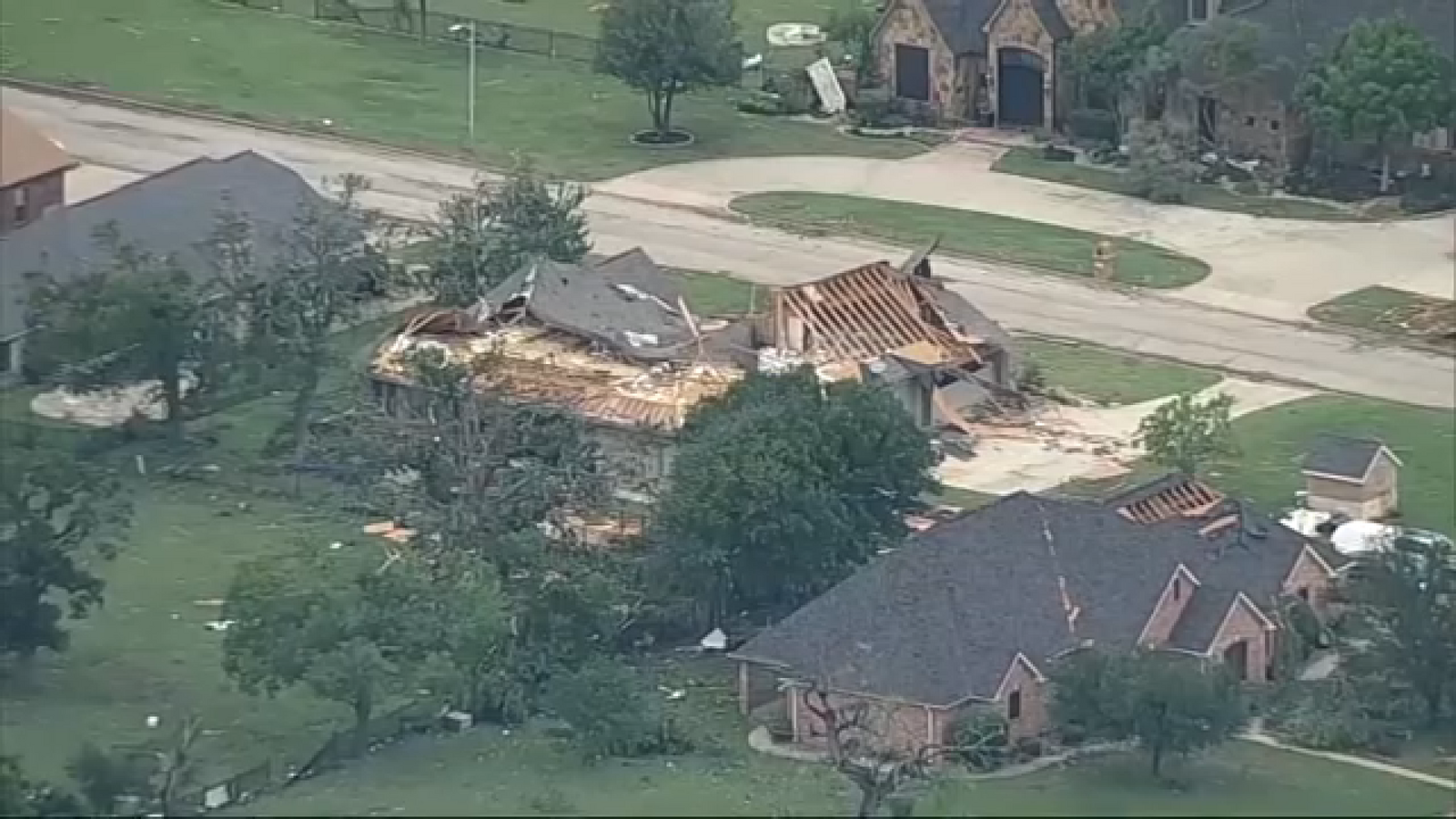
Severe thunderstorms damaged homes, businesses, and industrial facilities in Mineral Wells, Texas, sending at least 2 people to the hospital and displacing families. The city declared a local state of disaster and imposed a 10 p.m. curfew, while Ventamatic said its facility will be closed Wednesday due to severe damage and downed power lines. The storms were part of a broader system threatening hail larger than 2 inches, damaging winds, and possible tornadoes across Texas, Arkansas, and Mississippi.
The immediate market read is less about the local damage and more about the supply-chain interrupt embedded in repeated severe-weather clusters across the South/Central U.S. Over the next 1-2 weeks, the first-order beneficiaries are service and repair names tied to power restoration, roofing, building materials, and industrial cleanup; the losers are the small-cap, single-site manufacturers and regional distributors that have little redundancy. The second-order issue is inventory availability: even modest wind/hail events can create localized shortages in transformers, copper, roofing shingles, HVAC units, and plywood, which tends to lift pricing power for national suppliers before end-demand shows up in reported revenue.
The more important risk is that this is not an isolated event but part of a rolling weather regime that can hit logistics corridors multiple times in a quarter. That raises the probability of temporary bottlenecks in regional freight, higher claims for property/casualty carriers, and margin compression for retailers and contractors who must expedite replacement goods. For housing-related equities, the near-term volume impulse from repairs is usually offset by deductible friction and labor scarcity, so the cleaner trade is not "homebuilders up on rebuilds" but rather insurers and retailers absorbing the cost of churn.
Consensus may underappreciate how quickly these events translate into capex deferrals for small businesses and localized industrial production, which can bleed into regional banks and lease-heavy REITs with concentration in damaged counties. If outages last multiple days, the revenue hit is immediate; if the damage is structural, the real earnings risk comes over the next 1-2 quarters via tenant defaults, higher insurance renewals, and delayed equipment replacement. The overreaction tends to be strongest in low-float local names; the underreaction is in upstream suppliers with broad geographic exposure that can quietly take share as customers standardize around larger, more resilient vendors.
AI-powered research, real-time alerts, and portfolio analytics for institutional investors.
Request DemoOverall Sentiment
strongly negative
Sentiment Score
-0.72
