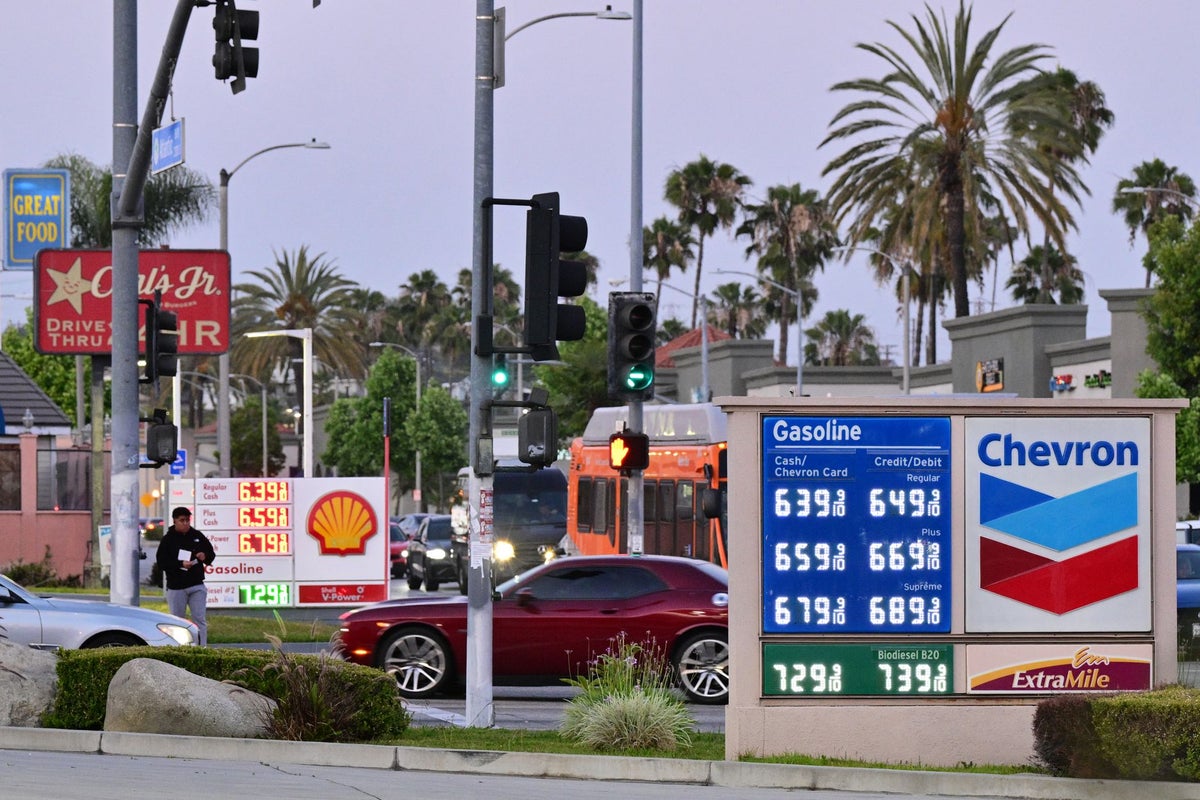
Nearly half of Americans are cutting spending or changing behavior as U.S. gasoline prices hit $4.43 per gallon, up from $3.15 a year ago. The poll shows 44% are driving less, 42% have reduced household expenses, and 34% have altered travel plans, signaling demand pressure across consumer and travel categories. The article frames the spike as a geopolitical shock tied to Trump’s Iran war, with analysts warning gas prices could rise further and broader energy disruption may intensify.
The immediate macro transmission is not just higher gasoline CPI; it is a forced reallocation out of discretionary spend into necessities, which tends to hit low- to middle-income cohorts first and with the highest marginal propensity to cut. That creates a faster-than-expected earnings air pocket for discretionary retail, restaurants, regional airlines, and travel intermediaries, while benefiting discount channels, auto repair, and select domestic services that are less fuel-intensive. The key second-order effect is that management teams will start guiding conservatively before hard data rolls over, so the equity market can price the demand hit well ahead of the next consumer prints.
The market is also underestimating the asymmetry between a headline de-escalation and a functional normalization of energy logistics. Even if the conflict narrative improves, refined product pricing can remain sticky longer than crude because shipping, insurance, and inventory rebuilding take weeks to unwind. That means the near-term risk is not an oil spike alone, but a lagged squeeze on margins for transport-heavy businesses and a delayed drag on real disposable income that can persist into the next quarter.
The contrarian angle is that some of the worst-case consumer damage may already be visible in sentiment, but not yet fully reflected in earnings estimates. If gasoline stabilizes rather than continues higher, the most crowded bearish trades in travel and discretionary may squeeze sharply because investors are extrapolating a straight-line demand collapse. The cleaner expression is to short businesses with high fuel pass-through friction and weak pricing power, not the broad consumer complex outright.
Politically, the setup increases the probability of policy responses that are supportive for energy but disruptive for growth: strategic inventory actions, diplomatic signaling, or pressure on refiners and shippers. Those interventions can cap the oil upside over a 1-3 month horizon, but they do little to repair consumer confidence quickly, which is why the equity pain can outlast the commodity move.
AI-powered research, real-time alerts, and portfolio analytics for institutional investors.
Request DemoOverall Sentiment
strongly negative
Sentiment Score
-0.60
