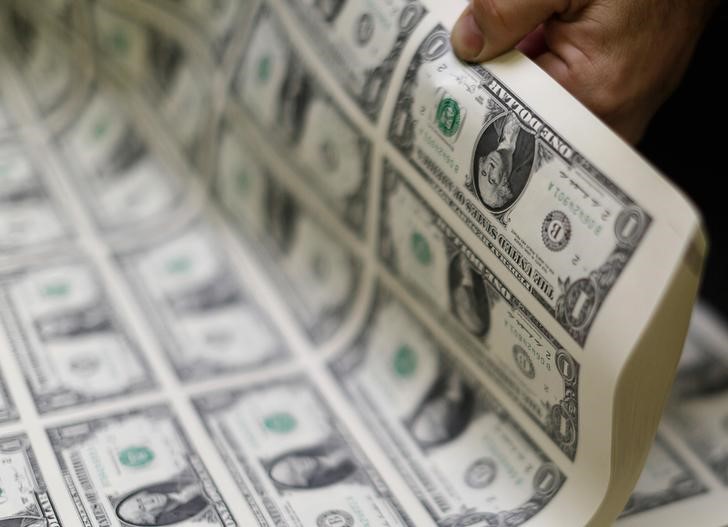
Goldman Sachs says the dollar’s near-term strength is being supported by a wider global growth gap, with U.S. growth holding up better while forecasts were cut more sharply outside the U.S. The bank warns that ongoing Middle East disruptions still pose upside risks to commodity and energy prices, which could pressure European currencies and current-account balances. It also notes that stronger-than-expected activity and flexible supply chains may be delaying the anticipated broad U.S. dollar depreciation.
The market is likely underestimating how asymmetric a “mild” supply shock can be for FX: when the first-order growth hit is delayed, the second-order current-account and terms-of-trade effects matter more, and those tend to show up first in Europe and commodity importers rather than in the U.S. That argues for continued relative underperformance in EUR and GBP versus USD over the next 1-3 months, even if the macro data look less fragile than feared. The key insight is that elasticity buys time, not immunity; once inventories normalize, the price impulse can reassert quickly.
The bigger positioning implication is that cyclical FX may have become too cheap for the wrong reason. If global activity holds up better than expected, the “safe haven dollar” bid can fade abruptly, but that would likely benefit high-beta commodity-linked currencies before it benefits Europe. AUD is the cleanest lagging beneficiary if China doesn’t roll over, while NOK is more sensitive to energy pass-through and should outperform on any renewed oil/gas squeeze; EUR remains the weakest link because its external balance is the most vulnerable to persistent energy costs.
For equities, the article is more about relative winners than outright macro beta. Energy-intense industries and European cyclicals face margin risk over a 1-2 quarter horizon, while U.S. dollar earners and firms with overseas cost bases get a hidden operating tailwind if the dollar stays firm. The contrarian risk is that markets are overpricing U.S. resilience and underpricing a late-cycle global inventory drawdown; if that happens, the dollar leg can unwind faster than consensus expects, creating a sharp short-covering rally in cyclicals and FX carry names.
AI-powered research, real-time alerts, and portfolio analytics for institutional investors.
Overall Sentiment
mildly negative
Sentiment Score
-0.15
Ticker Sentiment
