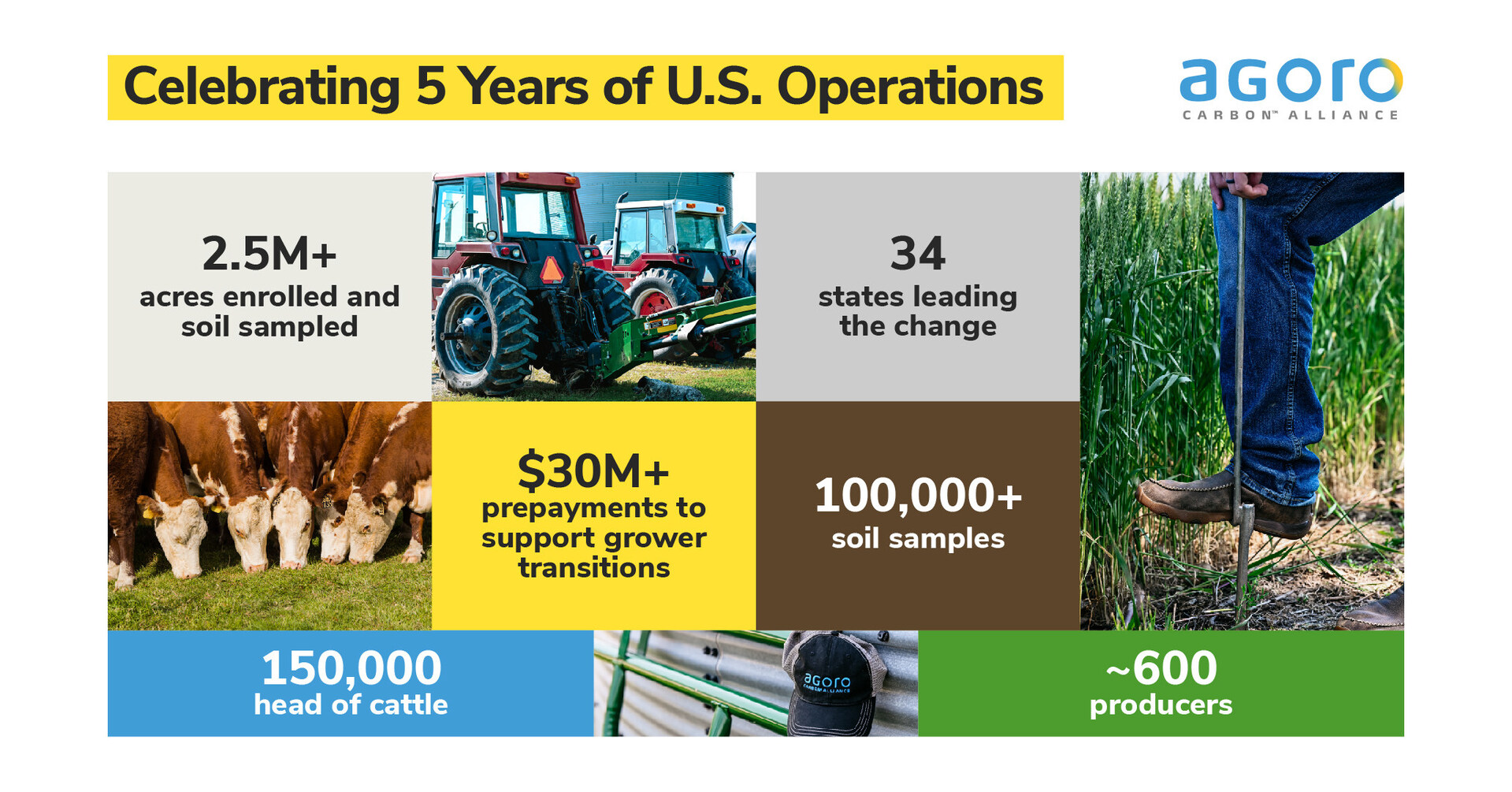
Agoro Carbon highlights expansion to 34 states with 600+ producers and 2.5M acres, and reports paying $30M+ in prepayments to farmers/ranchers. The firm secured a 12-year agreement with Microsoft for 2.6M soil-based removal credits under Verra VCS (VM0042) backed by rigorous MRV and a fixed pricing/structured payment model. While largely promotional, the deal and scale support a modest positive signal for demand in durable, scientifically verified carbon removals.
This is less a revenue event for Microsoft than a signal that procurement standards in voluntary carbon are tightening around quality rather than volume. That matters because the market is likely to bifurcate: a small set of MRV-heavy developers with durable supply and auditability should capture the premium, while low-credibility project aggregators face pricing pressure and higher churn. For listed ag-exposure names, the second-order effect is subtle: if regenerative acreage keeps growing, it can reduce input intensity over time, but the current scale is still too small to move fertilizer or seed demand in the next 1-3 quarters.
The main near-term risk is reversal on methodology scrutiny. Soil-carbon accounting has a high reversal/measurement-basis risk, so any adverse ruling on sampling, permanence, or additionality would hit the entire nature-based complex faster than it hits Microsoft. Over 6-18 months, the bigger catalyst is whether other hyperscalers copy this procurement model; if they do, the price floor for high-integrity removals rises and the market starts valuing contracted supply like an infrastructure annuity rather than an ESG sidecar.
Contrarian view: the consensus may be overrating how much this changes Microsoft’s economics and underrating how selective buyers will become. A few long-dated contracts do not prove a scalable demand wave; they may simply reflect a willingness to pay up for reputational insurance. If engineers and auditors keep favoring durable engineered removals over nature-based credits, the current optimism around soil carbon could prove premature despite improving headlines.
AI-powered research, real-time alerts, and portfolio analytics for institutional investors.
Overall Sentiment
mildly positive
Sentiment Score
0.35
Ticker Sentiment
