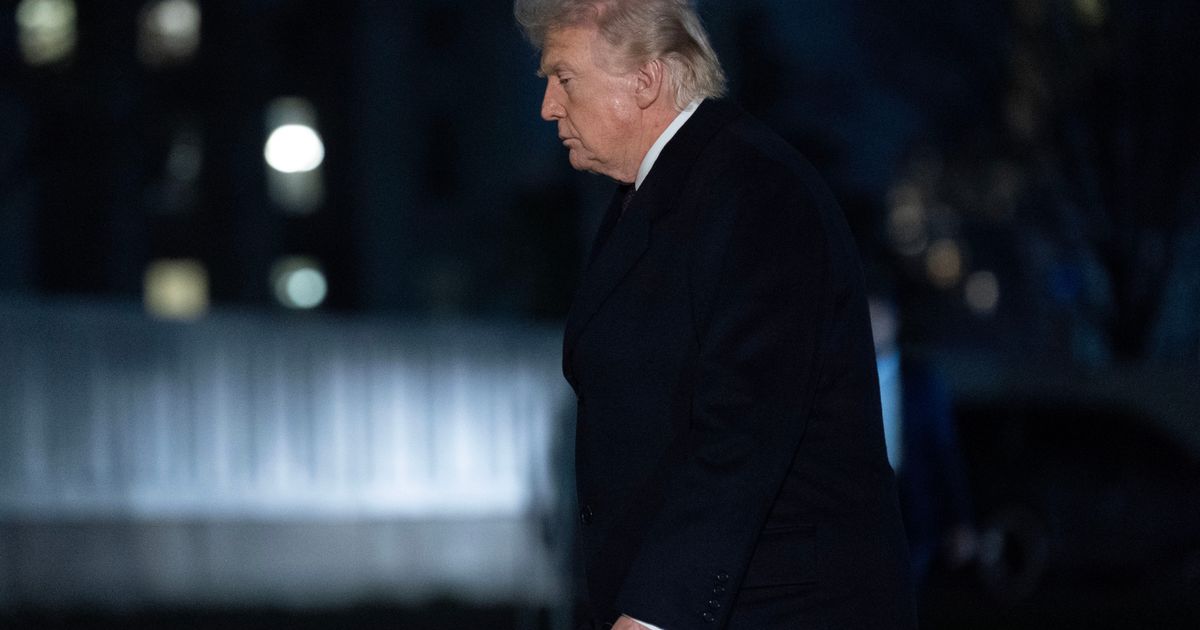
President Trump may delay his end-of-month trip to China while pressing Beijing to join a naval coalition to reopen the Strait of Hormuz; the administration has spoken to “about seven” countries about military support. The Iran war has sent oil prices sharply higher, lifting pump prices for U.S. consumers and increasing global market risk, while China has lowered its 2026 growth target to 4.5%–5.0%. A cancelled or postponed visit would raise the risk of renewed U.S.-China trade tensions despite the current tariff truce, increasing near-term policy and market uncertainty.
Immediate market mechanics: the headline-driven re-pricing of Strait-of-Hormuz tail risk is a volatility amplifier for crude and marine insurance spreads — a sustained disruption scenario can push Brent toward $100–120/bbl within 2–6 weeks, materially widening upstream E&P EBITDA and compressing jet-fuel margins for carriers by ~5–8% per $10 move. Energy producers with low decline curves and high free-cash-flow sensitivity (US onshore) capture most of the upside within months, while service providers face lumpy capex timing that delays margin realization.
Geopolitical second-order: conditional diplomatic theatre (high-profile visit uncertainty) raises the probability of trade-policy blips that hurt Chinese export sentiment and the yuan; a ~2–3% CNY move can slow capital goods orders and accelerate supply-chain re-shoring conversations — a multi-quarter process that benefits automation, inland logistics, and select industrials while hurting port-centric exporters and container lines in the near term. Insurance and freight-rate squeezes also redistribute cash flows from commodity buyers to specialty insurers and owners of very-large crude carriers (VLCCs).
Risk envelope and reversals: binary outcomes dominate near term — a public Chinese commitment to de-escalate or coordinated SPR/strategic insurance solutions can unwind the oil risk premium in 2–8 weeks; conversely, an escalation or failed coalition could create a 3–12 month stagflation regime, pressuring equities and pushing headline inflation and yields materially higher. Position sizing should reflect this binary payoff: favor defined-loss option structures and asymmetrical pairs rather than naked directional exposure.
AI-powered research, real-time alerts, and portfolio analytics for institutional investors.
Request DemoOverall Sentiment
mildly negative
Sentiment Score
-0.25
