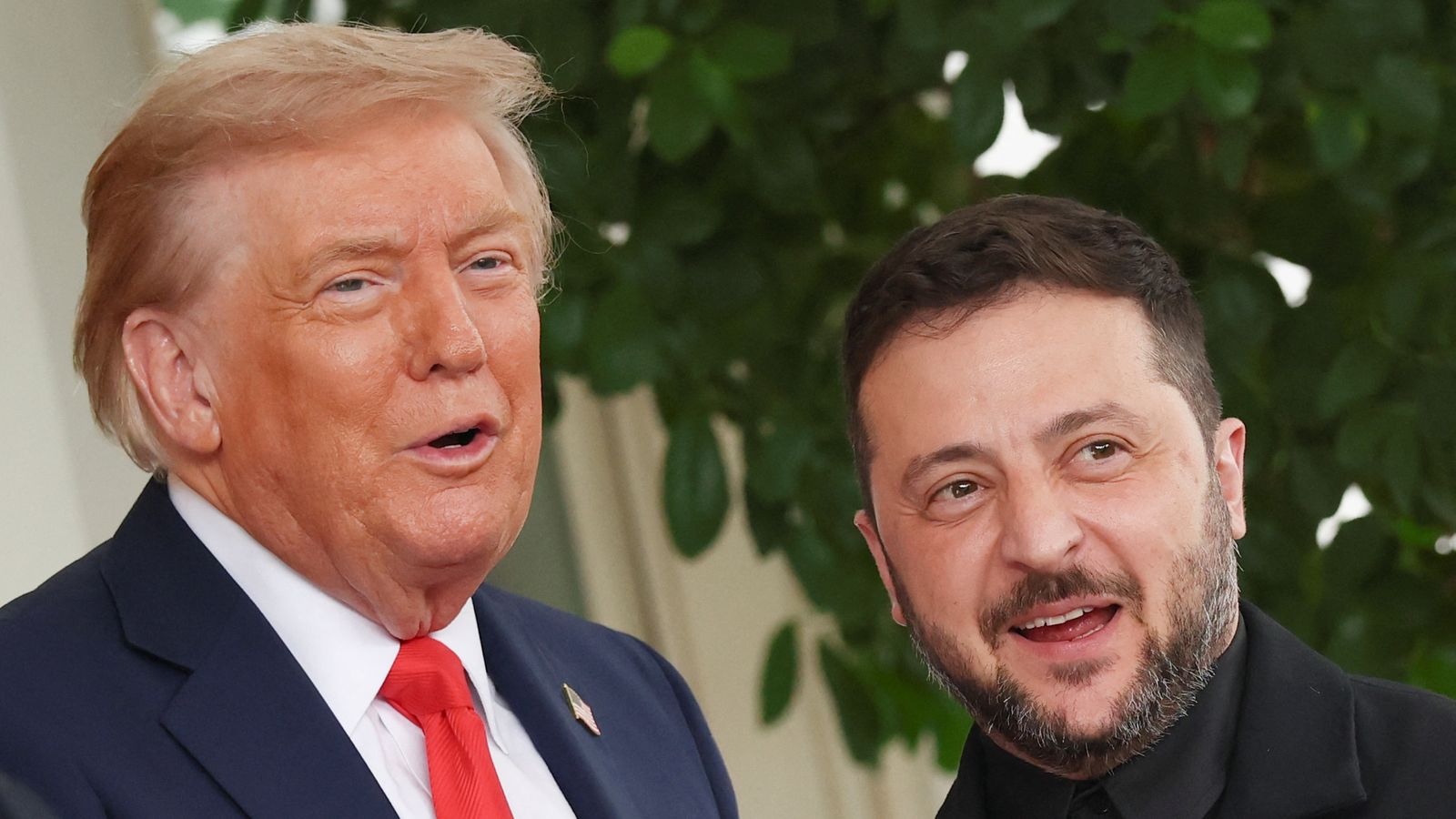
Recent White House talks involving President Trump, Ukrainian President Zelenskyy, and European leaders advanced peace discussions for the Ukraine war, notably with the US promising security guarantees for Kyiv. While Trump is credited with moving peace talks further than previously seen, significant obstacles remain, including Russia's preference for a deal before a ceasefire versus Ukraine and Europe's reverse stance. Additionally, unresolved complexities surround the enforcement and scope of future security guarantees, indicating a highly uncertain path to resolution despite the initial progress.
Recent White House discussions involving the US, Ukraine, and European leaders have advanced peace negotiations to their furthest point since the war began, primarily centered on a US commitment to provide security guarantees for Kyiv. However, this progress is significantly undermined by a fundamental impasse: Russia insists on a political settlement prior to a ceasefire, whereas Ukraine and its European allies demand the reverse sequence. The negotiations are further complicated by President Trump's negotiating posture, which is characterized as 'playing both sides' and being susceptible to influence, introducing a high degree of unpredictability. While the promise of US security guarantees is a key development, their practical application remains undefined, with 'potentially insoluble' issues surrounding the triggers for a military response and the scope of allied involvement, casting substantial doubt on the feasibility of a durable agreement.
AI-powered research, real-time alerts, and portfolio analytics for institutional investors.
Request DemoOverall Sentiment
mildly negative
Sentiment Score
-0.25
