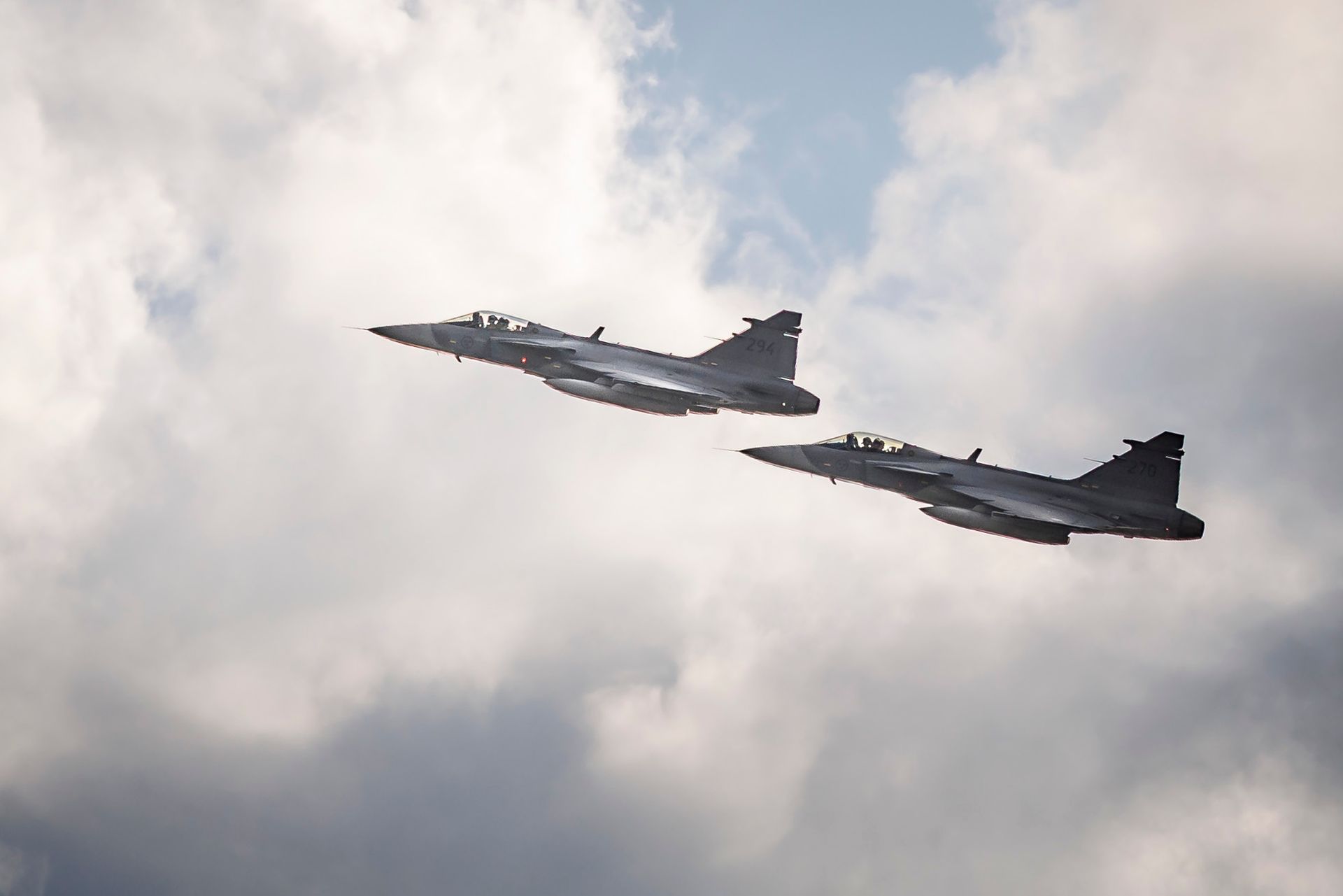
Sweden said it will transfer 16 used Saab JAS 39 Gripen C/D fighter jets to Ukraine and support procurement of up to 20 Gripen E aircraft, with E/F financing tied to a planned €2.5 billion EU Ukraine Support Loan. Deliveries of the older jets could begin in early 2027, while newer Gripen E deliveries may start by 2030, pending negotiations and export approvals. The package expands Ukraine’s Western air capability and marks Sweden’s largest military aid package to date.
This is less a near-term battlefield change than a multi-year signal that Europe is underwriting a higher-capability Ukrainian air force. The important second-order effect is procurement standardization: a Gripen-heavy mix would reduce Ukraine’s dependence on a patchwork of Western training, spare parts, and weapons pipelines, which is where most airpower programs stall. That favors Saab’s ecosystem and selected European munitions/electronics suppliers more than it benefits the aircraft headline itself.
The near-term operational uplift is modest because the first meaningful impact depends on pilot throughput, ground crew training, hardened basing, and export approvals. The market is likely underestimating the bottleneck on sustainment rather than airframes: the value accrues to maintenance, mission systems, EW integration, dispersal infrastructure, and munitions stocks over the next 12–36 months. If Ukraine can actually exploit short-field operations and rapid turnaround, the bigger loser is Russian strike economics, which become more expensive as air defenses are forced to chase smaller, more mobile targets.
Contrarian view: the stock-market instinct to buy 'fighter jet news' is probably wrong if it assumes immediate revenue. The real monetization is delayed and lumpy, and Sweden’s promise does not guarantee volume or timing; any political slippage, export-control friction, or battlefield escalation that damages airbases could push deliveries rightward. The more interesting trade is on a sustained European rearmament cycle, where this announcement is another datapoint supporting multi-year spending on ISR, EW, air defense, and munitions rather than a one-off Saab uplift.
AI-powered research, real-time alerts, and portfolio analytics for institutional investors.
Overall Sentiment
mildly positive
Sentiment Score
0.45
