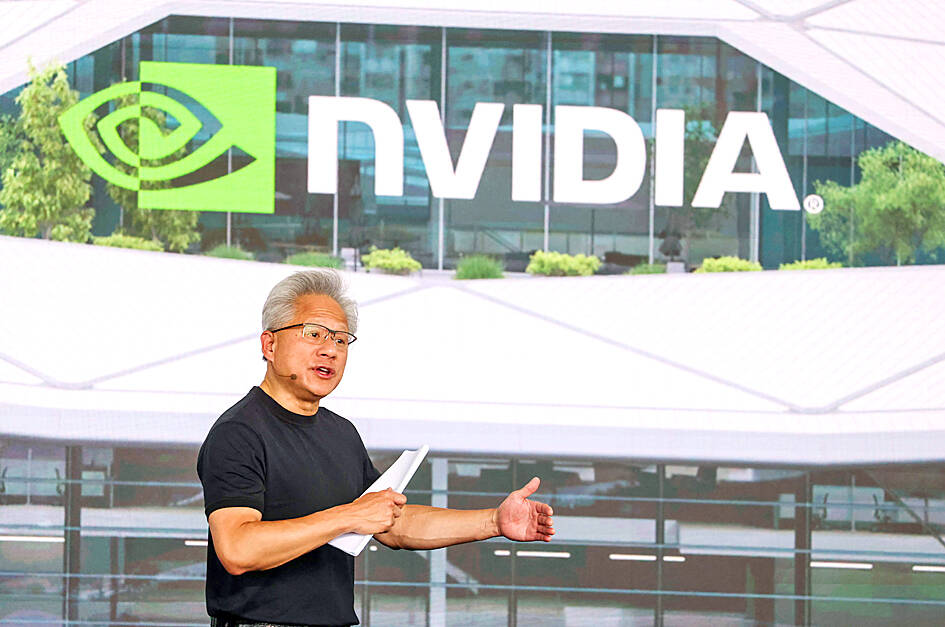
Nvidia CEO Jensen Huang said the company is spending about US$150 billion a year in Taiwan, up from US$10 billion to US$15 billion five years ago, underscoring Taiwan’s central role in the AI supply chain. Nvidia also plans to grow its Taiwan workforce to about 4,000, with construction on its new Taipei headquarters expected by year-end and operations targeted for 2030. The article also highlights a Taiwan HSR service disruption, drone-industry expansion plans, and ongoing Taiwan-China coast guard tensions near the Pratas Islands.
Nvidia is effectively anchoring itself to Taiwan’s industrial base, which should tighten the moat around the AI supply chain rather than merely add capacity. The first-order read is positive for NVDA, but the second-order winner is the Taiwanese ecosystem: advanced packaging, board/system integrators, power infrastructure, and any firm with scarce engineering bandwidth. That concentration also raises switching costs for hyperscalers; once design, packaging, and assembly are co-located, the economics favor Taiwan even if geopolitics worsens.
The underappreciated issue is power. If Nvidia’s Taiwan footprint scales as implied, the binding constraint shifts from chip availability to electricity, grid reliability, and permitting. That creates a multi-year capex cycle for Taiwanese utilities, transformers, cooling, and industrial power equipment, while increasing the value of firms that can shorten deployment timelines. It also means any headline about energy shortages, grid stress, or local opposition is a direct risk to the AI buildout narrative over the next 6-24 months.
For NVDA, this is bullish on the strategic narrative but already partly priced in at the ecosystem level; the more interesting alpha is in suppliers whose order books have not fully reflected the implied localization of AI manufacturing. The contrast with the HSR malfunction and coast guard tension is that Taiwan’s infrastructure and geopolitical resilience are now part of the AI trade itself. Any escalation around sea lanes or logistics disruption would likely hit downstream AI hardware names before it hits NVDA’s brand story.
Consensus is likely overestimating how linear this expansion is. The market tends to extrapolate AI demand while underweighting execution risk in Taiwan: land, power, labor, and political permissions can all slow the build even if demand remains strong. That creates a setup where NVDA remains a quality long, but the cleaner relative-value expression is long Taiwan industrial enablers versus expensive U.S. AI hardware proxies that depend on the same supply chain but have less direct local leverage.
AI-powered research, real-time alerts, and portfolio analytics for institutional investors.
Request DemoOverall Sentiment
moderately positive
Sentiment Score
0.35
Ticker Sentiment
