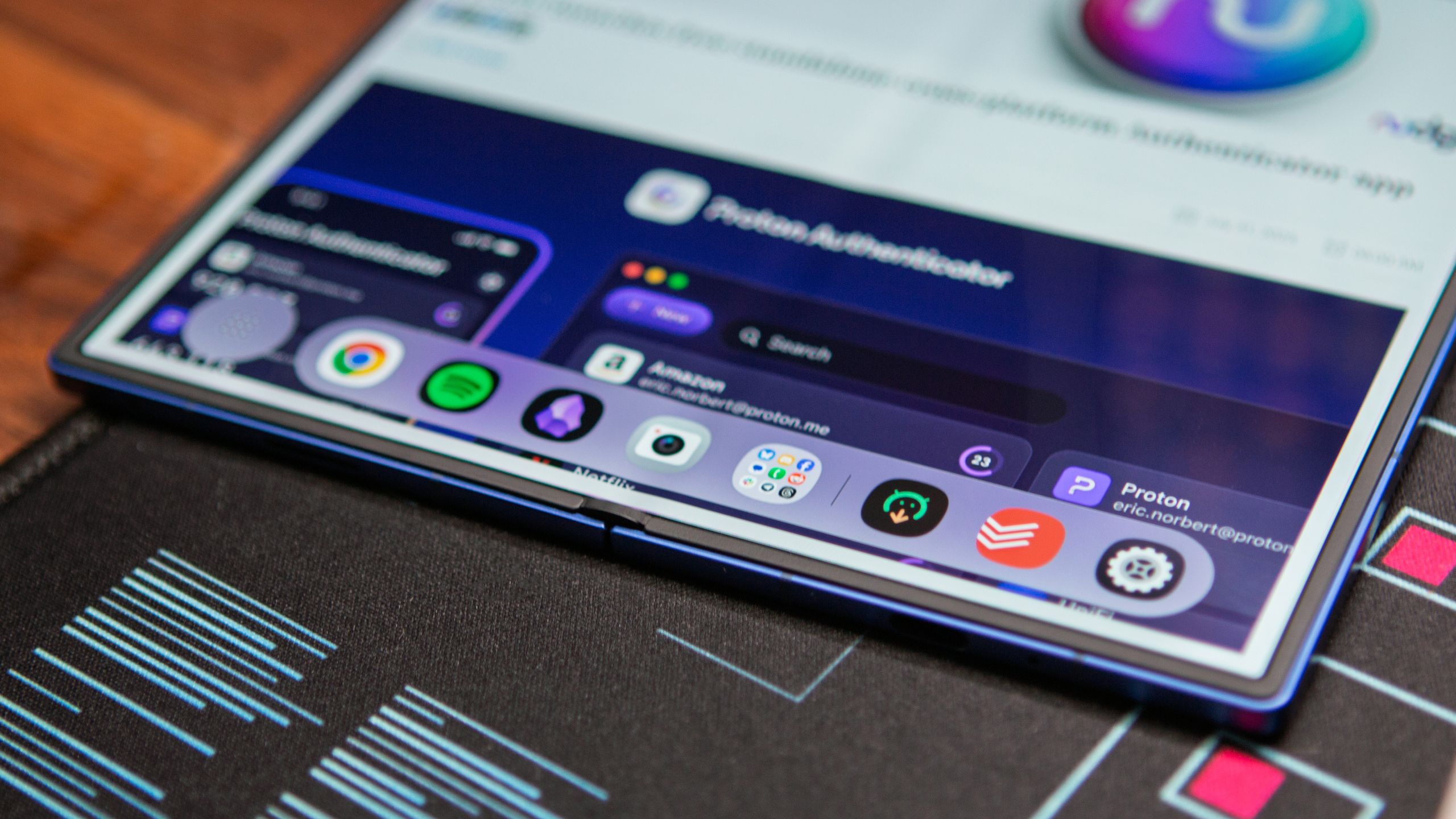
Samsung’s Galaxy Z Fold 8 is rumored to adopt a wider, shorter form factor with a larger cover screen, while a separate Galaxy Z Fold 8 Ultra may retain the slimmer design. Leaks, dummy units, and One UI 9 assets all point to Samsung testing a major foldable redesign, potentially including a tablet-like 4:3 aspect ratio when unfolded. The article is largely speculative and does not indicate any immediate financial impact.
The market implication is less about one handset launch and more about Samsung admitting the current foldable format has probably saturated its early-adopter ceiling. A wider outer display should improve everyday utility, which matters because foldables have struggled to convert curiosity into habit; if the cover screen becomes “good enough” for most tasks, Samsung can expand the addressable market beyond enthusiasts and to users trading down from premium slab phones. That would be a modestly positive read-through for panel, hinge, and assembly suppliers, but only if the design change drives meaningful unit growth rather than cannibalizing the existing Fold mix.
The second-order risk is margin compression. A thinner, wider device typically means tougher thermals, battery packaging, and camera compromises, so Samsung may be choosing form-factor differentiation over hardware excellence to defend share in China and against upcoming iPhone slim-line narratives. If the lower-cost Wide version becomes the volume model while an Ultra becomes the halo SKU, Samsung could be recreating a two-tier structure that supports ASPs but increases execution risk: any quality issue on the thinner model would hit the entire Fold franchise faster because the new shape will be more visible and more binary in consumer perception.
For component vendors, the likely winners are those with content tied to larger displays and new mechanical assemblies, while camera-centric suppliers could see a relative mix headwind if the cheaper Wide model de-speccs imaging. The broader takeaway is that Samsung may be trying to expand foldables into the mainstream premium segment before competitors lock in the category definition, which puts pressure on rival OEMs to respond within 2-3 product cycles rather than waiting for the technology to mature. That can be bullish for the category in the medium term, but it also raises the probability of a short-term launch disappointment if the market hears “less camera, more compromise” instead of “better everyday phone.”
AI-powered research, real-time alerts, and portfolio analytics for institutional investors.
Request TrialOverall Sentiment
neutral
Sentiment Score
0.10
The contrarian view is that this is not necessarily a demand breakout signal; it may be a defensive format pivot to fix a long-standing ergonomics problem without proving the category has become mass-market. If consumer response is muted, Samsung could end up with a more complicated lineup and worse economics, especially if Ultra siphons aspirational demand away from the base model. The key catalyst window is the first 30-60 days after launch: preorder mix, return rates, and carrier attachment data will tell us whether this is a genuine category expansion or just a cosmetic reset.
