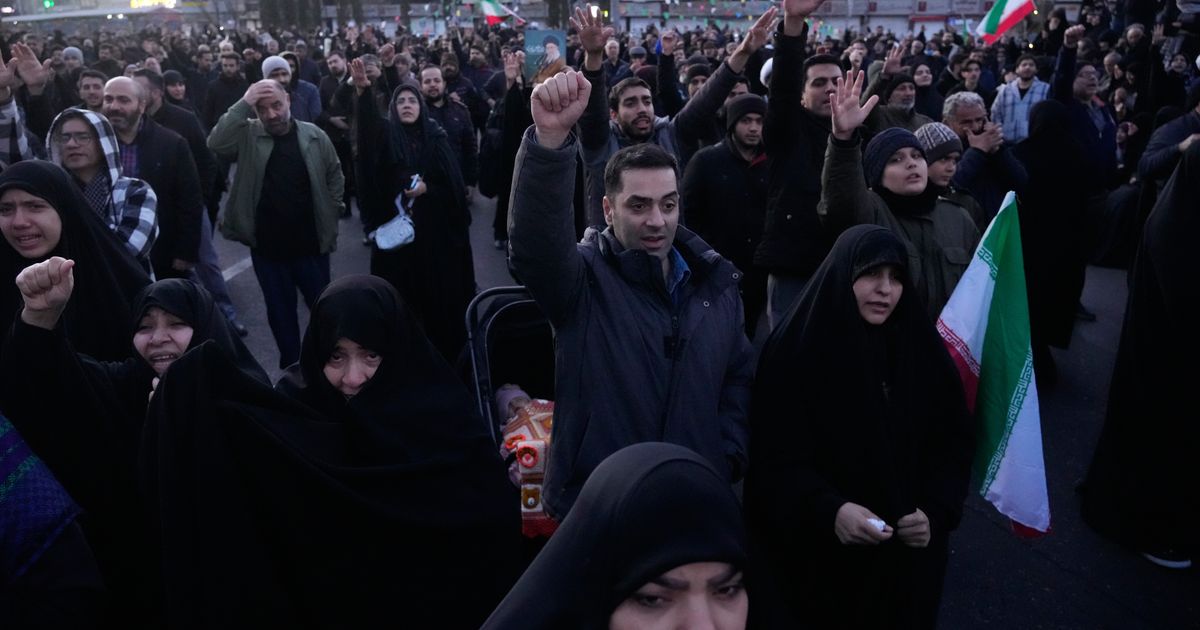
U.S. and Israeli forces conducted large-scale strikes across Iran, including B-2 strikes on ballistic missile sites and attacks on naval assets, and killed Supreme Leader Ayatollah Ali Khamenei and roughly 40 senior figures according to reports; Iranian leaders say more than 200 people have died since the strikes began. The campaign has rapidly expanded regionally—Iran fired missiles at Israel and Gulf states, militant groups struck U.S. positions, and civilian casualties were reported in the UAE, Kuwait and Bahrain—prompting threats of wider retaliation and a declared leadership transition in Tehran. For investors, the episode represents a major geopolitical shock with elevated tail-risk for oil supply and Gulf security, likely to drive risk-off flows, safe-haven bids and heightened volatility across EM assets and energy markets.
Market structure: Near-term winners are defense primes (LMT, RTX, NOC) and commodity producers (XOM, CVX) as oil, gold and insurance premia spike; losers are Gulf/EM equities, regional airlines (AAL, UAL), and tourist/retail names with MENA exposure. Pricing power shifts toward energy producers and arms suppliers; freight and marine-insurance cost pass-through will raise goods inflation by ~50–200bp in regional trade lanes if chokepoints are threatened over weeks.
Risk assessment: Tail risks include a prolonged closure of the Strait of Hormuz (Brent > $120 within 30–90 days), widescale cyberattacks on global energy/infrastructure, or NATO escalation; low-probability but portfolio-ruining scenarios justify asymmetric hedges. Immediate window (days): volatility spike (VIX +10–20pts), oil +10–25%; short-term (weeks–months): defense rerating and EM FX stress; long-term (quarters–years): higher structural defense and upstream capex.
Trade implications: Establish small, liquid directional positions and layered option hedges — buy energy/defense equity exposure while hedging with Treasuries (TLT) and gold (GLD/GDX). Pair trades: long defense vs short airlines/EM tourism; use calendar and vertical spreads to limit theta risk given uncertain conflict duration. Act within first 5 trading days for tactical moves; scale back if Brent reverts below $75 or a verified ceasefire occurs within 30 days.
Contrarian angles: Consensus may overpay defense multiples and oil spot-duration; if conflict stabilizes in 4–8 weeks, cyclicals and EM will mean-revert sharply (20–35% upside vs troughs). Historical parallels (1990/2003 Gulf spikes) show oil spikes often reverse within 2–3 months absent supply destruction — favor time-limited option structures over long-dated outright buys to avoid payoffs eroded by mean reversion.
AI-powered research, real-time alerts, and portfolio analytics for institutional investors.
Request TrialOverall Sentiment
strongly negative
Sentiment Score
-0.80
