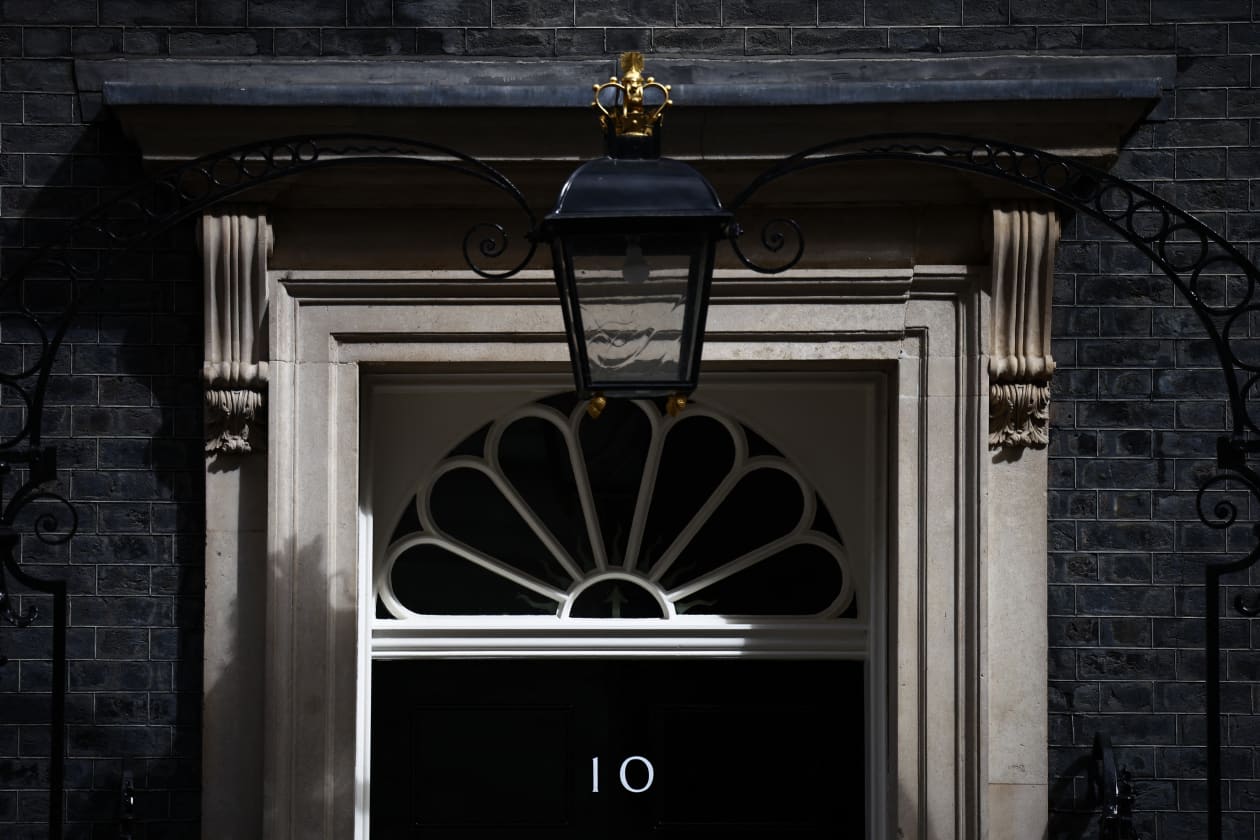
U.K. local council and mayoral election results could trigger another spike in bond-market anxiety on Friday if Labour is seen taking a battering. The article frames the risk as a fresh bout of fixed-income stress, with U.S. long-bond yields already near 5% and U.K. yields at multi-decade highs. The likely impact is more on rates and risk sentiment than on a specific asset or company.
The market is treating U.K. politics as a rates event because the real transmission channel is duration supply, not policy rhetoric. A weak showing for the governing party would likely be read as higher fiscal slippage and less political cover for spending restraint, which pushes the term premium up even if near-term growth data are soft. That matters most at the long end: when 30-year yields move first, banks, insurers, and levered real-estate balance sheets feel the pain before the broader economy does.
Second-order, this is a positioning squeeze as much as a macro story. Global fixed-income accounts have spent much of the year hiding in long duration on the assumption that disinflation would overwhelm fiscal noise; a fresh U.K. shock could force de-risking into already-thin liquidity, and the spillover is U.S. Treasury convexity and swap-spread volatility rather than just gilts. If long-bond yields in the U.S. are already near psychologically important levels, the marginal buyer becomes more price-sensitive, which increases the odds of air pockets around data releases and auction dates.
The key contrarian point is that political weakness can be disinflationary if it materially tightens spending plans, so the knee-jerk bearish rates reaction may fade quickly if the post-election messaging stays orthodox. The bigger risk is not the election result itself but what it changes in bond supply expectations over the next 1-2 quarters. If fiscal discipline is reaffirmed, the move should retrace; if not, term premium can keep grinding higher for months even without stronger inflation prints.
AI-powered research, real-time alerts, and portfolio analytics for institutional investors.
Overall Sentiment
mildly negative
Sentiment Score
-0.20
