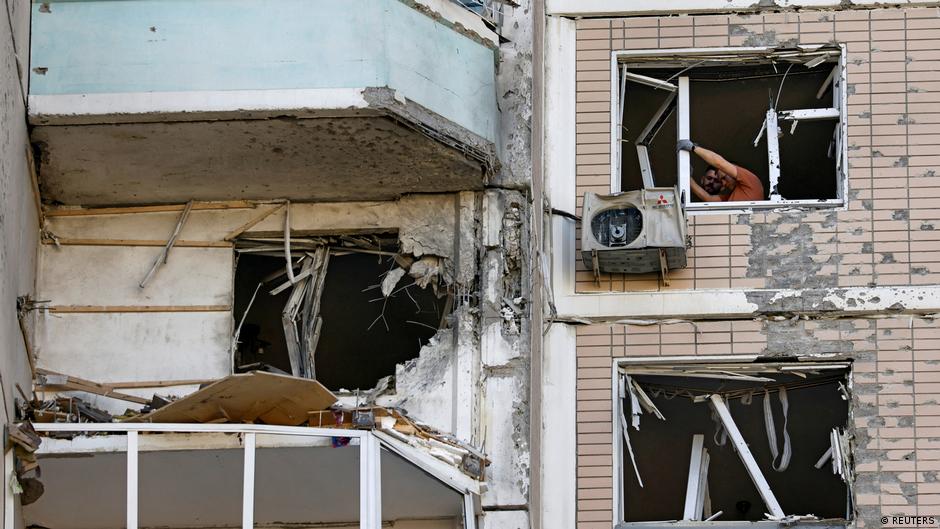
Nearly 600 Ukrainian drones targeted Russia overnight, killing four people and injuring at least 12 in the Moscow region, while Russia said it shot down 556 drones nationwide. The attack was one of the largest on Moscow since the full-scale invasion began in 2022 and follows renewed Russian strikes on Kyiv that killed 24 people. The article also notes diplomacy remains stalled, keeping geopolitical risk elevated.
This is less a one-off escalation than a signal that the conflict is migrating from a front-line attrition war to a deep-strike contest against rear-area confidence. That matters because Moscow’s comparative advantage has been volume of fire and presumed domestic immunity; when the capital region becomes a repeated target, the political premium on air defense, counter-drone, and critical-infrastructure hardening rises faster than any near-term battlefield change. The immediate market read should be a higher geopolitical-risk floor in European defense, logistics, and energy-route-sensitive assets rather than a broad commodity shock.
The second-order effect is on Russian operational economics: forcing high-value air-defense assets to defend a much larger footprint is an inefficient exchange for Moscow, and that inefficiency compounds over months. Even if physical damage remains limited, the more important transmission is forced dispersion of air-defense coverage and higher insurance/security costs for industrial nodes, transport corridors, and construction activity around major cities. That tends to depress domestic confidence and complicate labor mobility around the capital, which is more relevant to medium-term economic stress than the headline casualty count.
The contrarian risk is that markets may overprice immediate escalation while underpricing negotiation stagnation. A true macro shock would require either sustained disruption to Russian refining/power/logistics or a visibly broader NATO-adjacent spillover; absent that, this may trade more as a sentiment event than a sanctions event. The most likely near-term path is a burst of risk-off headlines, followed by mean reversion unless Ukraine demonstrates repeatability in target selection and Moscow shows measurable strain absorbing the attacks.
AI-powered research, real-time alerts, and portfolio analytics for institutional investors.
Request DemoOverall Sentiment
strongly negative
Sentiment Score
-0.70
