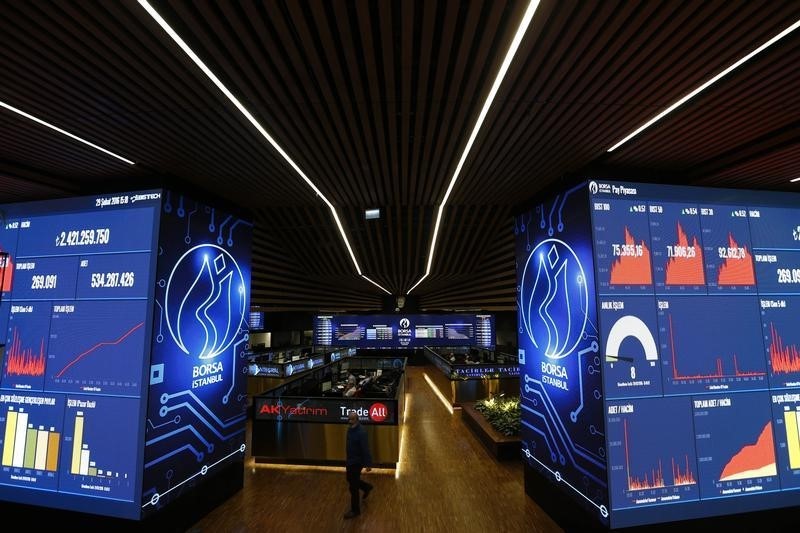
Istanbul's BIST 100 rose 0.60% on Monday, with advancers outnumbering decliners 501 to 108, while energy prices fell sharply: July crude dropped 5.87% to $90.93 and August Brent fell 5.49% to $94.71. Gold gained 1.12% to $4,607.25, USD/TRY was little changed at 45.72, and EUR/TRY rose 0.88% to 53.51. The article frames the move in the context of a potential Strait of Hormuz reopening, but the reported market action is mixed and largely commodity-driven.
The immediate market read-through is that the “risk premium unwind” trade in energy is vulnerable to overshooting. A reopening of a major chokepoint does not mechanically mean spare barrels arrive quickly; the first-order move is often speculative de-risking in crude, but the second-order effect is a squeeze in tanker rates, insurance, and shipping bottlenecks as cargoes re-route and inventories normalize unevenly. That favors downstream consumers and transport names with high fuel sensitivity, but not necessarily in a straight line because the market usually discounts the supply narrative faster than physical flows can adjust.
The bigger miss is that a softer crude tape can be supportive for broader risk assets even if headline geopolitics look calmer. Turkey-specific equities may benefit less from lower oil than the market assumes because the real transmission is through FX, inflation expectations, and policy credibility; a 5-10% decline in crude helps the current account and inflation optics, but if the currency does not follow through, local equity beta can remain choppy. Meanwhile, gold strength alongside falling oil suggests the market is pricing not peace, but reduced immediate energy stress with lingering macro uncertainty—an environment that often favors defensive commodity hedges over outright directional energy shorts.
Contrarian setup: the move in crude may be too much, too fast if traders are extrapolating a clean reopening into a durable supply surplus. If transit resumes but regional actors still prefer optionality, you can get a “fake calm” where prompt prices fall while forward curves stay sticky, which is usually bearish for upstream leverage but supportive for refiners and integrateds. The key risk catalyst over the next 1-4 weeks is whether physical exports and freight data confirm the headline; if not, energy equities can rebound violently as positioning re-hedges. The best asymmetry is to fade the most commodity-beta names rather than chase the headline move in broad indices.
AI-powered research, real-time alerts, and portfolio analytics for institutional investors.
Request DemoOverall Sentiment
neutral
Sentiment Score
-0.05
Ticker Sentiment
