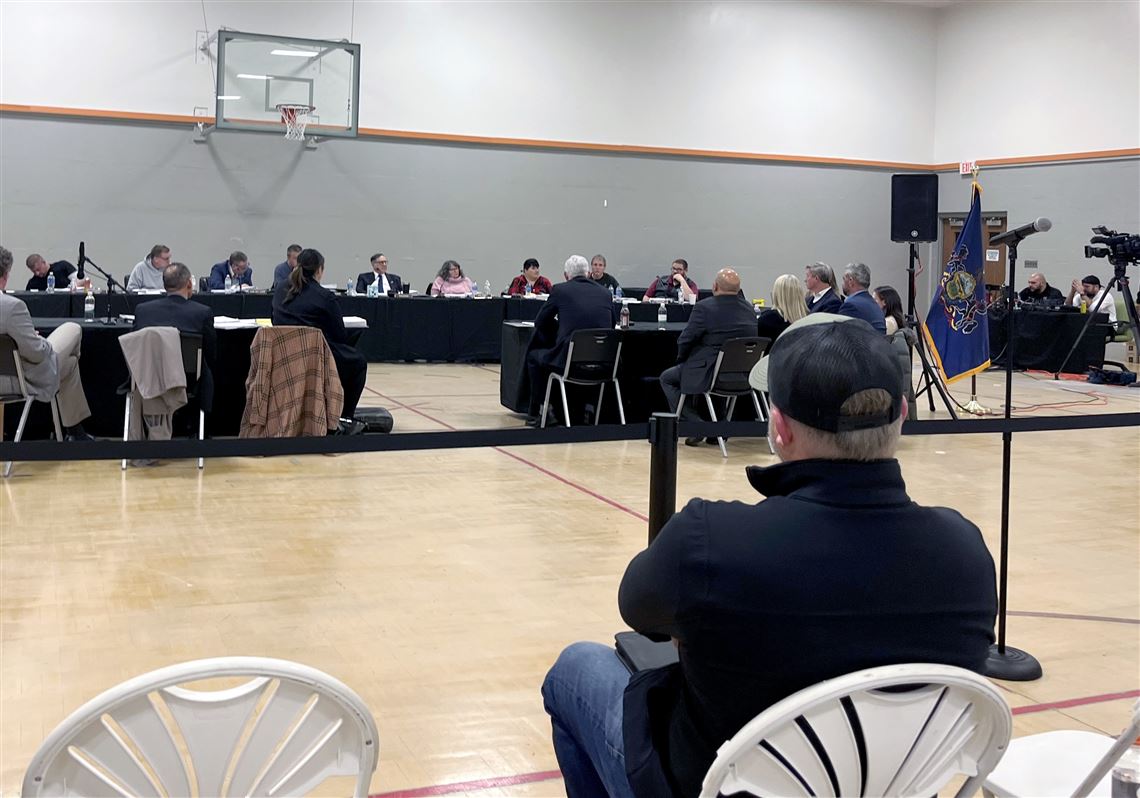
Developers are proposing large-scale conversions of idled steel sites in Pennsylvania into data centers—most notably a proposed 2-million-square-foot complex near Conshohocken and a 565,000-square-foot (plus 200,000 sq ft ancillary) project in Springdale—while Cleveland-Cliffs seeks buyers for three plants (one Conshohocken site spanning 66 acres) amid recent closures that affected 500+ workers. Local opposition, zoning pushback (a nonbinding 4-0 planning-board vote against the Conshohocken proposal and stalled hearings), environmental remediation challenges at Steelton, and PJM/PUC warnings about grid reliability and rapid load additions introduce execution and regulatory risk for data-center investments despite political endorsements and reported multi-billion-dollar interest from big cloud players. Funds evaluating utilities, real estate redevelopment, or Cleveland-Cliffs should weigh potential delays, community resistance, remediation costs and grid upgrades against demand for AI-related capacity.
Market structure: Cloud hyperscalers (AMZN, MSFT) are the likely end-demand winners if projects proceed, as they capture scale economics in AI infrastructure; regional power generators, industrial REITs and gas producers also benefit. Legacy steel producers (CLF) and local labor-dependent economies are losers; expect downward pressure on domestic rail/plate volumes and potential asset-fire-sale valuations near-term. Constrained PJM pockets imply spot wholesale power could rise ~5–15% in stressed months over the next 12 months, lifting utility capex and transmission-focused names. Risk assessment: Tail risks include municipal zoning moratoria, PJM interconnection refusals, or state-level curbs on data-center hookups that could strand announced investments — low probability but high impact for AMZN/MSFT commitments and for CLF’s asset-recycling. Immediate catalysts are zoning/PUC rulings in the next 30–90 days; medium-term (6–18 months) risks center on transmission upgrades and remediation costs; long-term (2–5 years) risks are structural labor displacement and local political backlash. Hidden dependency: successful projects require firm gas pipeline and transmission builds—if either lags, projects stall and power spreads widen. Trade implications: Tactical ideas: small overweight to MSFT/AMZN (1–3% each) to play secular AI demand but size for potential volatility; establish a 2–3% short position in CLF or buy 3–6 month 10–20% OTM puts to hedge remediation/liquidity risk. Relative-value: pair long STLD (2–3% weight) vs short CLF (equal notional) to play modernized mill premium. Use options: consider 6–12 month broken-wing call spreads on MSFT to collect premium while retaining upside, and buy CLF puts expiring 3–6 months; rebalance on zoning/PUC outcomes within 30–90 days. Contrarian angles: Consensus overlooks edge/distributed compute winners (data-center design, cooling, substation construction, copper/transformer vendors) which will see faster, fragmented demand if large central sites are blocked. The market may be over-discounting CLF’s recovery: if CLF secures >$200m in asset-sale proceeds or reduces net debt by >20% within 12 months, downside tightens—plan call-buying at >20% price drawdown as a volatility arb. Also, large-scale builds could trigger state regulatory price caps on interconnections, which would hurt hyperscalers’ margins and favor regulated utilities with guaranteed returns.
AI-powered research, real-time alerts, and portfolio analytics for institutional investors.
Request DemoOverall Sentiment
moderately negative
Sentiment Score
-0.35
Ticker Sentiment
