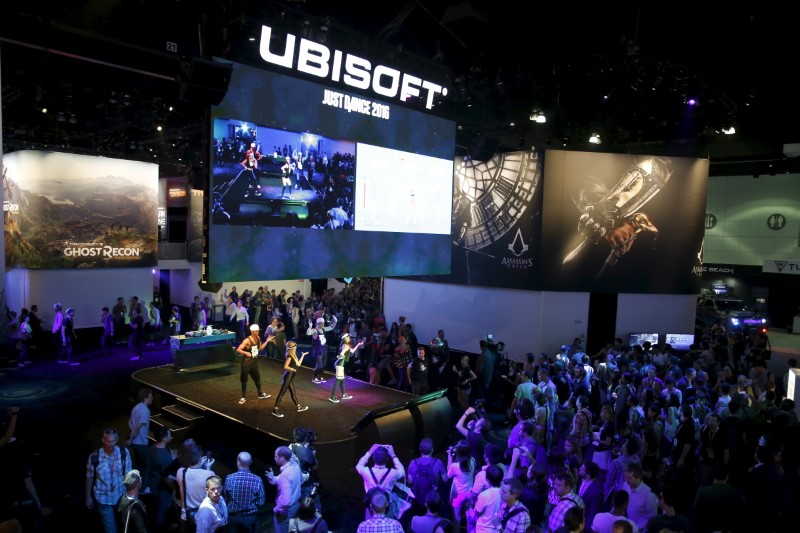
Ubisoft shares fell more than 4% after the company announced Assassin’s Creed Black Flag Resynced will launch on July 9 at 59.99 euros, highlighting another major release following January’s profit warning. The company is also in the middle of a sweeping reorganization, including the cancellation of six games and a plan to restructure into five creative divisions. The news points to ongoing execution and turnaround risk despite the new product pipeline.
The immediate read-through is not about the game itself but about the credibility of the turnaround narrative. When a publisher in a restructuring phase leans on a legacy IP refresh rather than a true franchise expansion, it usually signals capital allocation constraint: management is optimizing for low-risk monetization and near-term cash preservation, not organic reacceleration. That tends to support the equity only if the market was pricing in a deeper strategic reset; otherwise, it reinforces the view that growth options remain limited.
Second-order, this is mildly negative for the premium-single-player game ecosystem because it keeps the competitive bar low for incumbents with strong existing IP catalogs. It also highlights a structural shift toward remakes, remasters, and sequel-heavy portfolios, which benefits studios with efficient asset reuse but hurts smaller developers chasing new IP discovery. Over a 6-12 month horizon, the key question is whether this release can stop the earnings downgrades cycle or whether it becomes another proof point that the pipeline is still thin.
The contrarian angle is that a weak share reaction may actually be the right setup if expectations are already depressed enough. In that case, the stock can rally on evidence of execution rather than headline launch quality, because the hurdle is now operational discipline, not growth. The real catalyst window is the next 1-2 quarters: preorder momentum, review scores, and any commentary on margin contribution will matter more than launch-day downloads.
What the market may be missing is that a successful low-cost launch could slightly improve confidence in the reorganization, but it does not solve the longer-term issue of IP concentration risk. If this title underperforms, the downside is not just one product miss; it increases the probability of more aggressive cost cuts, portfolio pruning, and potentially a deeper strategic transaction within 12 months.
AI-powered research, real-time alerts, and portfolio analytics for institutional investors.
Request TrialOverall Sentiment
moderately negative
Sentiment Score
-0.35
Ticker Sentiment
