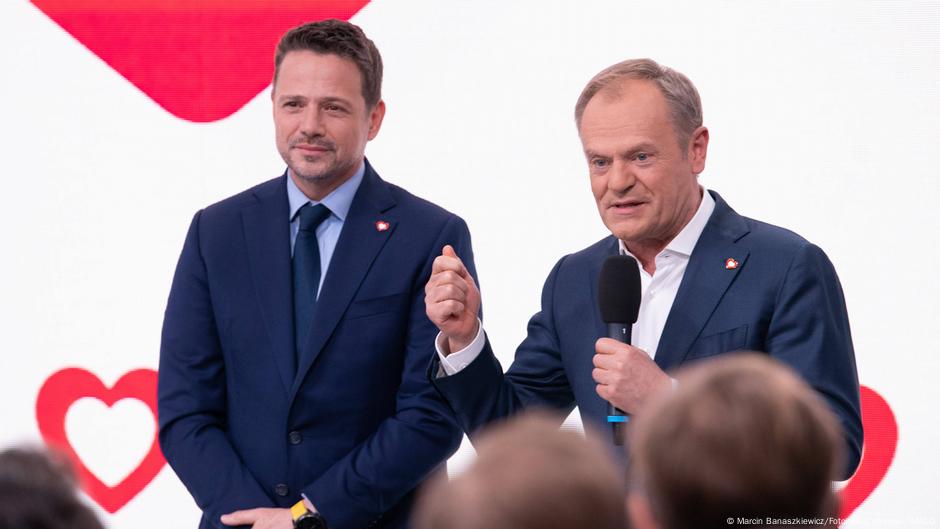
Polish Prime Minister Donald Tusk will seek a vote of confidence in parliament after his candidate lost the presidential election to Karol Nawrocki, a nationalist supported by the Law and Justice (PiS) party, who secured 50.89% of the vote. Nawrocki's victory signals a conservative shift, potentially hindering Tusk's efforts to reverse judicial reforms and strengthen Poland's pro-European stance, especially given the president's ability to influence foreign policy and veto legislation. Nawrocki, who is backed by US President Donald Trump, is expected to maintain a conservative position and oppose Ukraine's accession to NATO.
Polish Prime Minister Donald Tusk's decision to seek a parliamentary vote of confidence follows a significant political setback with his candidate, Rafal Trzaskowski, narrowly losing the presidential election (49.11%) to Karol Nawrocki (50.89%). Nawrocki's victory, supported by the nationalist conservative Law and Justice (PiS) party, signals a probable continuation of conservative policies and a potential impediment to Tusk's pro-European agenda. The new president-elect is expected to maintain the stance of outgoing President Andrzej Duda, particularly concerning judicial reforms which the European Union has criticized, leveraging the presidential power to veto legislation. This development casts doubt on Tusk's ability to reverse previous judicial changes and fulfill promises made to voters and the EU. Nawrocki, described as a eurosceptic historian, has campaigned on defending Poland's sovereignty, criticizing interference from Brussels, and espouses conservative values including an anti-abortion stance. His foreign policy inclinations suggest a preference for closer ties with the United States, having received backing from former US President Donald Trump, and while supporting Ukraine's defense, he opposes its NATO accession. Given the Polish president's non-ceremonial role, which includes influence over foreign policy and legislative veto power, Tusk's government faces considerable challenges in implementing its agenda, leading to an environment of political uncertainty, reflected in the provided moderately negative sentiment and uncertain tone signals.
AI-powered research, real-time alerts, and portfolio analytics for institutional investors.
Request DemoOverall Sentiment
moderately negative
Sentiment Score
-0.50
