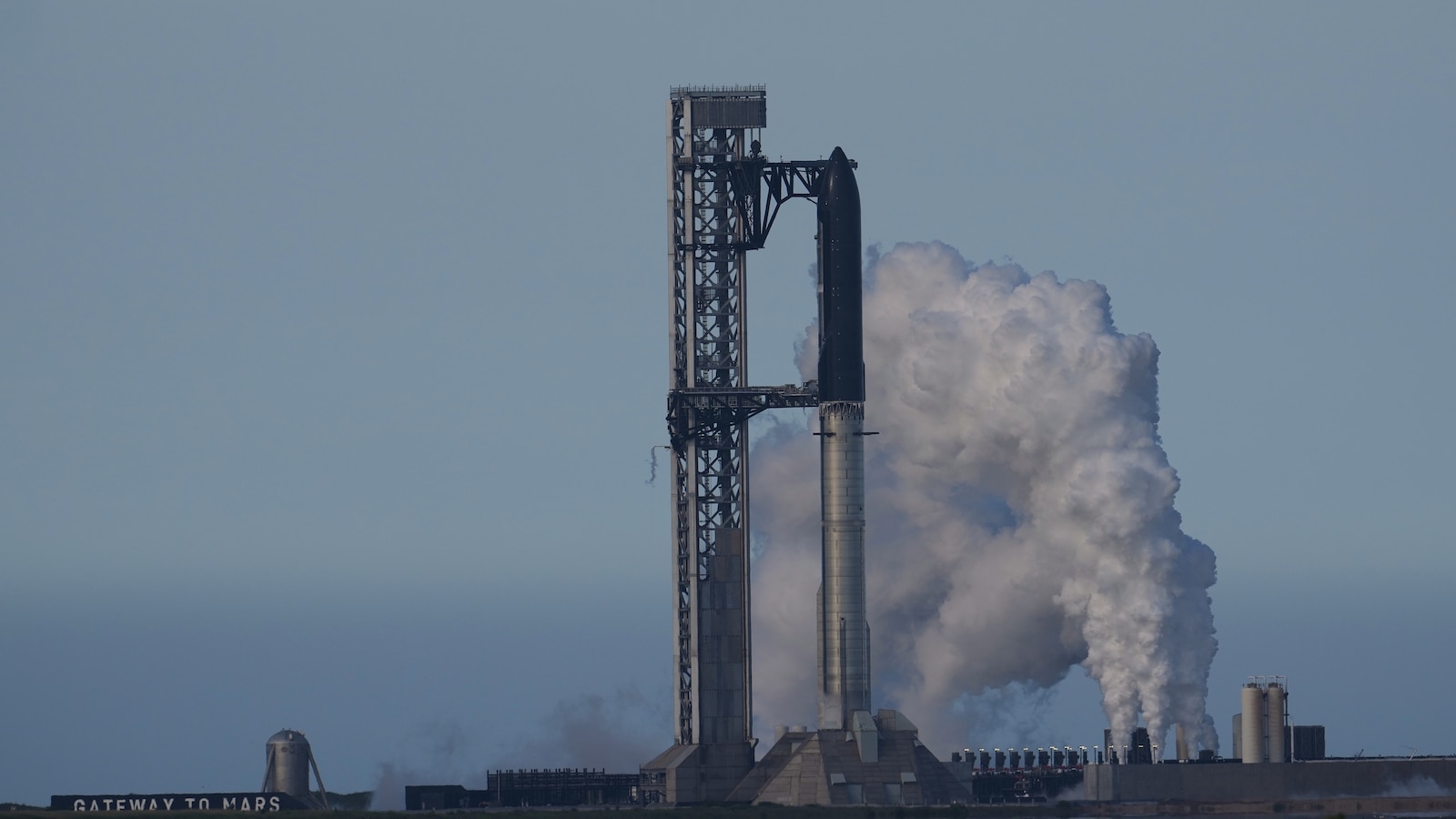
SpaceX's Starship test launch was halted within 30 seconds of liftoff due to problems with the new Texas launch pad, including a hydraulic pin that failed to retract. The 407-foot rocket will have to wait at least another day for another attempt, though Musk said a Friday launch is possible if the issue is fixed quickly. The delay is a setback for Starship, which NASA is counting on for future lunar landings.
The immediate market read is not about the single delay; it is about execution reliability at the exact moment SpaceX is asking investors to underwrite a much larger, more complex production and launch cadence. A pad-level hydraulic failure on a first-use configuration is a reminder that the binding constraint is increasingly ground infrastructure and operations, not just rocket design. That shifts the risk curve from “science project volatility” to “industrialization friction,” which is more damaging to valuation if it persists because it delays learning cycles and pushes out the timeline for any revenue recognition tied to launch cadence.
Second-order effects matter more here than headline launch slippage. Any supplier exposed to high-flight-rate assumptions in composite structures, avionics, launch ground systems, cryogenics, or range services could face order pushouts if test cadence stalls for multiple weeks; conversely, firms with reusability-adjacent infrastructure or launch-site automation exposure can benefit if SpaceX doubles down on pad redundancy and maintenance spend. The bigger strategic question is whether NASA and commercial customers start demanding more proof points before committing mission-critical payloads to Starship, which would raise the hurdle rate for the program even if the next attempt succeeds.
The contrarian view is that a near-hold on launch and an issue on a brand-new pad are not the same as a fundamental propulsion or vehicle-design failure. If the fix is operational rather than architectural, the delay could compress into hours or days with limited medium-term impact, especially given SpaceX’s tolerance for rapid iteration. The real tell is not one scrubbed launch but the next 30-60 days: if cadence normalizes, this becomes noise; if not, investors should start pricing a slower transition from development to monetization and more conservative assumptions around Starship’s role in future NASA timelines.
AI-powered research, real-time alerts, and portfolio analytics for institutional investors.
Request DemoOverall Sentiment
mildly negative
Sentiment Score
-0.15
