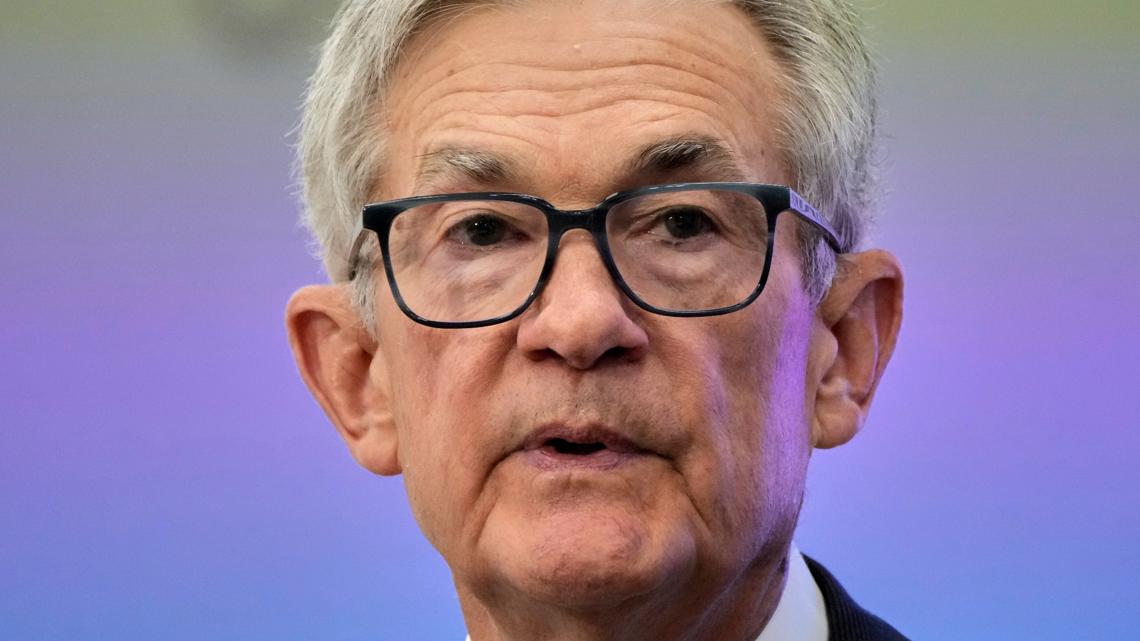
The Fed is widely expected to hold its key rate unchanged at 3.6% for a third straight meeting, while investors will focus on whether Chair Jerome Powell signals he may remain on the board after his term ends May 15. Inflation has risen to 3.3%, a two-year high, even as hiring has slowed and unemployment eased to 4.3%, leaving policymakers split between cuts and a possible hike. Kevin Warsh's expected Senate Banking Committee approval adds to leadership uncertainty and raises questions about Fed independence under the Trump administration.
The key market implication is not the unchanged rate itself, but the possibility of a governance shock that changes the distribution of future policy outcomes. If Powell stays on the board, the near-term market may read that as a small but meaningful constraint on a more politically pliant successor, compressing the tail risk of an abrupt dovish pivot. That matters most for the front end of the curve, where positioning is typically the most sensitive to perceived Fed regime change rather than to one meeting’s statement.
The bigger second-order effect is that a “two-Popes” Fed would likely slow the transmission of the next chair’s preferences into committee consensus. In practice, that raises the odds of more dissent, more ambiguous forward guidance, and a longer period where rate volatility stays elevated even if the policy rate is unchanged. Equity factor implications are important: lower confidence in the policy path is usually a headwind for duration-sensitive growth, but a modest back-up in real yields plus higher policy uncertainty can also support financials relative to software and other long-duration cash-flow names.
The contrarian miss is that the market may be overestimating how quickly a new chair can reshape policy if the labor market remains weak but not broken and inflation is re-accelerating from energy. A chair that wants cuts still may be boxed in for several meetings, meaning the real tradable event is not the nomination vote but the post-meeting language and any shift in the statement toward allowing either direction of next move. That creates a window where rate markets can whipsaw on communication, while the economic data path remains the dominant driver over the next 1-3 months.
The risk to this view is that Powell’s board stay is interpreted as a direct institutional challenge, escalating political pressure and increasing the odds of a more aggressive legislative or personnel response. In that case, the curve could bull-flatten on safe-haven demand while volatility spikes across rates and equities, with the strongest move likely in the 2-year sector. Conversely, if Powell signals he is leaving and the new chair is viewed as constrained by inflation and committee resistance, the immediate market reaction should be less dramatic than consensus expects because policy inertia is already high.
AI-powered research, real-time alerts, and portfolio analytics for institutional investors.
Request DemoOverall Sentiment
neutral
Sentiment Score
-0.05
