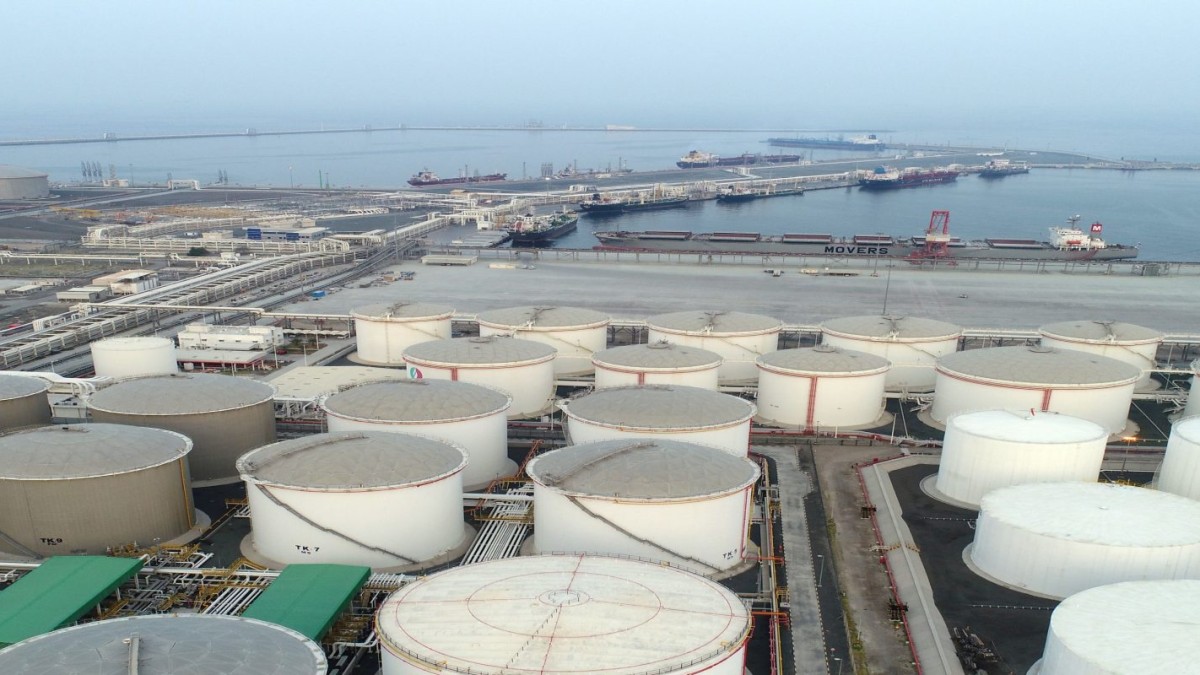
Brent crude fell 10% on the week to around $72 per barrel as markets bet Strait of Hormuz disruptions will ease, while Dubai and Murban flipped into contango on signs of temporary oversupply. Transit volumes through Hormuz remain well below normal, but weekly crude flows hit their highest since the conflict began, offsetting fresh geopolitical risks from Iran's drone attack on a Taiwan-owned cargo ship. The article also flags potential supply shifts from Iraq, China, Qatar, Saudi Arabia, Kazakhstan, Russia, and West African grades, underscoring broad volatility across energy markets.
The market is signaling that the marginal barrel risk premium from Hormuz is being repriced down faster than physical flows can normalize. That creates a classic trap: prompt barrels can cheapen even while headline geopolitical risk remains elevated, because traders care first about near-term liftings, storage optionality, and whether Asian buyers can secure prompt replacement grades. The flip into contango is important because it incentivizes storage and paper length while punishing holders of physical prompt supply, so the pain is likely concentrated in traders and refiners with short-covering exposure rather than upstream producers.
The bigger second-order effect is regional crude displacement. As Middle East benchmarks soften, Atlantic Basin and West African barrels are getting marked down, which pressures floating storage economics and narrows arbitrage windows into Asia. That should compress margins for merchant traders and some independent refiners that relied on wide regional spreads, while improving feedstock economics for complex refiners able to blend discounted cargoes into higher-value product slates.
The tail risk is not another single headline, but a renewed interruption that hits after positioning has de-risked and inventories have been drawn toward prompt demand. If transit recovery stalls, the market is likely underestimating how quickly the curve can re-backwardate and how violently freight and insurance costs reprice, especially for VLCCs and nearby product flows. Conversely, if transit normalization continues for 2-4 weeks, the market probably has room to test lower on Brent as speculative length unwinds and the physical premium evaporates.
The contrarian view is that the commodity complex may be too complacent on supply restoration speed and too bearish on the medium-term loss of optionality. Even partial instability around Hormuz raises the value of non-Middle East barrels, and that can support differentials for U.S. Gulf Coast exports, Brazilian crude, and select North Sea grades even if flat price falls. In other words, the headline risk premium may fade, but the dispersion trade is getting more attractive: weaker benchmark crude, stronger relative winners in logistics, freight, and advantaged non-Middle East supply.
AI-powered research, real-time alerts, and portfolio analytics for institutional investors.
Request DemoOverall Sentiment
mildly negative
Sentiment Score
-0.20
