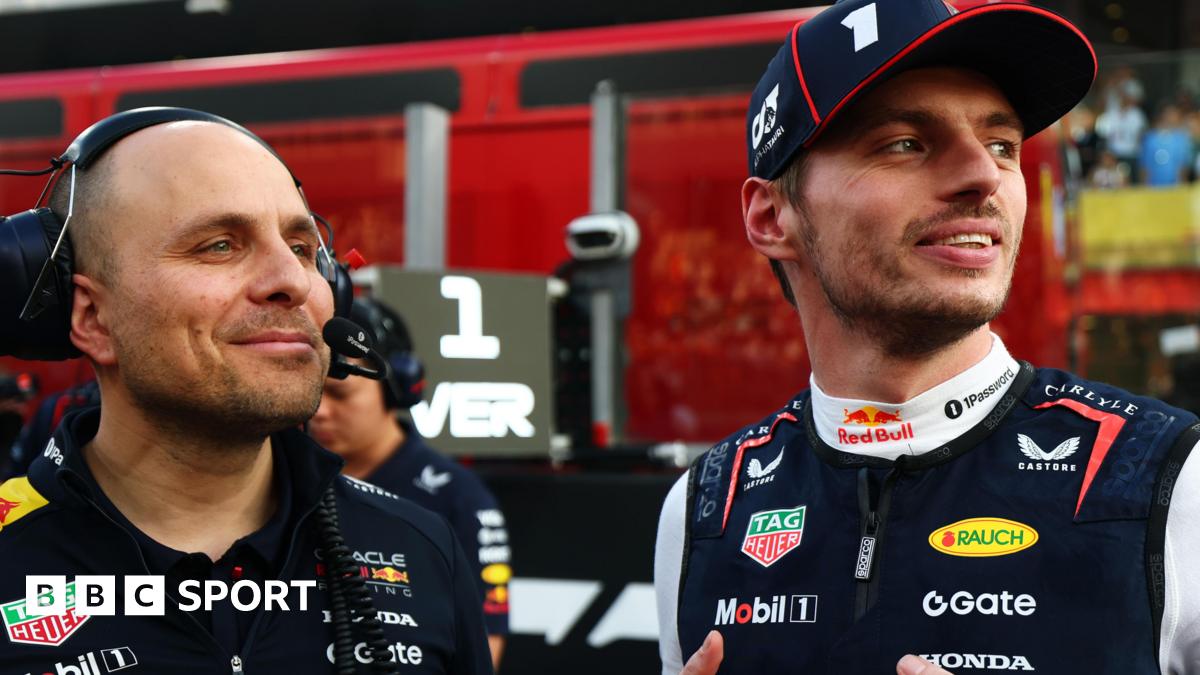
Gianpiero Lambiase, Red Bull's head of race engineering and Max Verstappen's race engineer, has agreed to join McLaren in 2028. He will support McLaren team principal Andrea Stella in an unspecified race-operations role and is the third senior Red Bull figure to move to McLaren (after Rob Marshall in 2024 and Will Courtenay earlier this year). For investors the direct market impact is low (~0.2): the move strengthens McLaren's operational depth while removing experienced personnel from Red Bull, which could worsen Red Bull's short-term rebuild risk and feed into ongoing uncertainty over Verstappen's future if competitiveness does not improve.
A high-profile operational hire at a competitor is less about a single-person uplift and more about accelerating organizational competence transfer: expect process improvements (race ops cadence, telemetry-to-decision loops, pitstop and strategy workflows) to compound across a season and shave measurable tenths per lap within 6–18 months. That compresses the current performance dispersion among top teams and raises the probability of podium-share erosion for incumbents, not through one-off design gains but via faster race-day execution and iteration speed.
Talent migration also creates two under-priced costs: (1) short-term disruption risk at the donor organization as tacit knowledge leaves and replacement cycles play out; (2) medium-term wage and contractor inflation in a thin market for elite race engineers, which can flow into supplier contracts and capex on simulation/track infrastructure. Both effects concentrate downside in the next 3–12 months if the donor team’s on-track performance declines and sponsors re-evaluate payments tied to results.
The primary tail risks are integration failure (new hire misfit or cultural mismatch) and regulatory changes that re-center car performance on design rather than operational execution, which would blunt the hire’s impact. Monitor three near-term signals as catalysts: weekend-in-race operational KPIs (pit time variance, strategy reversals), relative lap-time improvement at circuits favoring execution over aero, and changes in sponsor/partner language about performance-linked fees — each can move valuations in 1–3 months.
AI-powered research, real-time alerts, and portfolio analytics for institutional investors.
Request DemoOverall Sentiment
neutral
Sentiment Score
0.00
Ticker Sentiment
