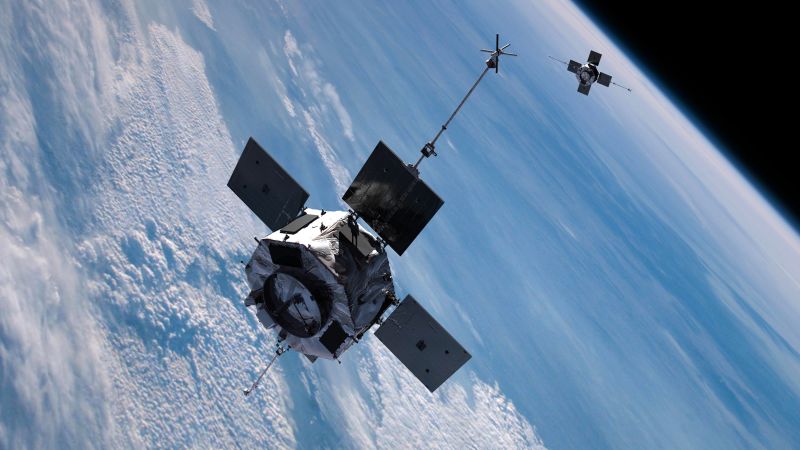
The 600 kg (1,323 lb) Van Allen Probe A is predicted to reenter Earth's atmosphere around 7:45 p.m. ET Tuesday ±24 hours, with NASA estimating a 1-in-4,200 chance that debris could harm a person. Most of the spacecraft is expected to burn up, but some components may survive; the earlier-than-expected decay is attributed to a stronger solar maximum increasing atmospheric drag. Van Allen Probe B is now also likely to reenter before 2030, highlighting NASA's 25-year disposal policy and growing focus on debris mitigation.
Solar-driven increases in upper-atmosphere density materially shorten LEO asset lifetimes, which shifts several multi-year operating and regulatory timelines into a near-term procurement problem. Expect satellite operators to face mid-single-digit percentage increases in per-unit capital cost over the next 12–36 months as they add deorbit hardware, extra propellant margins, or insurance buffers; that compresses free cash flow for low-margin constellation players first.
Defense and space-surveillance vendors will see a faster payback on SSA (space situational awareness) systems: governments respond to concentrated reentry events with accelerated contracting cycles, typically 6–24 months, for persistent tracking and debris-removal R&D. Reinsurers and specialty insurers get pricing power in the near term, but they also carry asymmetric tail risk if a ground-impact incident causes a political backlash that freezes launches or forces large payouts.
Two second-order supply-chain effects matter: (1) demand for low-mass, high-impulse electric thrusters and deployable drag-sail systems will spike, benefiting component specialists and manufacturers with short lead times; (2) persistent orbital congestion increases the value of in-orbit servicing and ADR (active debris removal) IP—contracts here are stickier and less price-sensitive than commercial comms payload sales.
Key catalysts that will change market positioning are regulatory moves (rulemaking and liability frameworks) expected within 12–24 months and any headline ground-impact event within days that could force immediate policy reaction. A quiet outcome from this reentry would slow policy momentum and keep current commercial cost trajectories intact; an accident would accelerate procurement and repricing across insurance, defense contracting, and smallsat manufacturing by multiple years.
AI-powered research, real-time alerts, and portfolio analytics for institutional investors.
Request DemoOverall Sentiment
neutral
Sentiment Score
0.00
