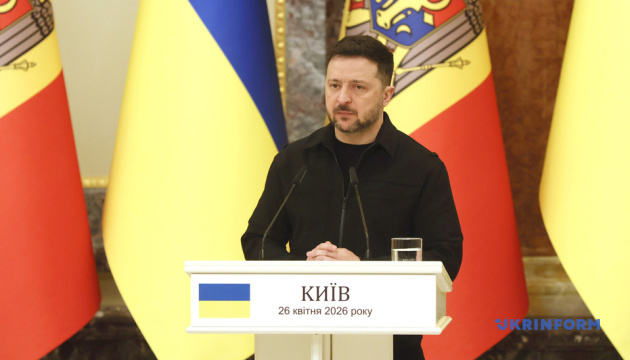
Ukraine expects roughly EUR 350–400 million in new funding from three undisclosed countries under the PURL program, while broader 2026 support tranches are cited at EUR 90 billion, including an initial EUR 45 billion tranche. Zelensky said the first proceeds would prioritize domestic production, drones/miltech, and energy protection, with several billion expected for energy security. The article also notes the unblocking of a Ukraine support loan for 2026–2027 and adoption of the EU's 20th sanctions package against Russia.
This is less a one-off funding headline than a signal that Ukraine’s war economy is becoming more institutionalized: external support is shifting from emergency transfers toward recurring, earmarked tranches that preferentially fund domestic industrial capacity, energy hardening, and logistics resilience. That matters because each marginal euro spent on local production has a larger multiplier than imported kit: it supports capacity utilization, employment, and procurement depth while reducing leakage to foreign suppliers over time. The near-term market impact is not on sovereigns alone, but on a wider ecosystem of European defense, grid-hardened infrastructure, and dual-use manufacturers.
The second-order winner is the European defense supply chain, especially firms with ammunition, air-defense, drone, counter-drone, and electronic warfare exposure that can scale delivery within 6–18 months. A more subtle beneficiary is the energy security stack: grid equipment, transformers, backup generation, fuel logistics, and industrial cybersecurity. Conversely, any incremental easing in perceived war risk could cap the move in high-beta defense equities, but that looks more like a trading pause than a structural reversal because the funding architecture implies multi-tranche support through 2026.
The contrarian angle is that this is not an undifferentiated bullish impulse for all defense names. If governments increasingly favor bilateral, ring-fenced deals, the edge shifts to contractors with export licenses, localized production footprints, and fast contracting cadence, while slower prime contractors may underperform despite the broader thematic bid. Also, markets may be underpricing the inflationary spillover from persistent wartime diesel and power-security spending: that supports energy-infrastructure capex more than it supports crude outright, which is a better expression of the trade than a directional energy commodity bet.
AI-powered research, real-time alerts, and portfolio analytics for institutional investors.
Request DemoOverall Sentiment
neutral
Sentiment Score
0.15
