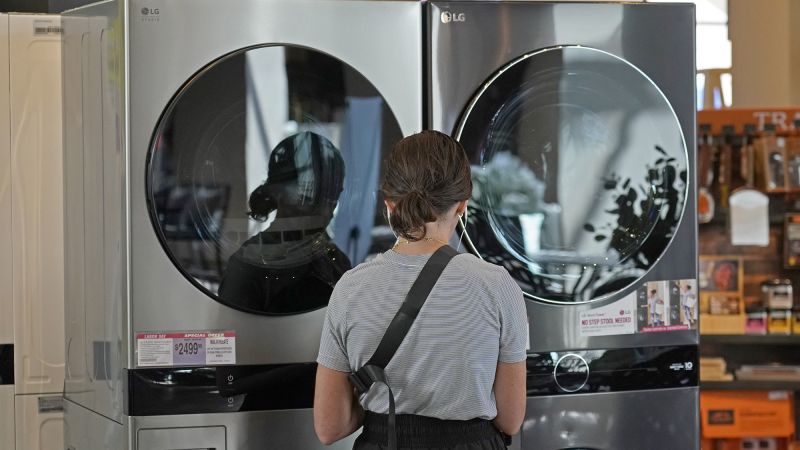
The Trump administration will extend its 50% steel tariffs to consumer appliances containing steel, effective June 23, impacting products like refrigerators and dishwashers. This move aims to protect the US steel industry and prevent foreign competitors from circumventing existing tariffs, but it is projected to raise costs for American manufacturers relying on steel components. Previous steel tariffs under Trump's first term led to increased costs for various industries, shrinking their output by over $3 billion in 2021, according to the International Trade Commission.
The Trump administration's decision to extend 50% steel tariffs to consumer appliances, effective June 23, will directly impact manufacturers of products like refrigerators, dishwashers, and ovens by imposing an additional tax on the steel content within these goods. This policy aims to shield the U.S. steel industry and prevent foreign competitors from circumventing existing tariffs by importing finished goods. However, this is anticipated to elevate input costs for American appliance manufacturers; for instance, Whirlpool (WHR) previously reported hundreds of millions of dollars in higher costs due to steel tariffs. While domestic steel producers like U.S. Steel (X) may experience a more favorable market due to reduced foreign competition, potentially leading to increased domestic steel prices as seen after the initial 25% tariff, historical data indicates broader adverse economic effects. The International Trade Commission's 2023 analysis found that similar tariffs during Trump's first term, despite modestly expanding U.S. steel production, contributed to rising costs for steel-consuming industries, shrinking their output by over $3 billion in 2021. Furthermore, tariffs on imported washing machines reportedly increased average prices by about $90 while creating a modest 1,800 U.S. jobs, suggesting potential inflationary pressures and limited net economic benefits.
AI-powered research, real-time alerts, and portfolio analytics for institutional investors.
Overall Sentiment
strongly negative
Sentiment Score
-0.60
Ticker Sentiment
