
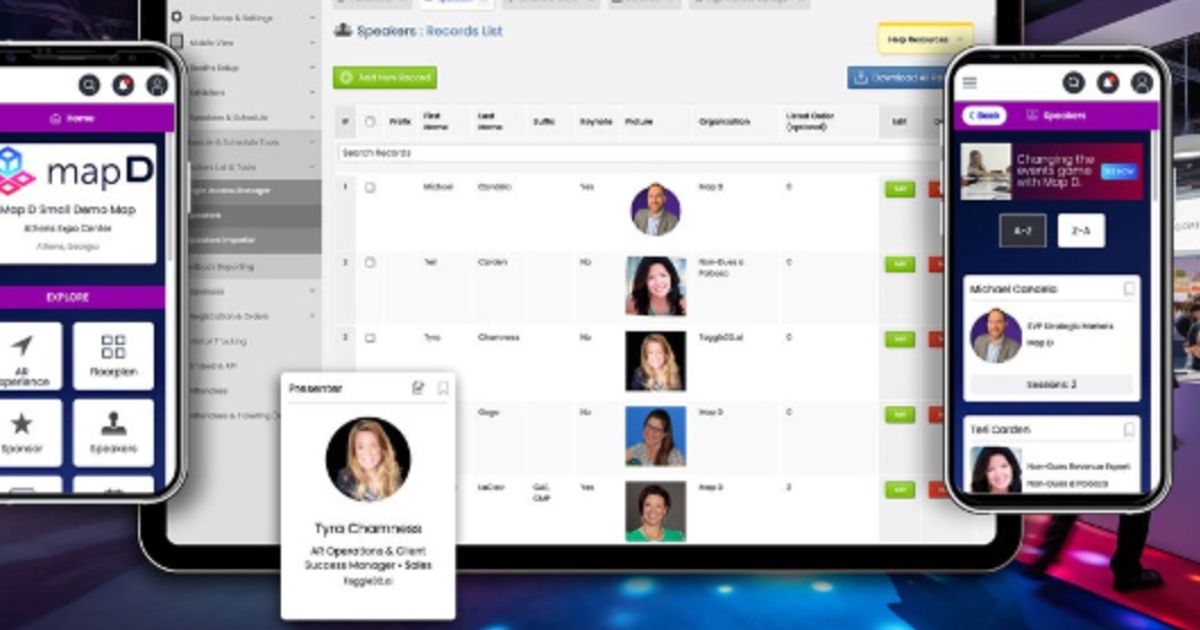
Nextech3D.ai secured Tier 1 Starter customer General Dynamics Information Technology and Tier 2 Growth client Mercury Financial, with expected 2026 annual investments of $25,000–$50,000 and $75,000–$150,000 respectively. The additions indicate enterprise uptake of its AI Events Operating System (EOS), which automates registration, on-site operations, analytics and attendee engagement, and underline the company’s tiered pricing strategy (Starter $25k–$50k up to Enterprise >$250k) as it seeks larger, enterprise-grade contracts. While the immediate revenue impact is modest, the wins validate product-market fit in automated event infrastructure and could catalyze further enterprise expansion and higher-value contracts.
Market structure: Nextech3D.ai (OTCQX:NEXCF) and other AI-driven event-platform vendors are direct winners as enterprises shift spend from manual logistics and one-off vendors to unified SaaS stacks; wins at Starter ($25k–$50k) and Tier‑2 ($75k–$150k) imply modest near-term ARR per client but scale via volume and upsells to >$250k Enterprise accounts. Incumbent legacy event services, temporary staffing and bespoke integrators are losers as automation reduces headcount and marginal pricing power; cloud providers (AMZN, MSFT) are indirect beneficiaries via hosting/AI inference spend. Cross-asset impact is limited but expect small-cap tech credit spreads to tighten on visible SaaS ARR growth; options on AI/cloud names may see implied-vol repricing on earnings/catalysts.
Risk assessment: Tail risks include a major data breach or DoD procurement reversal that could wipe 20–40% of forward revenue, and regulatory limits on AI use at events (privacy/biometrics) that could force product rework. Immediate (days) effects are sentiment-driven; short-term (weeks–months) depends on proof points: renewal rates, ARR per client and gross margin; long-term (quarters–years) hinges on platform stickiness and ability to land >$250k enterprise contracts. Hidden dependency: integrations with third-party mapping, payment, and cloud infra create single‑vendor risks and contagion in SLAs. Accelerants: large public sector deals, partnerships with major cloud/CRM vendors; reversals: missed renewals or high churn.
trade implications: For direct exposure take a small, tactical long in NEXCF (OTCQX:NEXCF) sized to 2–3% of liquid equity risk capital to capture enterprise ramp — increase to 4–6% only after two consecutive quarters of ARR growth >25% or when Enterprise customers contribute >20% of ARR; use a hard stop at −50% given OTC liquidity. To express the structural cloud upside without OTC risk, allocate 1–2% to AMZN (cloud demand) and consider a 3–6 month call spread (buy 10% OTM, sell 25% OTM) sized to 1% portfolio to leverage upside while capping premium. Rotate 5–10% away from public live‑event/temporary‑staffing exposure over next 3 months and redeploy into SaaS/AI infra if NEXCF or peers report sequential ARR acceleration.
contrarian angles: The market may underappreciate revenue concentration risk — Starter and Tier‑2 contracts in article are small, so headline customer wins can be noise; don’t extrapolate enterprise scale from a few $25k–$150k logos. Reaction is likely underdone for downside (a single defense procurement loss could cut projected 2026 revenue by >10% for a small-cap), so size positions conservatively and demand cadence metrics (quarterly bookings, net dollar retention >110%, churn <5% annually) before adding. Historical parallels: early SaaS rollouts often trade on logos not $ARR; avoid doubling in until monetization and renewals prove out, or else risk a value trap.
AI-powered research, real-time alerts, and portfolio analytics for institutional investors.
Request TrialOverall Sentiment
mildly positive
Sentiment Score
0.30
Ticker Sentiment
