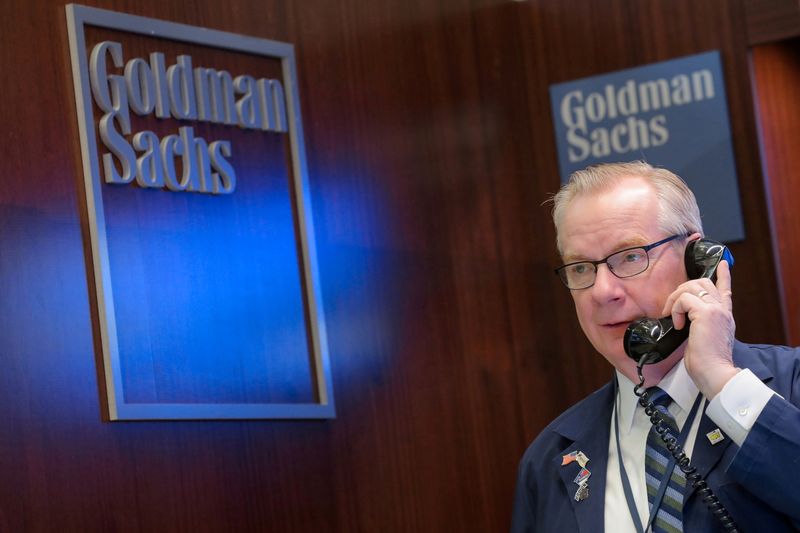
S&P 500 fell 2% this week amid heightened geopolitical risk; Goldman warns that a prolonged energy shock could meaningfully dent its 2026 EPS growth forecast of 12%, noting each 1 percentage-point change in real U.S. GDP maps to a 3–4% change in S&P 500 EPS. Goldman says higher crude benefits energy names but raises costs for consumer-facing and industrial firms. The report flags the 'AI Virtuous Cycle'—led by Nvidia and hyperscalers—where large CapEx flows into other S&P 500 revenues, but stresses sustained market gains require demonstrable AI-driven productivity or revenue growth.
The AI-driven capex wave is already compressing where S&P profits accrue: a concentrated cohort (semiconductor fabs, hyperscaler cloud infra, and a handful of power-equipment suppliers) will capture a disproportionate share of incremental revenue, raising dispersion across the index. Expect supply-chain choke points in specialty silicon, high-voltage power gear, and advanced cooling to create episodic margin tailwinds for suppliers (and price pressure for downstream users) over the next 6–24 months.
A sustained energy squeeze would transmit to corporate earnings primarily via growth, not direct oil profits — a persistent $15–20/bbl shock lasting >3–6 months plausibly trims real GDP by ~0.5–1.0ppt over a year, implying a 1.5–4% hit to S&P EPS via Goldman’s GDP-to-EPS multiplier; that scenario magnifies the benefit to producers but forces multiple compression for high-multiple growers. The timing matters: short spikes (days–weeks) are volatility events; prolonged shocks (quarters) are earnings events that force re-rating and flows into energy/cash-flow-rich names.
Market-structure secondaries: concentration makes option market liquidity and gamma exposure a systemic risk — crowded longs in a few names create steep vol term-structure and asymmetric downside when macro indicators (capex guidance, export-control headlines, oil >$90 for >30 days) disappoint. Tactical positioning should be bifurcated: capture secular AI upside through controlled convexity while using short-dated macro or sector hedges against an energy-driven growth shock in the next 1–6 months.
AI-powered research, real-time alerts, and portfolio analytics for institutional investors.
Overall Sentiment
mildly negative
Sentiment Score
-0.20
Ticker Sentiment
