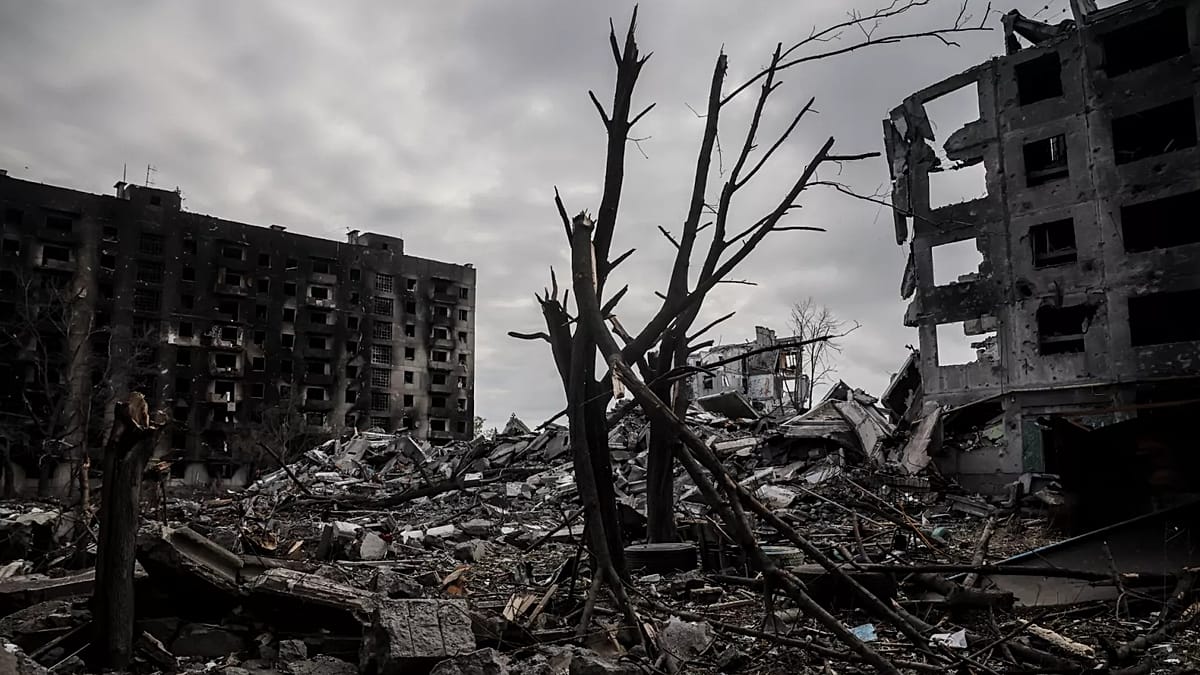
Ukraine claims its long-range strikes have significantly impacted Russia's oil sector, with over 160 attacks this year reportedly causing a 20% drop in domestic oil products and temporarily halting 37% of Russia's refining capacity. While these claims remain unverified, they underscore Ukraine's strategy to disrupt Russia's war economy, presenting potential implications for global energy markets and Russia's fiscal stability amidst ongoing conflict. Meanwhile, Russian forces are reportedly making slow and costly advances in Ukraine's Donetsk region, contested by Ukrainian President Zelenskyy.
The ongoing conflict in Ukraine's eastern Donetsk region remains highly contested, with Russian forces deploying approximately 170,000 troops in a push towards Pokrovsk, though their advances are described as slow and costly. Ukrainian President Zelenskyy acknowledges Russian infiltration into Pokrovsk but asserts that Ukrainian defenders are actively eliminating them, rejecting claims of encirclement. This indicates a protracted and attritional ground war, with both sides incurring significant personnel and materiel costs.
Concurrently, Ukraine claims substantial success in its long-range strikes against Russian oil infrastructure, reporting over 160 attacks this year that have allegedly caused a 20% drop in Russia's domestic oil products and temporarily halted 37% of its refining capacity. While these claims are unverified, they highlight Ukraine's strategy to disrupt Russia's war economy and potentially impact global energy supply dynamics. Furthermore, Ukraine states it has destroyed nearly half of Russia's Pantsir air defense systems and an advanced Oreshnik hypersonic missile, signaling an evolving technological dimension to the conflict.
The humanitarian situation continues to deteriorate, with civilian casualties reportedly rising 30% this year compared to 2024, alongside Russian drone strikes on Ukrainian cities like Sumy and Odesa's energy infrastructure. UN officials express grave concern over these attacks as winter approaches, warning of a potential "major crisis" due to disruptions in essential services. Compounding this, UN humanitarian funding for Ukraine has drastically fallen from $4 billion in 2022 to $1.1 billion this year, exacerbating response challenges.
AI-powered research, real-time alerts, and portfolio analytics for institutional investors.
Request DemoOverall Sentiment
strongly negative
Sentiment Score
-0.70
