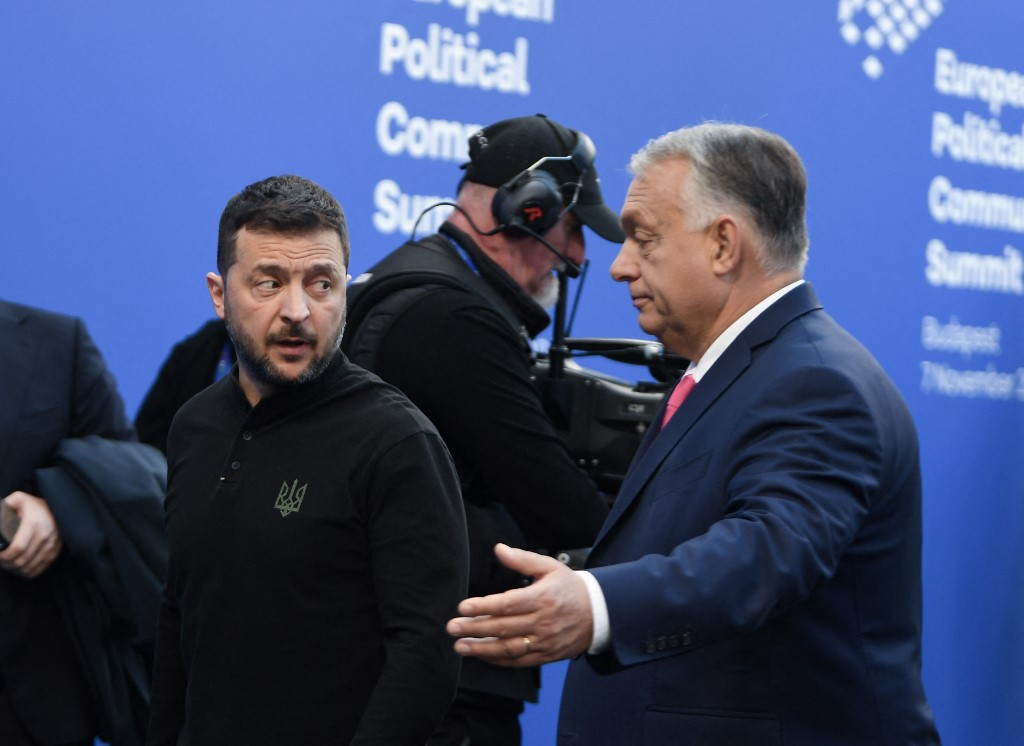
€90 billion EU loan package for Ukraine is at risk after Hungarian PM Viktor Orbán threatened to veto the funding ahead of an EU summit, linking his reversal to disruptions on the Druzhba pipeline and Hungary's energy security. EU officials are weighing punitive measures (stripping voting rights, tightening EU funds access) but are delaying decisive action until after Hungary's election; a post-election crackdown is possible. The standoff raises the probability of delayed aid to Kyiv and increased political and energy-market volatility across the EU.
Orbán's leverage over a single pipeline has outsized market consequences because it converts a localized energy chokepoint into a vetoable political asset; that raises the probability of episodic EU institutional responses (votes, conditionality, targeted budget holds) within a 1–6 month window after the Hungarian ballot. Markets will price this as a regime-risk wedge: expect a 50–150bp bid in Hungarian 5y CDS and a 1–2% widening of BTP/Bund-like peripheral spreads if punitive measures are signaled post-election.
Energy flows are the transmission mechanism to commodity and refining margins — even modest, recurrent Druzhba interruptions can push Urals/Brent differentials wider by $1–3/bbl regionally and force traffic onto costlier seaborne routes, raising refining feedstock cost in Central Europe within 1–3 months and compressing regional refinery crack spreads. That shifts economic rents toward Mediterranean terminals and logistics players, and increases short-term tolls for refiners locked into pipeline supply.
Two political-path scenarios dominate returns: a continuation of the current government yields a multi-month legal/political escalation that gradually crimps Hungary's access to EU funds (3–12 months), while a successful opposition upset produces a transient rally but leaves uncertainty on EU conditionality for 3–6 months as Brussels tests compliance. The true tail event is a full veto causing a Ukrainian funding gap — that would trigger sharp risk-off, J-curve sovereign spread moves and commodity volatility inside days to weeks.
Consensus currently treats Hungarian risk as binary and near-term; the mispricing is that energy countermeasures and infrastructure reroutes are gradual and tradable. Tactical plays should capture spread-widening in Hungarian assets, relative-value divergence among Central European refiners, and short-duration FX/credit protection to asymmetrically monetize the post-election policy shock.
AI-powered research, real-time alerts, and portfolio analytics for institutional investors.
Request DemoOverall Sentiment
moderately negative
Sentiment Score
-0.45
