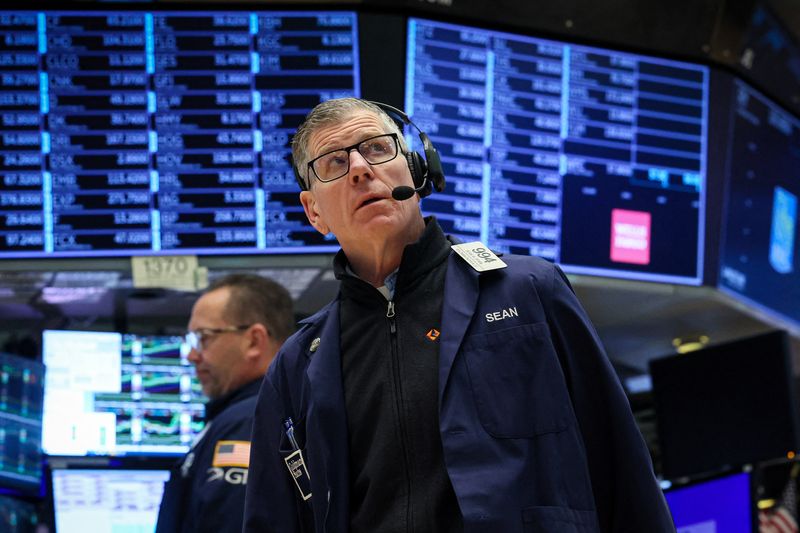
U.S. stock futures were little changed, with S&P 500 Futures up 0.1% to 7,155.0, Nasdaq 100 Futures up 0.2% to 26,808.75, and Dow Jones Futures up 0.1% to 49,708.0 as investors stayed cautious ahead of a ceasefire expiry. Markets are being pressured by escalating U.S.-Iran tensions, a weekend Strait of Hormuz closure, U.S. seizure of an Iranian cargo vessel, and a sharp Monday spike in oil prices. Investors are also watching Kevin Warsh’s Fed chair confirmation hearing, a heavy earnings slate including UnitedHealth and GE Aerospace, and March retail sales data due Tuesday.
The immediate equity implication is not the CEO transition itself, but the signaling effect: Apple is choosing continuity at exactly the moment when capital markets are rewarding visible execution and punishing strategic drift. That makes the bar for the next management regime unusually high on AI monetization, services growth, and capital allocation; any hint that product-cycle innovation slows could compress the multiple faster than fundamentals deteriorate. In the near term, the stock should trade more on narrative stability than on operating change, which tends to dampen realized volatility unless the incoming leadership surprises on strategy.
The bigger second-order effect is across suppliers and adjacent hardware names. A leadership handoff at Apple often widens dispersion within the ecosystem: contract manufacturers, component vendors, and app/platform beneficiaries can outperform or underperform on expectations of product cadence and mix, even if Apple itself remains stable. If investors interpret the transition as a more conservative capital-allocation phase, that can be a headwind for high-beta hardware suppliers while indirectly supporting recurring-revenue names in the ecosystem.
The contrarian read is that this may be a low-event catalyst for the stock but a high-event catalyst for the option market. If the market has already internalized leadership continuity, implied volatility may be too rich relative to realized move risk over the next 1-2 weeks; the better expression is likely not outright direction but skew/volatility positioning into the first post-announcement earnings or guidance cycle. The main risk to that view is if the successor is perceived as more product-centric and AI-aggressive, which could trigger a multiple re-rating rather than a simple status-quo trade.
AI-powered research, real-time alerts, and portfolio analytics for institutional investors.
Request TrialOverall Sentiment
mildly negative
Sentiment Score
-0.20
Ticker Sentiment
