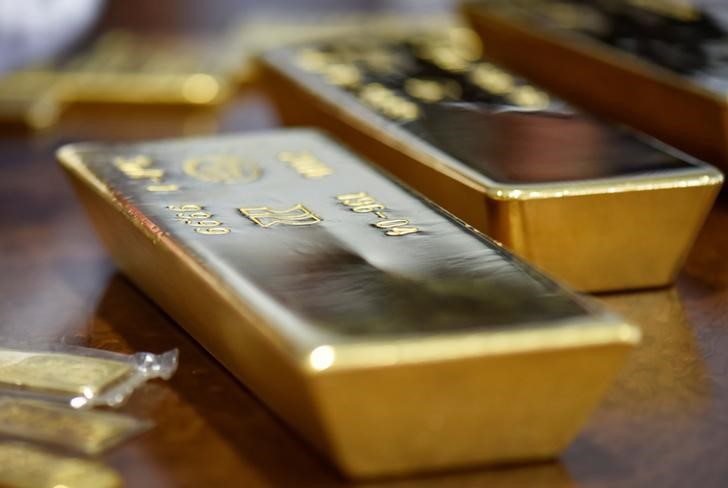
Brent and WTI topped $100 a barrel as the Iran war, a potential prolonged U.S. naval blockade, and fears of a disrupted Strait of Hormuz kept oil markets on edge. Gold slipped 0.1% to $4,593.04/oz and futures to $4,606.31/oz as investors favored the dollar and braced for the Fed's two-day meeting, where rates are expected to stay unchanged. The combination of higher oil prices and inflation risk is reinforcing hawkish central bank expectations and pressuring non-yielding assets.
The market is moving from an inflation story to a policy-constraint story: if oil stays elevated, central banks cannot easily rescue risk assets even if growth softens. That creates a nasty regime for duration-sensitive equities and gold simultaneously, because the first-order safe-haven bid into bullion is being offset by the second-order effect of higher real-rate expectations and stronger USD demand. The key implication is that the market is not just pricing “more geopolitical risk,” it is pricing a slower path to policy easing, which tends to compress multiples across defensives and long-duration growth.
Energy is the obvious winner, but the cleaner expression is not broad beta — it is cash-flow leverage among producers with low decline rates and fast payout. If the supply shock persists for several weeks, refiners, logistics, and industrials become the next-order losers as input costs stay sticky while end-demand elasticity lags by a quarter or more. The more interesting divergence is within energy: upstream names with short-cycle exposure should outperform integrateds if crude remains elevated but product cracks do not expand proportionally.
The contrarian risk is that this move is too consensus-driven and could unwind quickly if the blockade narrative is softened or if Iranian supply re-enters via intermediaries. In that case, the market’s inflation scare would collapse faster than the physical market, causing a sharp reversal in crude and a relief rally in gold and rate-sensitive assets. For now, the asymmetry is still tilted toward owning volatility rather than outright direction, because the next catalyst is binary and likely to arrive within days, not months.
AI-powered research, real-time alerts, and portfolio analytics for institutional investors.
Overall Sentiment
mildly negative
Sentiment Score
-0.35
Ticker Sentiment
