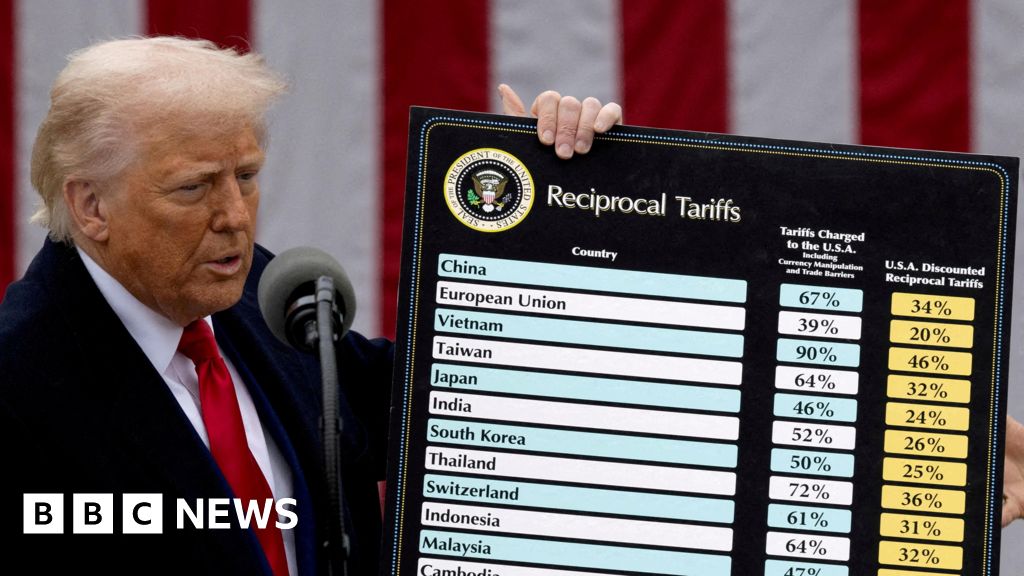
The US Supreme Court is hearing a landmark case challenging the legality of tariffs imposed by the Trump administration, with businesses and states arguing they are illegal and have caused significant financial disruption. A ruling against the administration could upend its trade strategy, potentially requiring the refund of billions in collected tariffs, estimated at $90 billion already paid, and would redefine the limits of presidential power under the 1977 International Emergency Economic Powers Act. Businesses, facing millions in tariff costs and operational upheaval, highlight the high stakes for the economy and future trade policy, as the decision will impact both current trade agreements and the scope of executive authority.
The US Supreme Court is hearing a landmark case challenging the legality of tariffs imposed by the Trump administration under the 1977 International Emergency Economic Powers Act (IEEPA). Businesses and states argue these tariffs, which have cost companies like Learning Resources $14 million this year and Cooperative Coffees $1.3 million, are illegal and have caused significant financial disruption. A ruling against the administration could necessitate the refund of an estimated $90 billion in import taxes collected through September, as per Wells Fargo analysts.
This case extends beyond immediate financial implications, addressing the broader question of presidential power, specifically the use of the IEEPA to impose tariffs without direct Congressional approval. Legal analysts note the difficulty in predicting the outcome, but a ruling favoring Trump would expand executive authority, while a contrary decision could limit future White House actions on trade policy. The Senate's symbolic, bipartisan resolutions rejecting Trump's tariffs underscore legislative concerns.
The uncertainty surrounding the decision has created significant operational challenges for businesses, forcing them to absorb costs, raise prices, and shift manufacturing, as exemplified by Chocolats Camille Bloch. The ruling, expected by January but potentially as late as June, will influence current trade negotiations, with the European Parliament delaying ratification of a trade deal until the outcome is known. The potential for future tariffs, even if imposed through different means, remains a concern for businesses seeking predictability.
AI-powered research, real-time alerts, and portfolio analytics for institutional investors.
Request DemoOverall Sentiment
moderately negative
Sentiment Score
-0.50
Ticker Sentiment
