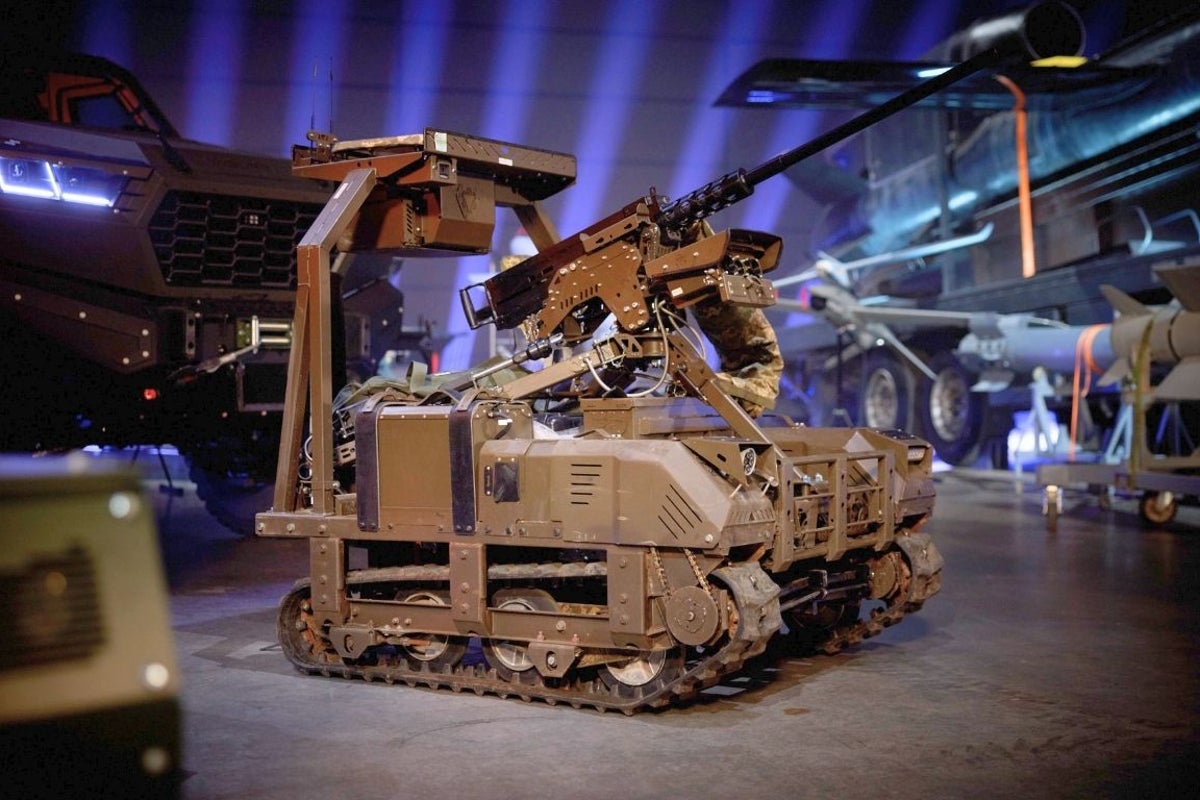
Ukraine is expanding its use of unmanned ground vehicles (UGVs), with the 3rd Separate Assault Brigade saying it aims to replace about 30% of infantry with robots in high-risk roles. The article cites a 488% jump in Ukraine’s UGV market last year, with logistics robots carrying 200-600kg and strike units claiming more than 100 operations in recent months. While the development is framed as a wartime necessity, it highlights a growing defense-tech market and potential future export opportunity for Ukrainian manufacturers.
This is less about a single battlefield innovation than a procurement regime shift: once a platform proves it can reduce infantry attrition while extending persistence, budgets tend to migrate from legacy manned systems into modular autonomy, comms, sensors, and field repair. The near-term winners are not just UGV builders but the broader “robotics stack” — ruggedized semiconductors, encrypted radios, EO/IR payloads, battery systems, and mobile maintenance providers — because front-line survivability depends on iteration speed, not one-off hardware specs.
The second-order effect is on force structure. If robots absorb logistics, reconnaissance, and static defense, the marginal value of infantry falls in lower-intensity sectors while the value of specialists in EW, software, and remote operations rises sharply. That implies a longer-duration demand tail for training, simulation, and counter-drone/counter-robot systems: every offensive robot deployment creates a defensive requirement for detection, jamming, and remote kill-chain disruption.
The main risk is not battlefield failure but institutional friction: scaling autonomy in war usually runs into procurement bottlenecks, export controls, and reliability issues under EW-heavy conditions. In the next 3-6 months, the key catalyst is whether battlefield success converts into repeat orders and standardized doctrine; if not, this remains a tactical advantage rather than a capex cycle. Over 12-24 months, successful exportability matters more than domestic use, because the commercial addressable market is likely to be allied militaries and border/security forces, not peer conflicts alone.
Contrarian view: the market may overprice the current UGV narrative as a pure hardware story. The bigger monetization pool could be software-defined autonomy, teleoperation interfaces, and countermeasure ecosystems, while many small robot OEMs are likely to be commoditized quickly as designs iterate every few months. Investors should favor platforms with defense procurement access and recurring software/service revenue over one-off builders.
AI-powered research, real-time alerts, and portfolio analytics for institutional investors.
Request DemoOverall Sentiment
mildly positive
Sentiment Score
0.20
