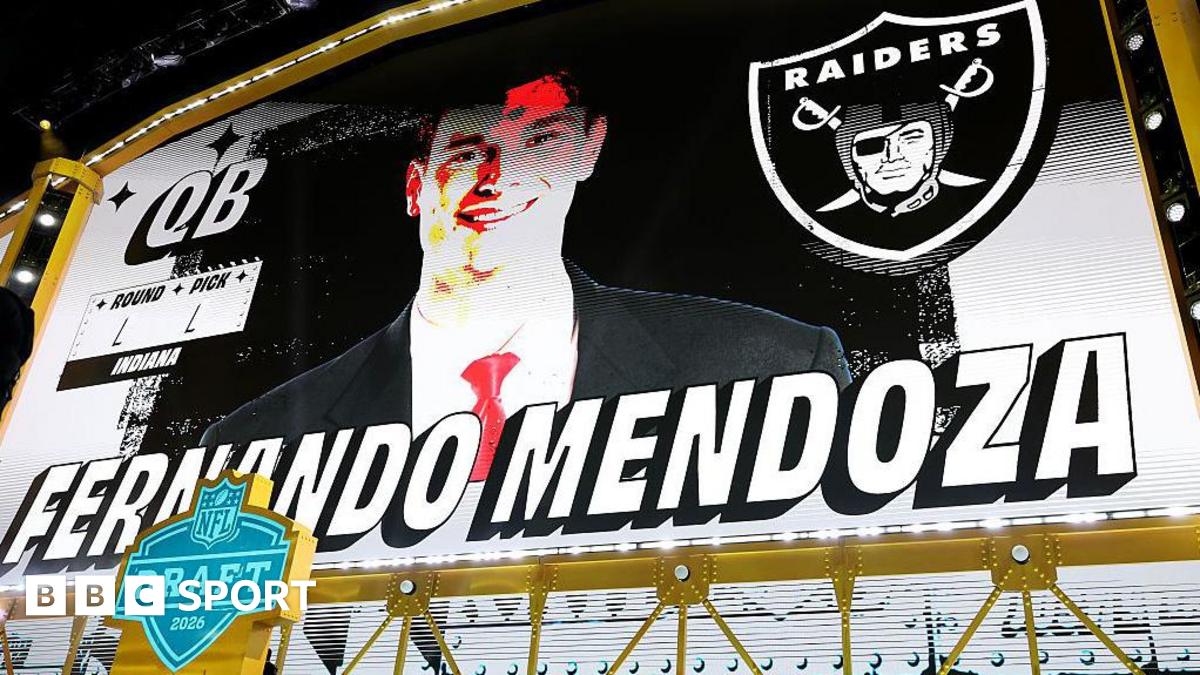
The 2026 NFL Draft opened with the Las Vegas Raiders selecting quarterback Fernando Mendoza first overall, followed by a run of notable first-round picks including David Bailey, Jeremiyah Love, Carnell Tate, and Ty Simpson at No. 13. The night featured eight trades on day one and significant movement among teams, but the article is primarily sports news with limited direct market relevance. Overall impact on financial markets is minimal.
The market is implicitly pricing the Raiders as a multi-year media asset, not just a football team: a franchise quarterback on a rookie deal creates the same kind of operating leverage sports investors prize in MLS/Formula 1/streaming IP. The second-order effect is that Las Vegas now has a cleaner path to premium inventory monetization — higher local ratings, more national windows, and more sponsor demand — while Brady’s involvement increases the probability of better quarterback development, which is the key variance reducer in franchise valuation.
The Rams’ decision to take Ty Simpson is the clearest example of option value over present value. When a veteran bridge QB is one injury away from forcing a reset, a developmental first-rounder creates a cheap call option on a 3-5 year window; if Simpson hits, the pick is transformative, and if he doesn’t, the downside is mainly opportunity cost. The catch is that quarterback development is path-dependent: sitting behind Stafford improves processing but may not solve the pressure-handling issue that often becomes the early career failure mode, so the real catalyst is not draft night but Stafford’s health over the next 12-18 months.
The broader signal is that teams are prioritizing scarce, premium positions while the league’s consensus was to lean defense. That usually compresses the market value of non-premium defensive front talent and raises the relative value of elite QBs, tackles, and corners in future drafts and free agency. For media and entertainment holders tied to the NFL ecosystem, the near-term winner is anyone monetizing quarterback narratives; for the clubs themselves, the downside risk is that an aggressive first-round QB bet can crowd out roster depth and create a two-year evaluation cliff if the player is not immediately above replacement.
AI-powered research, real-time alerts, and portfolio analytics for institutional investors.
Request TrialOverall Sentiment
neutral
Sentiment Score
0.05
