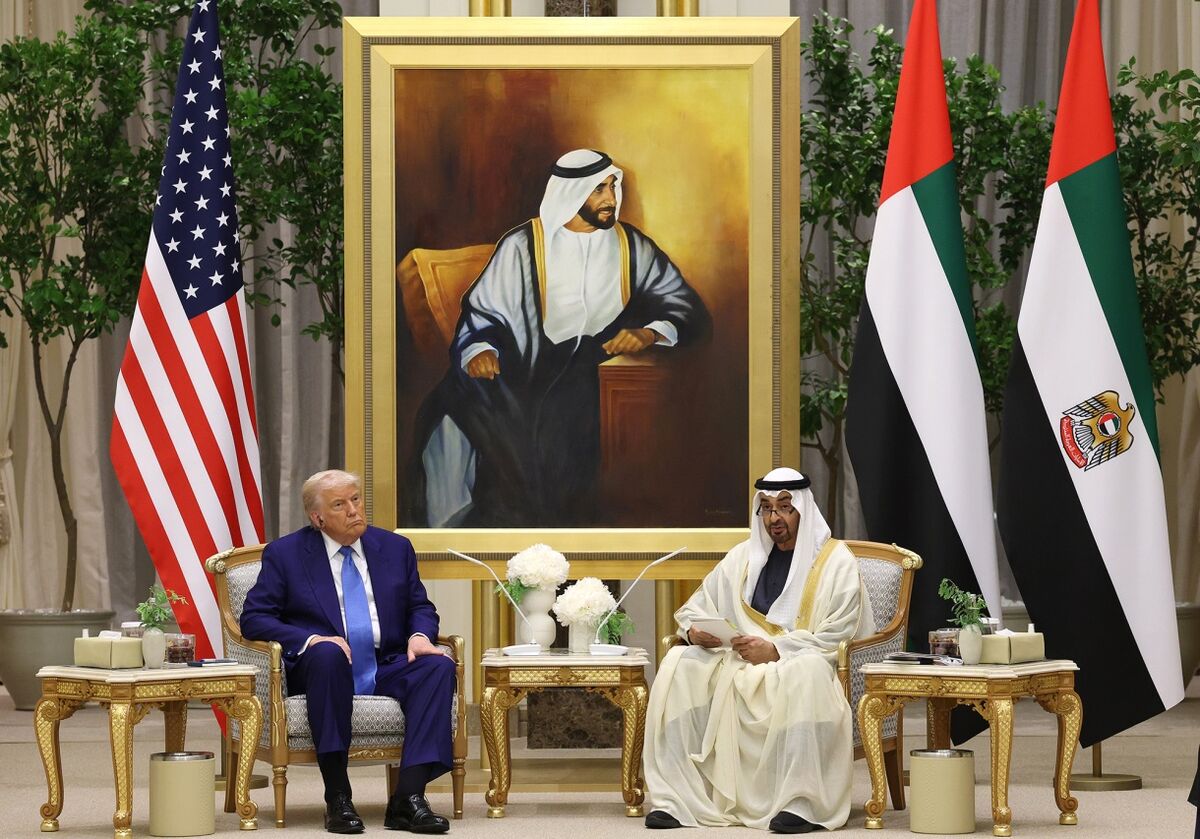
The US said it would likely help the UAE financially if the war in Iran worsens its economic outlook, including possible support through a currency-swap line if needed. Kevin Hassett said a swap facility is probably unnecessary, but the comments underscore concern about regional spillovers from the conflict. The article is largely a policy signal rather than a market event, though it may modestly affect FX and banking-liquidity expectations in the Gulf.
The market should read this less as an imminent bailout signal and more as a backstop on Gulf funding stress. That matters because the first-order risk is not a UAE sovereign crisis, but a second-order tightening in regional dollar liquidity, NDF pricing, and bank funding costs if the Iran conflict forces capital flight or higher hedging demand. A credible U.S. backstop can cap disorderly moves in AED-linked assets even if it never gets used.
The most likely beneficiaries are regional banks, dollar-sensitive real estate, and quasi-sovereigns that rely on stable offshore funding; the losers are hedge funds positioned for a clean risk-off shock in GCC FX and rates. If markets believe the UAE is effectively insured, local spreads can retrace quickly, but that also reduces the urgency to de-risk energy chokepoints via direct market hedges. The bigger hidden effect is that reassurance to the UAE can stabilize broader EM carry trades by reducing fears of a contagious dollar squeeze in the Gulf.
The contrarian angle is that the statement itself may be more important than the facility. Public willingness to support the UAE can compress implied tail risk in the next few weeks, but if the war escalates and shipping/insurance disruptions worsen, any support package will be too slow to offset real-economy damage. The setup favors buying volatility selectively rather than chasing outright directional bets: the base case is calm, but the distribution remains fat-tailed over a 1-3 month horizon.
For now, the key catalyst is whether regional funding spreads widen despite the rhetoric; if they do, that is a signal the market believes the conflict is moving from headline risk to balance-sheet risk. Conversely, if Brent and GCC bank CDS stay contained, the implied protection premium is being overstated and the trade becomes short-vol/long-liquidity.
AI-powered research, real-time alerts, and portfolio analytics for institutional investors.
Request DemoOverall Sentiment
neutral
Sentiment Score
-0.05
